
Creating content can feel overwhelming. You might have a great idea but struggle to bring it to life. Or maybe the ideas just aren’t coming at all. That’s completely normal. The good news is this: one strong idea can turn into a full content plan with the right approach.
Don’t fret. With a little structure and strategy, you can create content that is clear, consistent, and effective. Let’s dive in.
Why Content Planning Matters
Content marketing plays a huge role in today’s digital world.
“Crafting and delivering top-notch content are crucial for enhancing brand awareness, driving traffic and connecting with your target audience.”
Aishwarya Suresh, Content Writer at Sprinklr, in “How to Create a Content Plan”
In simple terms, good content helps people find you, trust you, and connect with your brand. But without a plan, it’s easy to waste time creating content that doesn’t support your goals. That’s where a content plan comes in.
What Is a Content Plan?
A content plan is like a roadmap. It’s a strategic document that outlines:
- Your goals
- Your target audience
- Your content topics
- Your timeline
Think of it as your guide for what to create, when to create it, and why it matters. Instead of guessing your next move, you have a clear direction.
Why You Need a Content Plan
A strong content plan keeps everything aligned. Tushar Pol, in “The Ultimate Guide to Creating a Content Marketing Strategy,” explains that content helps brands connect with audiences in a crowded digital space. A plan ensures that connection is meaningful.
Here’s what a content plan helps you do:
- It keeps your content tied to your business goals.
- It helps you avoid creating content that doesn’t add value.
- It makes it easier to explain your strategy to your team or leadership.
- It creates a smoother workflow so you know what to post and when.
- It allows you to track performance and improve over time.
In short, it brings clarity to your content process.
How to Create a Content Plan
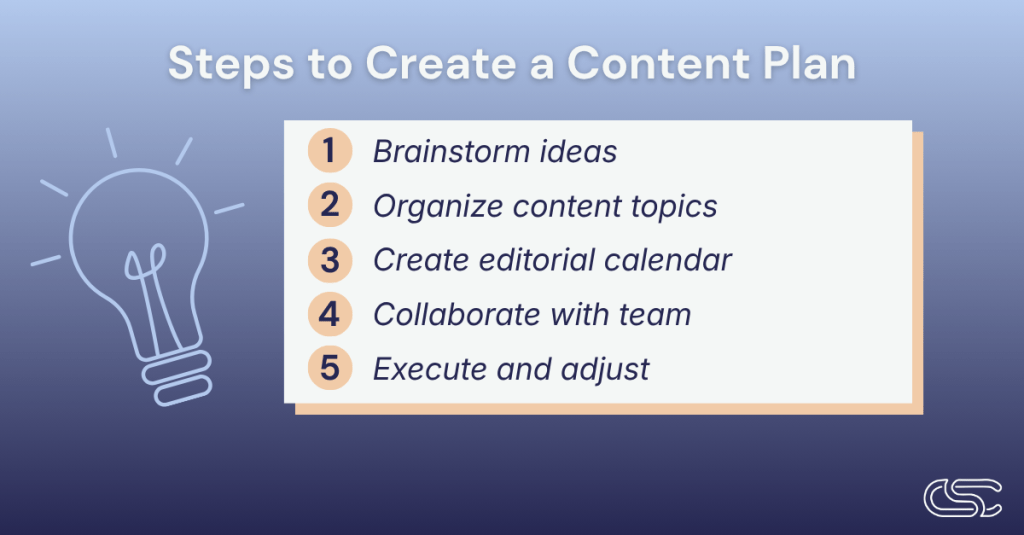
According to a Mailchimp article titled “Essential Content Planning Tips for Smarter Marketing,” there are a series of steps to create a content plan that will help achieve business objectives, streamline your workflow, and improve target audience engagement. Let’s break it down.
Step 1: Brainstorm and Research Ideas
Every great content plan starts with ideas. Begin by writing down anything that comes to mind. Don’t overthink it. The goal here is to get your ideas out, not to make them perfect. When you have a list, start digging a little deeper.
Look at what people are searching for online to spot trends. Take time to review what your competitors are posting and see where there might be gaps. You can also listen to your audience by paying attention to comments, questions, and conversations happening on social media.
If you can, involve others in this process. Bringing in teammates from different departments can lead to fresh ideas you may not have thought of on your own.
Step 2: Organize and Prioritize Topics
Now that you have your ideas, it’s time to bring order to the chaos. Start by grouping similar ideas together. You might notice themes begin to form, which can help you create stronger, more connected content. Think about who each piece is for and what goal it supports.
From there, decide what matters most right now. Some topics may be tied to a specific season or event, while others may fill a gap in your current content. Focus on the ideas that will have the biggest impact.
This step helps turn a long list of ideas into a focused and strategic plan.
Step 3: Build an Editorial Calendar
This is where your content plan really starts to take shape. An editorial calendar helps you map out what you are creating and when it will be published. It also keeps everyone on the same page. Instead of guessing what comes next, you have a clear schedule to follow.
Break the process into simple stages like drafting, editing, designing, and approval. This makes each piece of content easier to manage. You can also plan ahead for how each piece will be shared, whether that’s through social media, email, or other channels.
Having a clear calendar keeps your workflow steady and reduces last-minute stress.
Step 4: Collaborate with Your Team
Content creation works best when people work together. Take time to build a clear process with your team. Everyone should understand their role and what is expected of them. This helps avoid confusion and keeps projects moving forward.
One way to do this is by creating simple content briefs. These give direction on the goal, audience, and message for each piece. When everyone has the same information, the final product is stronger and more consistent.
Good collaboration leads to better content.
Step 5: Execute and Adjust
Now it’s time to put your plan into action. Start publishing your content based on your schedule. As it goes live, pay attention to how it performs. Look at what people are engaging with and what might be falling flat.
This is your chance to learn and improve. If something works well, build on it. If something doesn’t, don’t be afraid to make changes.
A content plan isn’t meant to be set in stone. It should grow with you over time. The more you adjust and refine, the stronger your content will become.
Key Takeaways: Build Smarter, Not Harder
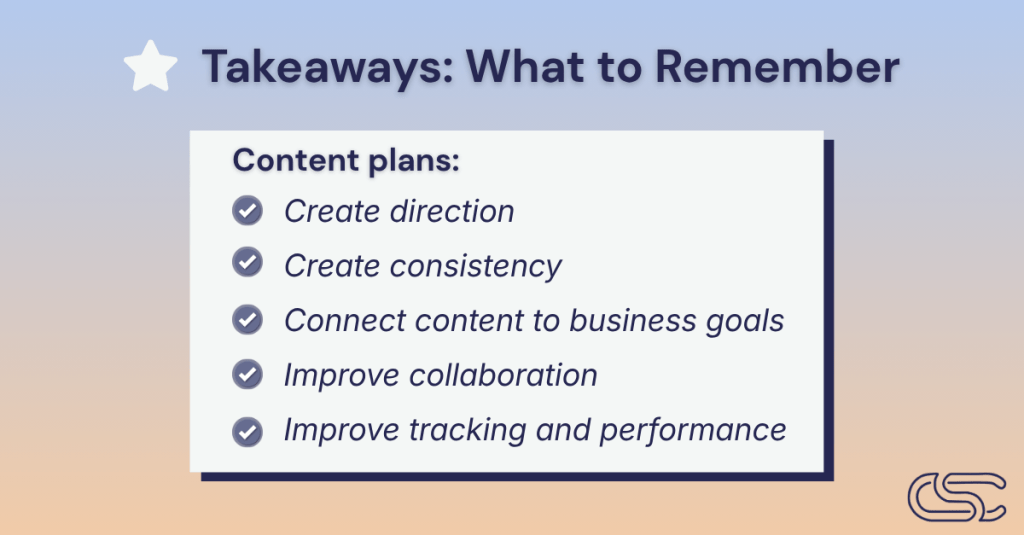
Creating a content plan doesn’t have to be complicated. Start with one idea. Build around it. Stay organized. Keep your goals in focus.
Here are the main points to remember:
- A content plan gives your ideas direction
- It helps you stay consistent and organized
- It connects your content to real business goals
- It makes collaboration easier
- It allows you to track and improve performance
Most importantly, it helps you create content with purpose.
Your Next Step
Ready to get started? Take one idea you’ve been sitting on and map it out. Ask yourself:
- Who is this for?
- What value does it provide?
- Where will it be shared?
Then build your plan from there. Content creation isn’t about doing more. It’s about doing it better. Start small. Stay consistent. And keep creating with intention.
Good luck creating your content plan!
 Christian Schaaf's Blog + Portfolio
Leave a comment