I still remember the first time I noticed a branding mistake at work. A flyer was about to go out to families, and everything looked great until I spotted the wrong logo version and an off-brand color. It was a small detail, but it didn’t feel right. That moment stuck with me.
Why? Because branding is all about trust. When something looks off, even slightly, it can confuse your audience. If you’re starting your own brand or trying to improve one in your current role, here’s the truth: a strong brand is more than just a logo or a catchy slogan. It’s a full system that works together to tell a clear story.
Let’s walk through some of the most common brand design mistakes and how you can avoid them.
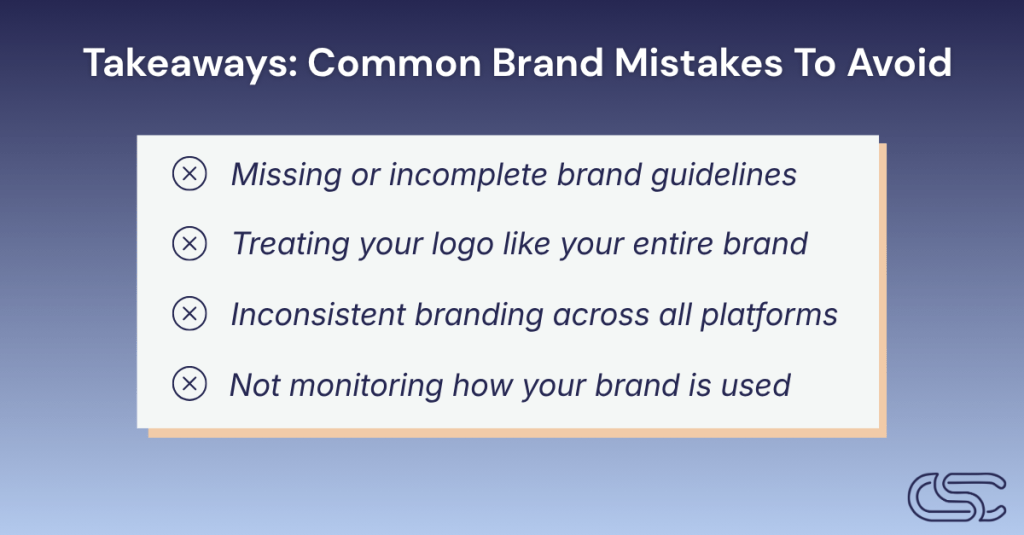
Mistake #1: Weak or Missing Brand Guidelines
One of the biggest mistakes brands make is not having clear brand guidelines. In “Make Your Brand Irresistible. Avoid These 9 Common Mistakes,” Brown Bag Marketing staff state that this is often where things start to go wrong. If your brand guidelines are unclear, inconsistent, or completely missing, your team will struggle to stay aligned.
Think of brand guidelines as your playbook. They should clearly outline:
- Logo usage (size, spacing, variations)
- Color palette
- Fonts and typography
- Tone and voice
- Imagery and visual style
Without this document, everyone is guessing. And when everyone guesses, your brand starts to drift.
How to avoid it: Take the time to build a strong, easy-to-use brand guidelines document. Make sure it’s accessible to your team and updated as your brand evolves.
Mistake #2: Treating Your Logo Like Your Entire Brand
Your logo matters. It’s often the first thing people recognize. But here’s the catch: it’s not your entire brand.
A brand is the full experience someone has with your organization. It includes your visuals, your messaging, your tone, and even how people feel when they interact with you. When you focus only on your logo, you miss the bigger picture.
How to avoid it: Build a complete brand system. Think about how your colors, typography, voice, and imagery all work together. Your logo should fit into that system and not carry it on its own.
Mistake #3: Inconsistent Branding Across Platforms
This one happens more often than you think. You might have great brand guidelines, but if they aren’t followed, they don’t help much.
In “5 Common Branding Mistakes (And How to Avoid Them)”, Terry Burrows, Managing Director at Ghost Design, highlights brand inconsistency as a major issue. Imagine this: Your website uses one tone. Your social media uses another. Your emails look completely different. It creates confusion. Consistency builds recognition. Recognition builds trust.
How to avoid it: Use your brand guidelines across all platforms, including your website, social media, email campaigns, and print materials. Make sure your team knows how to use them. Training and communication go a long way.
Mistake #4: Not Monitoring How Your Brand Is Used
Creating a brand is one thing. Protecting it is another. As Terry Burrows points out, many brands fail to “police” how their identity is used. This includes both internal and external use.
From personal experience, this is where a lot of behind-the-scenes work happens. In my role, I review materials created by others to make sure they follow brand standards before they are distributed. We also have a system where staff send materials to me for approval. It may seem like extra work, but it makes a big difference. This ensures that all materials follow our brand guidelines.
How to avoid it: Be proactive by reviewing materials before they go public, check how your logo appears on third-party sites, make sure ads link back to your organization, and create a simple approval process for your team. This keeps your brand clean, consistent, and professional.
Why These Mistakes Matter
At first glance, these mistakes might seem small. A slightly off color. A different font. A logo used the wrong way. But over time, these small issues add up. They can confuse your audience, weaken your credibility, and make your brand harder to recognize. On the flip side, strong branding creates clarity. It helps people understand who you are and what you stand for.
Quick Brand Check: Are You on Track?
Before you move on, take a moment to reflect:
- Do you have clear brand guidelines?
- Are they easy for your team to access?
- Is your branding consistent across all platforms?
- Do you review how your brand is used?
If you answered “no” to any of these, that’s okay. The good news is: you can fix it.
Bring It All Together: Your Next Step
Branding is not a one-time task. It’s an ongoing process that takes attention and care. If you’re serious about building a strong brand, start by reviewing what you already have. Look for gaps. Fix inconsistencies. Strengthen your system.
If you want to see what a brand guidelines document looks like in action, I’ve created one for my personal brand. Feel free to check it out below and use it as inspiration for your own.
Because at the end of the day, great branding isn’t just about looking good; it’s about being clear, consistent, and memorable. Take a few minutes today to review your brand. You might be surprised by what you find and how you can make it even stronger.
 Christian Schaaf's Blog + Portfolio
Leave a comment