Category: Portfolio

  • From Idea to Impact: Your Simple Guide to Building a Content Plan That Achieves Objectives

    From Idea to Impact: Your Simple Guide to Building a Content Plan That Achieves Objectives

    Creating content can feel overwhelming. You might have a great idea but struggle to bring it to life. Or maybe the ideas just aren’t coming at all. That’s completely normal. The good news is this: one strong idea can turn into a full content plan with the right approach.

    Don’t fret. With a little structure and strategy, you can create content that is clear, consistent, and effective. Let’s dive in.


    Why Content Planning Matters

    Content marketing plays a huge role in today’s digital world.

    “Crafting and delivering top-notch content are crucial for enhancing brand awareness, driving traffic and connecting with your target audience.”

    Aishwarya Suresh, Content Writer at Sprinklr, in “How to Create a Content Plan”

    In simple terms, good content helps people find you, trust you, and connect with your brand. But without a plan, it’s easy to waste time creating content that doesn’t support your goals. That’s where a content plan comes in.


    What Is a Content Plan?

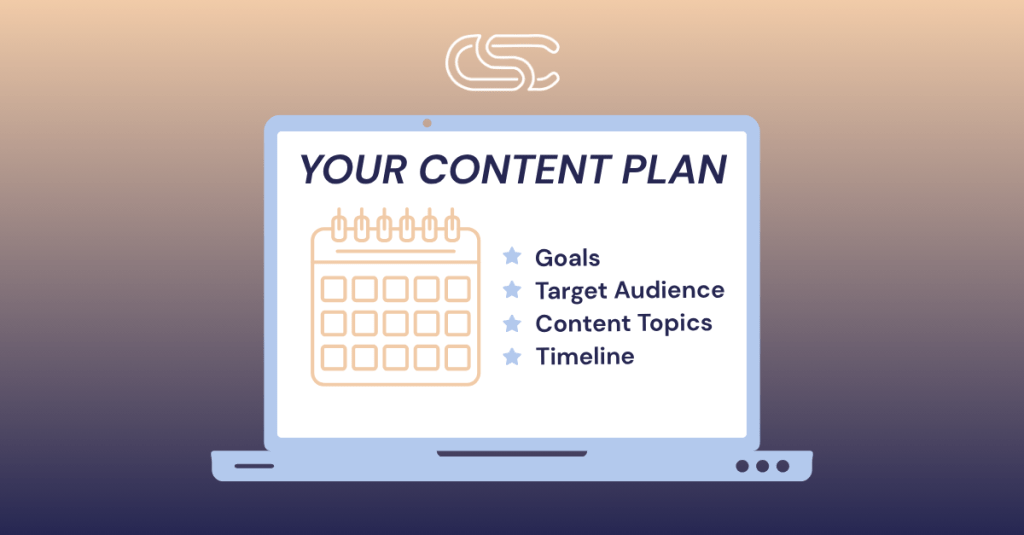
    A content plan is like a roadmap. It’s a strategic document that outlines:

    • Your goals
    • Your target audience
    • Your content topics
    • Your timeline

    Think of it as your guide for what to create, when to create it, and why it matters. Instead of guessing your next move, you have a clear direction.


    Why You Need a Content Plan

    A strong content plan keeps everything aligned. Tushar Pol, in “The Ultimate Guide to Creating a Content Marketing Strategy,” explains that content helps brands connect with audiences in a crowded digital space. A plan ensures that connection is meaningful.

    Here’s what a content plan helps you do:

    • It keeps your content tied to your business goals.
    • It helps you avoid creating content that doesn’t add value.
    • It makes it easier to explain your strategy to your team or leadership.
    • It creates a smoother workflow so you know what to post and when.
    • It allows you to track performance and improve over time.

    In short, it brings clarity to your content process.


    How to Create a Content Plan
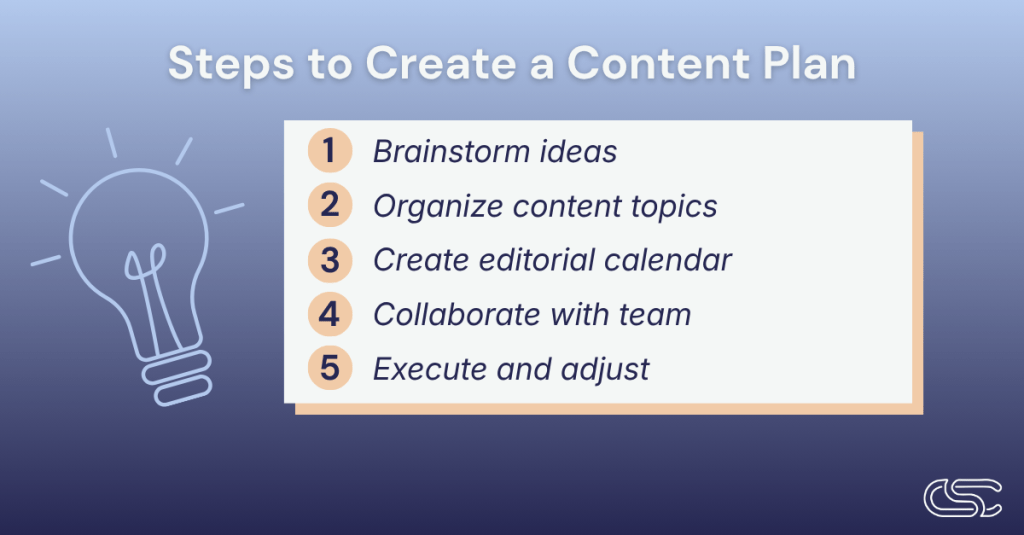
    According to a Mailchimp article titled “Essential Content Planning Tips for Smarter Marketing,” there are a series of steps to create a content plan that will help achieve business objectives, streamline your workflow, and improve target audience engagement. Let’s break it down.

    Step 1: Brainstorm and Research Ideas

    Every great content plan starts with ideas. Begin by writing down anything that comes to mind. Don’t overthink it. The goal here is to get your ideas out, not to make them perfect. When you have a list, start digging a little deeper.

    Look at what people are searching for online to spot trends. Take time to review what your competitors are posting and see where there might be gaps. You can also listen to your audience by paying attention to comments, questions, and conversations happening on social media.

    If you can, involve others in this process. Bringing in teammates from different departments can lead to fresh ideas you may not have thought of on your own.

    Step 2: Organize and Prioritize Topics

    Now that you have your ideas, it’s time to bring order to the chaos. Start by grouping similar ideas together. You might notice themes begin to form, which can help you create stronger, more connected content. Think about who each piece is for and what goal it supports.

    From there, decide what matters most right now. Some topics may be tied to a specific season or event, while others may fill a gap in your current content. Focus on the ideas that will have the biggest impact.

    This step helps turn a long list of ideas into a focused and strategic plan.

    Step 3: Build an Editorial Calendar

    This is where your content plan really starts to take shape. An editorial calendar helps you map out what you are creating and when it will be published. It also keeps everyone on the same page. Instead of guessing what comes next, you have a clear schedule to follow.

    Break the process into simple stages like drafting, editing, designing, and approval. This makes each piece of content easier to manage. You can also plan ahead for how each piece will be shared, whether that’s through social media, email, or other channels.

    Having a clear calendar keeps your workflow steady and reduces last-minute stress.

    Step 4: Collaborate with Your Team

    Content creation works best when people work together. Take time to build a clear process with your team. Everyone should understand their role and what is expected of them. This helps avoid confusion and keeps projects moving forward.

    One way to do this is by creating simple content briefs. These give direction on the goal, audience, and message for each piece. When everyone has the same information, the final product is stronger and more consistent.

    Good collaboration leads to better content.

    Step 5: Execute and Adjust

    Now it’s time to put your plan into action. Start publishing your content based on your schedule. As it goes live, pay attention to how it performs. Look at what people are engaging with and what might be falling flat.

    This is your chance to learn and improve. If something works well, build on it. If something doesn’t, don’t be afraid to make changes.

    A content plan isn’t meant to be set in stone. It should grow with you over time. The more you adjust and refine, the stronger your content will become.


    Key Takeaways: Build Smarter, Not Harder
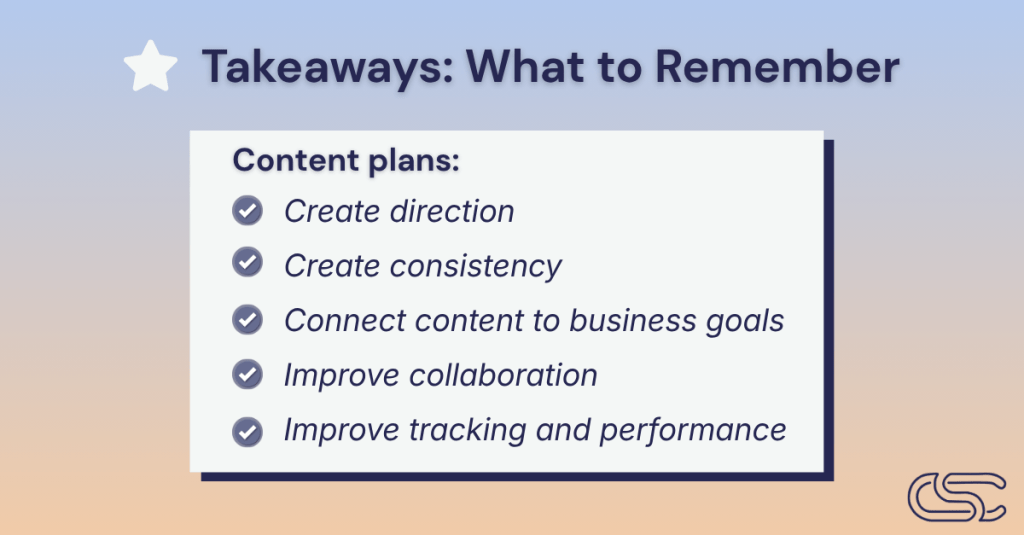
    Creating a content plan doesn’t have to be complicated. Start with one idea. Build around it. Stay organized. Keep your goals in focus.

    Here are the main points to remember:

    • A content plan gives your ideas direction
    • It helps you stay consistent and organized
    • It connects your content to real business goals
    • It makes collaboration easier
    • It allows you to track and improve performance

    Most importantly, it helps you create content with purpose.


    Your Next Step

    Ready to get started? Take one idea you’ve been sitting on and map it out. Ask yourself:

    • Who is this for?
    • What value does it provide?
    • Where will it be shared?

    Then build your plan from there. Content creation isn’t about doing more. It’s about doing it better. Start small. Stay consistent. And keep creating with intention.

    Good luck creating your content plan!
  • Find Your Voice: How to Build a Brand People Feel

    Find Your Voice: How to Build a Brand People Feel

    I was scrolling through social media the other day when I noticed something interesting. I kept stopping on certain posts, even when I didn’t know who they were from. Some felt fun and light. Others felt bold and confident. A few felt warm and welcoming.

    That’s when it clicked. It wasn’t just the visuals pulling me in. It was the voice.

    That moment stuck with me. It showed me that a strong brand voice is more than words on a screen. It’s a feeling. It’s the reason we connect with certain brands and not others.

    As I’ve worked on building my own brand, I’ve realized how important it is to shape that feeling with intention. Your brand voice helps people understand who you are, what you stand for, and why they should care. Let’s break down how you can build a brand voice that truly connects and resonates with your audience.


    What Is Brand Voice (and What Isn’t)?

    Before we build a brand voice, we need to define it.

    “A brand voice is your company’s unique identity and perspective inspired by your core values, mission, and personality.”

    Ankit Vora, Senior Content Writer at SemRush, in Brand Voice: What It Is and How to Define It (+ Template)

    Vora asserts that your brand voice is your brand’s personality. It’s how your brand thinks and feels. It comes from your mission, your values, and what you believe in.

    Brand tone, on the other hand, is how you express that voice. It’s the words you choose, the style you use, and how you adjust your messaging depending on the situation.

    Think of it like this:

    • Voice = your personality (this stays consistent)
    • Tone = your mood (this can shift slightly)

    A great example of this is Brooks Running. They don’t follow the typical “grind and hustle” sports messaging. Instead, their voice is joyful, inclusive, and focused on the everyday runner. Check out their most recent Instagram post:

    Brooks Running’s Instagram Post about their limited Untamed Collection.

    You can see their excitable and runner-centric language in their caption: phrases like “go wild” and “express yourself” feel fun and inviting. They even use emojis to keep things light and energetic. Their tone supports their voice, but the core identity stays the same.

    And that’s the goal: consistency with personality.


    Why Brand Voice Really Matters

    Here’s the truth: people connect with feelings. We’re emotional by nature. When we support a brand, we want it to reflect who we are and what we believe in.

    In “Brand voice: What is it and why it matters,” Jamia Kenan, Senior Social Media Specialist at Sprout Social, states that brand voice will help your company stand out in a saturated landscape. Logos and visual identity are just the first steps in building recognition. Your written content and video scripts deserve the same level of care and attention.

    A strong brand voice helps you:

    • Stand out in a crowded market
    • Build trust with your audience
    • Create memorable experiences
    • Make your content instantly recognizable

    Think about it. When brand voice is done well, you can recognize a brand before you even see the name.

    In today’s world, where content is everywhere, originality is what makes people stop scrolling. Your voice is what makes them stay. With the rise of AI and automation, this matters even more. The brands that win are the ones that still feel human.


    How to Develop Your Brand Voice

    Building a strong brand voice doesn’t happen overnight. It takes intention, reflection, and a bit of research.

    In “What is a brand voice? Plus, 7 tips to develop one,” Whitney Vige, Content Writer at Asana, offers some practical steps to help you get started.

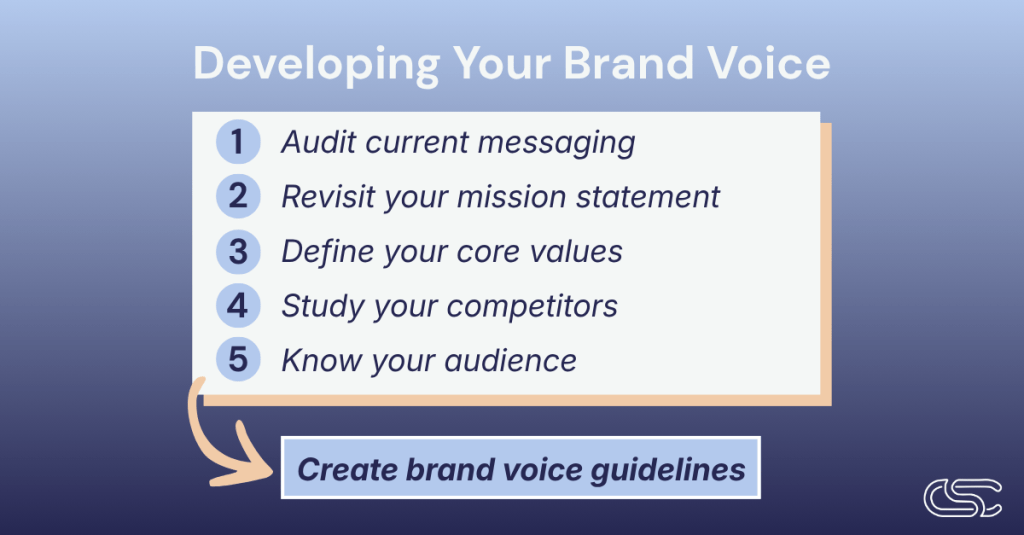
    1. Audit Your Current Messaging

    Start with where you are right now. Look at your website, social media posts, emails, and any other content. Ask yourself:

    • Does this sound like one consistent brand?
    • What emotions does this create?
    • Where are the gaps or inconsistencies?

    This gives you a baseline. You can’t grow if you don’t know your starting point.

    2. Revisit Your Mission Statement

    Your mission is your “why.” It should guide everything you say and how you say it. If your mission is about empowering others, your voice should reflect that. If it’s about innovation, your voice might feel bold and forward-thinking. Your voice should always connect back to your purpose.

    3. Define Your Core Values

    Your values shape your personality. If your brand values community, your voice should feel inclusive. If your brand values performance, your voice might feel strong and focused.

    Are no values defined? That’s a great starting point. This will serve as your foundation.

    4. Study Your Competitors

    Take a look at brands in your space. Ask yourself:

    • What does their voice sound like?
    • What makes them stand out?
    • Where is there room for you to be different?

    The goal isn’t to copy. It’s to find your unique lane.

    5. Know Your Audience

    Who are you talking to? Your audience’s age, interests, and behaviors all shape how you communicate. The way you speak to a group of high school students will be different from how you speak to corporate professionals. Meet your audience where they are.

    6. Create Brand Voice Guidelines

    After you’ve done the research, document it. This is where everything comes together. Your brand voice guidelines should include:

    • Your brand personality (3–5 key traits)
    • Words you use often
    • Words you avoid
    • Tone examples (do’s and don’ts)

    This helps keep your messaging consistent across your team, your platforms, and your content.


    Your Next Step: Build It and Stick With It

    Developing a strong brand voice comes down to one thing: intention. You can’t just hope your brand “sounds right.” You have to build it, test it, and refine it over time.

    If you’re not sure where to start, try this simple checklist:

    • Review your current content
    • Define your mission and values
    • Study your competitors
    • Understand your audience
    • Write out your brand voice guidelines
    • Apply it consistently across everything

    Conduct the research. Build the brand voice document. Stay consistent.

    When you do, your brand won’t just be seen; it will be felt. Happy creating!

  • From Overwhelmed to Job-Ready: How to Build a Portfolio that Gets You Hired

    From Overwhelmed to Job-Ready: How to Build a Portfolio that Gets You Hired

    Looking for a new job can feel overwhelming. You may be wondering:

    Where do I even start?
    How do I package my work?
    Do I need to update my projects or start from scratch?

    If you’re in this phase right now, I here you and I see you. I am currently rebuilding my portfolio, refining old projects, and shaping my personal brand. There’s a lot that goes into it. It can feel like a full-time job on top of your actual job.

    But as I’ve worked through this process, I’ve picked up a few key lessons. If you’re in the same place, I hope these help make things feel a little more clear and a lot more doable.

    Let’s dive in.


    Your Portfolio Is More Than a Gallery

    “Your portfolio is more than just a showcase. It’s your story. It’s a breathing, living document of your story. Who are you? What can you do? Your portfolio is not a dumping ground.”

    Evergreen Odeh, Building a Portfolio That Gets You Hired (Even Before You Feel Ready)

    Evergreen does an excellent job explaining everything a portfolio encompasses. It is not just a collection of your best work.

    It’s your story.

    Think of it like this: a hiring manager is trying to understand who you are in just a few minutes. Your portfolio is your chance to guide them. This means your portfolio should not be static. It should show:

    • How you think
    • How you create
    • How you solve problems

    Don’t just show the final product. Show the journey.

    How did you go from idea to outcome?
    What decisions did you make along the way?
    Why did you choose one direction over another?

    This is where you stand out.


    Where Should You Build Your Portfolio?

    Before you build, you need a place to host your work. There are plenty of great options, and each one fits different needs.

    In “How to Make a Portfolio That Gets Jobs and Clients,” Tom Gerencer offers a few options to consider:

    • Behance: A free platform where you can share projects, get feedback, and get discovered by recruiters.
    • Dribbble: Great for UX, product, and branding designers. It includes job boards and a “Hire Me” feature.
    • Adobe Portfolio: Ideal if you already use Adobe Creative Cloud. It offers clean templates and easy integration with Behance.
    • Squarespace: Best for building a fully branded, professional website. It gives you full control over design and layout.
    • Carbonmade: A simple drag-and-drop builder that’s easy to use and visually strong.

    I’m personally using Squarespace because I wanted a polished, fully branded site where recruiters can easily view my work.

    My advice? Choose the platform that fits your goals and skillset. Don’t overthink it. The content matters more than the tool.


    How to Build a Portfolio That Gets You Hired

    Now that you have a place to build, let’s talk about what actually goes inside. Let’s look at some tips from Robert Half’s “How to create a digital portfolio that gets you hired.”

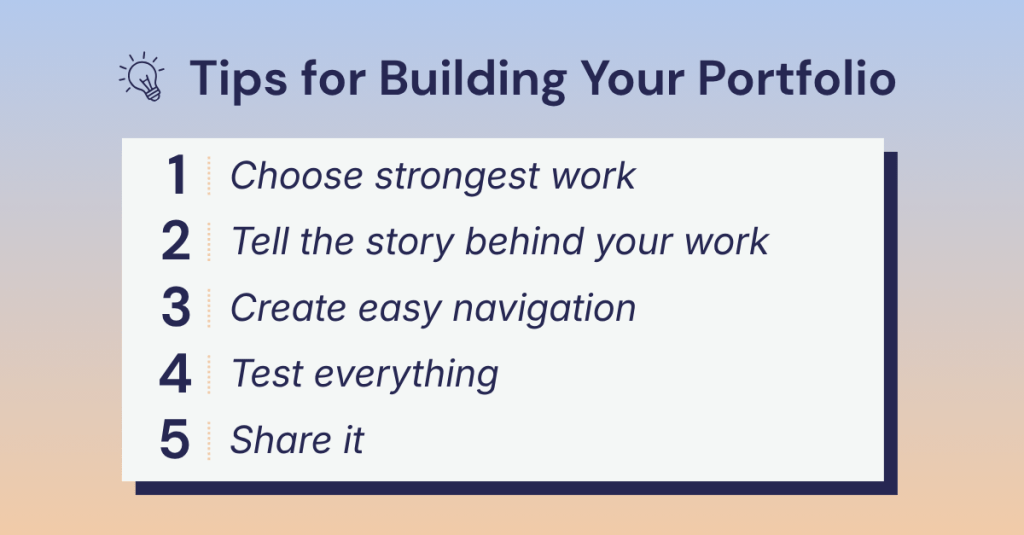
    1. Choose Your Strongest Work

    You don’t need to include everything in your portfolio. Aim for 7–10 strong projects that show:

    • Your core skills
    • Your industry experience
    • Your creative range

    Keep your work recent when possible. Quality always beats quantity.

    2. Tell the Story Behind the Work

    This is where many portfolios fall short. Well-written, compelling descriptions and case studies add incredible knowledge and give the employer a sneak peek into your creative mind.

    Don’t skip this part. Each project should include a short case study. They can be structured in different ways, but here are a few questions they should answer:

    • What was the goal?
    • Who was the audience?
    • What was your process?
    • What was the outcome?

    This is your chance to show how you think, not just what you make.

    3. Make It Easy to Navigate

    Hiring managers are busy. If they can’t find your work quickly, they’ll move on. Keep your layout clean, simple, keep menus clear, and easy to scan. Don’t be afraid to use white space. The main takeaway? Don’t overcomplicate things that distract from your projects.

    You can organize your portfolio by:

    • Relevance (industry or type of work)
    • Impact (skills or strengths)

    4. Test Everything

    Before you share your portfolio, test it. Do images load quickly? Does it work on mobile and desktop? Are there any typos? Better yet, have a friend or mentor review it. Fresh eyes catch things you might miss.

    5. Share It With the World

    Once your portfolio is ready, don’t keep it hidden. Share it on LinkedIn, add it to your featured section, and talk about your work. You created it: let people see it.


    Bring It to Life With Real Work

    Want a real example? As I rebuild my own portfolio, I’ve created a branding document that walks through my full process of how I created my brand.

    It’s a great example of how to:

    • Show your thinking
    • Present your work clearly
    • Tell a complete story

    If you’re just getting started, creating something like this is a great first step. Take a peak below.


    Final Thoughts: Start Where You Are

    Building a portfolio can feel like a lot. Start with what you have. Refine as you go. Keep improving over time. Your portfolio is not a one-time project. It’s something that grows with you.

    And remember: you’re not just showing your work. You’re showing what your capable of.

    Now go build something you’re proud of. You got this!

  • Designing the Story: How to Make Your Brand Stand Out in a Noisy World

    Designing the Story: How to Make Your Brand Stand Out in a Noisy World

    In today’s digital world, we are constantly scrolling, clicking, and consuming content. Ads blend together. Posts get skipped. Messages are forgotten almost as quickly as they appear.

    So what actually sticks?

    Stories.

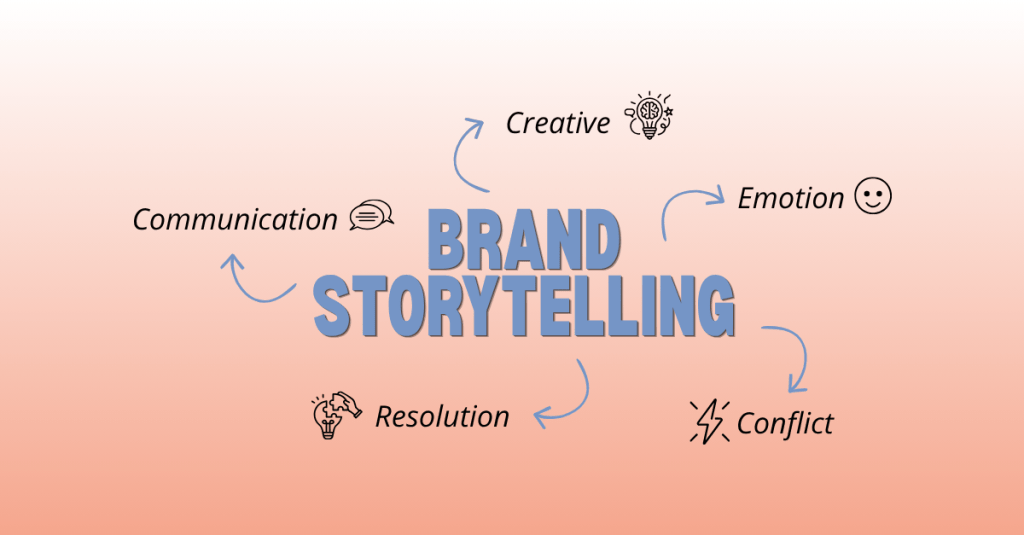
    People don’t remember facts. They remember stories. That’s where brand storytelling comes in.

    “Brand storytelling is the strategic practice of using narrative techniques to communicate your brand’s values, mission, and personality across digital channels to create emotional connections with audiences.”

    Dan Hughes, What Is Brand Storytelling? The Complete Guide for Digital Marketers in 2025

    In a world where consumers see thousands of messages every day, storytelling is how you stand out, and more importantly, how you’re remembered.


    What Is Brand Storytelling (Really)?

    At its core, brand storytelling is not about your product. It’s about your people. It’s about the problems they face, the journey’s they’re on, and how your brand fits into that journey.

    • the problems they face
    • the journey they’re on
    • and how your brand fits into that journey

    The biggest mindset shift? The audience is the hero. Not the brand.

    Your role is to guide them.


    How to Craft an Effective Brand Story

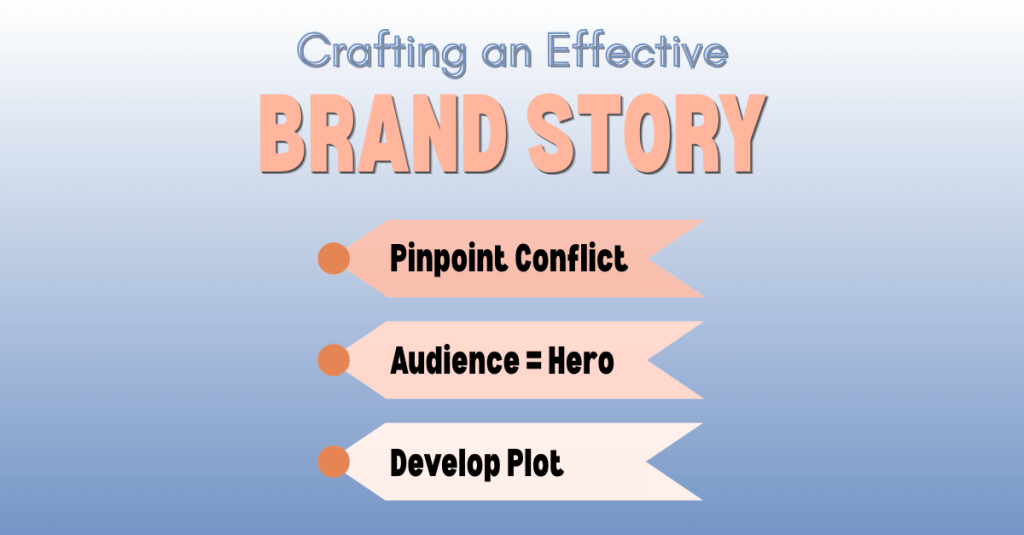
    A strong brand story doesn’t happen by accident. It’s built with intention. Drawing from insights by Ally Heinrich, here’s a simple framework:

    1. Pinpoint the Conflict

    First, identify the conflict. What is your audience struggling with? What problem are they trying to solve? Without a clear challenge, there’s no reason for a story to exist.

    2. Make Your Audience the Hero

    Next, position your audience as the hero. Your brand is not the center of the story. Your audience is. You are there to support them, guide them, and help them move forward.

    3. Develop the Plot

    Finally, develop the journey. Think about where your audience starts, what obstacles they face, and how things change by the end. That transformation is what makes your story meaningful.

    Great brand stories don’t just inform; they transform.


    What Content Formats Work Best?

    There are many ways to tell a story. What matters most is how clearly and effectively the story is told. The Breezy Company offers some tips on which channels to use to create your brand story:

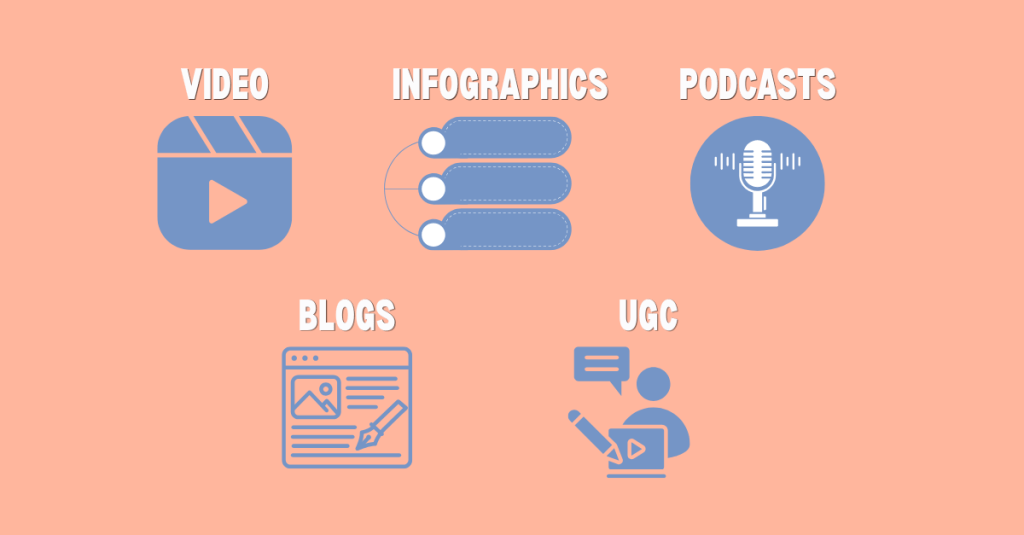
    Video

    Video is one of the most powerful formats because it combines visuals, motion, and emotion. Whether it’s a short-form clip or a longer narrative, video can capture attention quickly and hold it.

    Infographics & Data Visuals

    Visual formats like infographics and data visualizations also play an important role. When done well, they turn information into something engaging and easy to understand.

    Podcasts

    Audio, such as podcasts, offers a more personal connection. It allows people to engage with your story while they go about their day, making it both accessible and impactful.

    Blogs

    Written content, like blogs, allows you to go deeper. You can build a narrative, guide the reader step by step, and create a more detailed experience.

    UGC

    And then there’s user-generated content. When your audience tells their own stories about your brand, it often feels more authentic and trustworthy than anything you could create yourself. UGC can boost conversion rates by up to 4.5%.


    What Metrics Actually Matter?

    Not all metrics tell the full story. Hughes asserts that it’s important to look at how people are actually engaging with your content instead of focusing only on surface-level numbers.

    Story completion rate is one of the most telling indicators. The goal is 70% for video and 60% for written content. If people are watching or reading all the way through, it means your story is holding their attention.

    Engagement quality also matters. A thoughtful comment or meaningful interaction is often more valuable than a simple like.

    Conversion rates help show whether your storytelling is leading to action. Comparing story-driven content to more traditional, product-focused content can reveal what truly resonates.


    Why Brand Storytelling Matters More Than Ever

    The digital landscape is louder than ever.

    With endless scrolling, constant ads, and the rise of AI-generated content, people are overwhelmed with information. It’s easy for brands to get lost in the noise.

    “The brands that stand out are not the loudest. They’re the most relatable.”

    Everest Digital, Stories That Sell: Why Brand Storytelling Matters More Than Ever in 2025

    People are looking for something real. They want to feel connected, understood, and engaged. Storytelling gives brands a way to create that connection in a way that feels natural and human.


    Your Next Steps to Becoming a Brand Storyteller

    If you’re looking to become a stronger brand storyteller, start simple.

    Focus on your audience first. Think about their challenges, their goals, and what matters to them. From there, build a story that feels clear and intentional.

    Experiment with different formats. Pay attention to what connects. Refine your approach over time.

    Most importantly, keep practicing. Storytelling is not something you perfect overnight. It’s something you develop by doing.


    Bring Your Story to Life

    A strong brand story does more than explain what you do. It shows people where they’re going and how you can help them get there.

    If you’re ready to start creating more intentional, story-driven content, start with this simple prompt:

    Who is your audience, what challenge are they facing, and how does your brand help them move forward?

    You don’t need a perfect answer right away. The goal is to begin thinking in terms of story rather than features or products. Focus on the journey, not just the outcome.

    From there, you can begin to shape your narrative: what your audience is working toward, what obstacles they encounter, and how your brand plays a role in helping them get there.

    Start with the story. The rest will follow. Happy creating!

  • From Idea to Execution: My Content Creation Process

    From Idea to Execution: My Content Creation Process

    I’ve always been someone who sees the story first. Growing up, I loved “painting the picture” for friends and family and bringing ideas to life through words, visuals, and creativity. I was especially drawn to commercials, films, and design: the kind of content that makes you stop, watch, and feel something.

    That early interest grew into a passion for content creation and brand storytelling. Over the past five years, I’ve refined a process that helps me turn ideas into content that is both intentional and impactful.

    If you’re a content creator, marketer, or designer, this is for you.


    What Is Content Creation?

    Before diving into the process, it’s important to define what content creation actually is.

    “Content creation is the process of developing and sharing media in various formats to reach and engage your target audience.”

    Alex Lindley

    At its core, content creation is about connection. It’s not just about making something look good; it’s about creating something people feel.


    My 4-Phase Content Creation Process

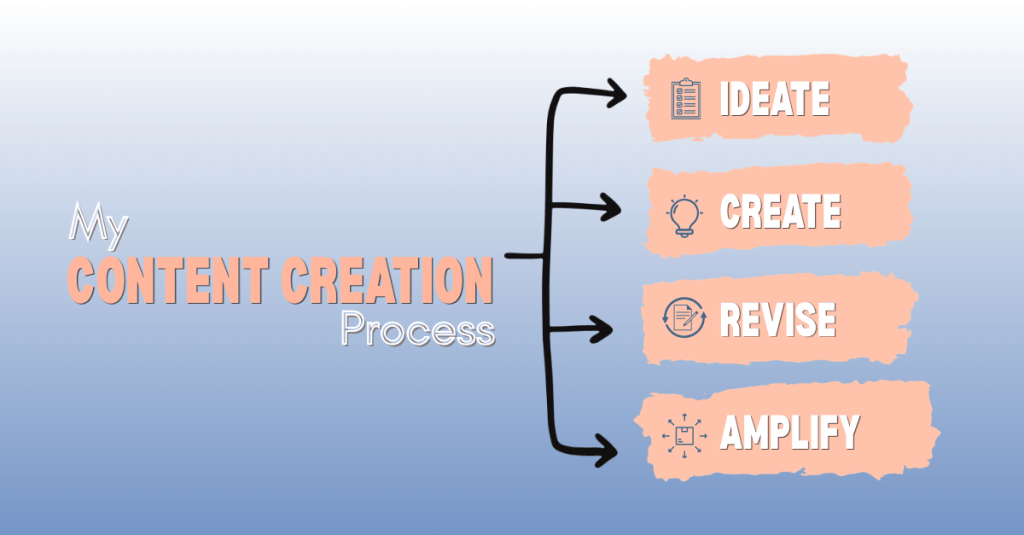
    Four-Stage Content Creation Process

    I follow a simple four-phase process inspired by Angela Tague’s framework: Ideate, Create, Revise, and Amplify. Each phase builds on the last to ensure the final content is both strategic and engaging.

    Phase 1: Ideate

    Every piece of content starts with an idea, but strong ideas don’t happen by accident. This phase is all about aligning creativity with strategy. Before I design anything, I take time to understand the audience, explore trends, and organize my thoughts. I create mind maps to generate ideas and tools like Trello to keep everything structured. This step sets the foundation for everything that follows.

    Questions to ask:

    • Who is this content for?
    • What problem does it solve?
    • Does this align with my brand or message?
    • Would I engage with this if I saw it online?

    Phase 2: Create

    When the idea is clear, it’s time to bring it to life. This is where strategy turns into visuals, copy, and content that people can actually see and interact with. While this phase is more hands-on, I always stay grounded in the original goal to make sure the content stays focused and effective.

    Questions to ask:

    • Does this still align with the core idea or goal?
    • Has the idea evolved in a way that improves the final outcome?
    • Is the message clear and easy to understand?
    • Would I stop and engage with this if I saw it online?

    Phase 3: Revise

    Content rarely comes out perfect on the first try. The revision phase is where I step back and refine the work to make it stronger. This includes editing for clarity, improving design elements, and getting feedback from others. Even small changes can make a big difference in how the content is understood and received.

    Questions to ask:

    • Is the message as clear as possible?
    • What can be simplified or improved?
    • Would someone outside of my field understand this?

    Phase 4: Amplify

    Creating great content is only half the job. Making sure it reaches the right audience is just as important. In this phase, I focus on distribution and performance. This includes optimizing for SEO, posting across platforms, and thinking about how the content can be repurposed. The goal is to extend the life of each piece of content and maximize its impact.

    Questions to ask:

    • Where will this content perform best?
    • How can I repurpose this for other platforms?
    • Is it easy for my audience to find and engage with?

    Why This Process Matters

    Having a clear content creation process makes everything more consistent and effective. It helps streamline production, keeps messaging aligned, and ensures that each piece of content has a purpose.

    “Every piece of content should help build your brand so that you become the first person people think of when they have a need you can fill.”

    Jon Loomer, The Secret to Consistent Content Creation

    This idea has stuck with me. Content is not random; it’s intentional.


    Tools That Support My Process

    The right tools can make a measurable difference, but more importantly, it’s about how you use them. These are a few tools I use to bring ideas to life:

    Each of these tools plays a role at a different stage of my process: from brainstorming ideas to executing and refining content.

    If you’re looking to explore more options, 22 Best Content Creation Tools for Creators by Cecilia Meis is a great resource to get started.


    Create with Purpose

    Content creation is more than just making posts; it’s about telling a story with purpose. From idea to execution, every step plays a role in building something meaningful.

    When you approach content with both strategy and creativity, you don’t just create: you connect.

    Ready to put this process into action? Download my content creation checklist and use it the next time you create.

    Happy creating!