Tag: writing

  • Creating My Own Podcast

    Creating My Own Podcast

    This week, I explored the process of creating my very own podcast: from developing the concept and planning the structure to learning the ins and outs of sound, scripting, and delivery. Before hitting record, I wanted to understand what makes a podcast engaging and professional. That began with diving into several readings that covered everything from microphone techniques to scriptwriting strategies. Below are my key takeaways and reflections from each piece that helped shape my understanding of podcast creation.


    Readings & Writings

    The Bare Bones: Camera Course for Film and Video – Chapter 8: Sound

    By: Tom Schroeppel

    Sound might not be visible, but it’s one of the most powerful storytelling tools. In this chapter, Schroeppel emphasizes that sound waves are spherical, traveling outward from their source. He compares microphones to our ears, explaining how both detect differences in frequency and amplitude. Frequency determines pitch (measured in Hertz, or Hz), while amplitude determines loudness (measured in decibels, or dB).

    I found it fascinating how Schroeppel described the physics behind sound, like how each 3 dB increase doubles intensity, and how this translates to practical audio work. He also detailed microphone types and pickup patterns, which was extremely helpful as I thought about what equipment I might use for my own recording. Dynamic and electret condenser mics each have their advantages, and their pickup patterns (omnidirectional, cardioid, and supercardioid) determine how sound is captured in different environments.

    What resonated most was his advice on recording clean, separate tracks for dialogue, sound effects, and ambience. Recording 30 seconds of “presence” or background noise after a scene helps create smooth transitions. This reinforced how intentional every sound decision should be, not just for technical quality, but for crafting a listener’s emotional experience.


    “The Art of Creating an Invisible Podcast Episode Script”

    By: Kevin Anderson

    Kevin Anderson’s article reminded me that podcasting is as much about preparation as it is about performance. He encourages creators to script strategically, not word-for-word, but enough to give structure and clarity. The goal is to make your podcast sound natural and unscripted, even if it’s been thoughtfully written.

    Anderson calls this approach the “invisible podcast script.” It’s invisible because it blends seamlessly into the host’s delivery: the listener doesn’t hear the preparation behind the performance. His five reasons for writing such a script stood out to me: it gives structure, ensures flow, builds professionalism, boosts confidence, and saves time in production. I also appreciated his breakdown of key script sections, from the opening “Welcome to” to the closing call to action.

    The takeaway: write the way you speak. Anderson’s emphasis on storytelling, relatability, and authenticity is exactly the tone I want for my podcast.


    “Creating a Great Podcast Script: 3 Methods Top Podcasters Use”

    By: Colin Gray

    Colin Gray expanded on the topic of scripting by breaking it down into three practical methods: the Word-for-Word Script, the Detailed Episode Outline, and the Bullet Point Plan. I liked how he explained that each has trade-offs, from precision and confidence to flexibility and spontaneity.

    For me, the detailed outline approach seems ideal. It allows me to stay on topic while still speaking conversationally. The bullet-point method also intrigued me because of its freedom, but it requires strong improvisation skills. At the end of the day, it’s important to figure out which method works best for you and to practice your script before pressing record.

    Gray’s closing point stuck with me: no matter which format you use, the goal is to make your delivery feel natural and connected. This felt like a recurring theme across all the readings. Podcasting, like good communication, is about making your audience feel part of the conversation.


    “Podcast Taglines, Hooks, & the Power of Words”

    By: Kevin Anderson

    In this piece, Anderson shifts focus to branding and memorability. He highlights how powerful a tagline can be for building a podcast’s identity. A simple, catchy introduction like “Welcome to Steal the Show with Michael Port. This is Michael.” instantly connects with listeners.

    He explains a few formats, including the straightforward tagline, the two-step format, and the bio format, that are all designed to make a podcast recognizable and relatable. What I found particularly helpful was his advice to use “hooks” throughout episodes to keep listeners engaged. These hooks might introduce recurring segments, like “Question of the Month” or “Interview of the Week,” giving structure and familiarity.

    This reading made me think deeply about how I’ll introduce myself and my show. I want something short and memorable: a phrase that instantly reminds listeners what my podcast stands for.


    “Best Podcast Tools of 2025: Make, Market, & Monetise Your Show”

    By: Matthew McLean

    McLean’s article provided a variety of practical resources. He listed tools that simplify the podcasting process, from recording to marketing. Tools like Alitu and EditPoint (iOS app) streamline editing by removing filler words and silences, while Podpage makes building a podcast website effortless.

    I especially liked learning about the Samson Q2U microphone and the Zoom PodTrak P4 recorder, both tools that balance quality with affordability. Tools like Beehiiv for newsletters and the Podcast Host Planner for organization also showed how podcasting extends beyond recording: it’s about planning, branding, and growing a community.

    This article reminded me that podcasting is both an art and a system. Having the right tools can make creativity flow more smoothly and turn ideas into polished episodes.


    “Podcast Presentation Skills | Honing Your Speechcraft”

    By: Robert Cudmore

    Cudmore’s article tied everything together by focusing on delivery. His advice on pace, pitch, and confidence really stood out. He encourages podcasters to speak as if talking to a friend; to let their natural voice come through. I appreciated his reminder to breathe, avoid jargon, and not fear imperfection.

    I also loved his discussion of storytelling structures like the Hero’s Journey, The Mountain, and Start in the Middle. These frameworks help build tension, shape narrative flow, and keep listeners hooked from start to finish. His reminder to include a call to action at the end of each episode felt like the perfect full-circle moment; it’s not just about sharing your message but inspiring your listeners to take the next step.

    Cudmore’s advice made me realize that podcasting is ultimately about connection, speaking with your audience, not at them.


    Research to Inform

    Below are some examples of podcasts and commercials I researched to inspire the creation of my own podcast.

    1.) New Heights with Jason & Travis Kelce: Taylor Swift
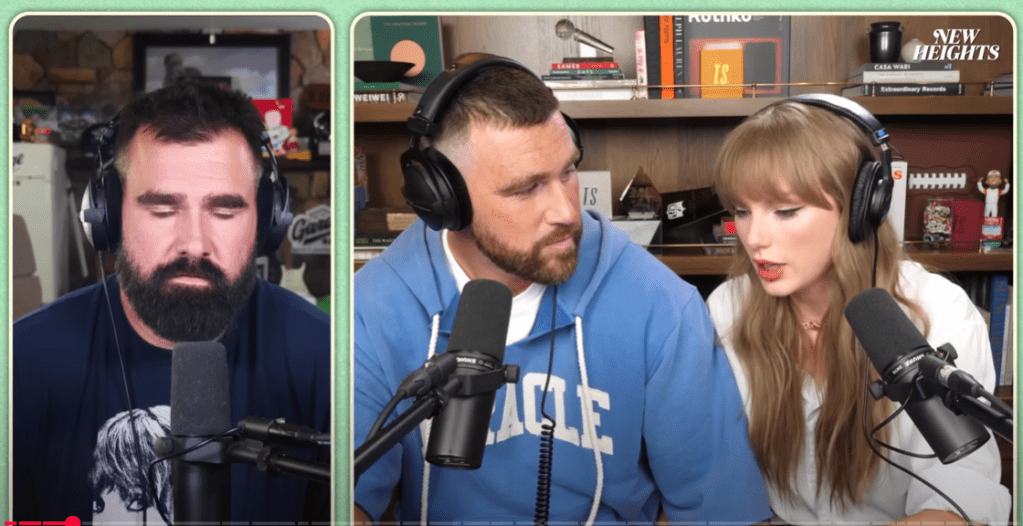
    From a structure standpoint, this episode really shows how the Kelce brothers know their audience. It starts with their usual mix of sports talk and brotherly banter, setting that familiar, relaxed tone fans love. Then, bringing in Taylor Swift shifts things to a deeper, more personal story, one that still feels natural but adds a whole new layer of interest. The conversation is funny and loose at times, but it also delivers real substance through her reflections and album reveal. It’s the perfect blend of casual and meaningful.

    What makes it work is authenticity. Jason and Travis stay true to who they are, and that chemistry pulls listeners in while letting Taylor shine in her own way. On top of that, the episode nails the marketing side: teasing the guest beforehand, building excitement, and then turning the live stream into a record-breaking event.


    2.) How to Save a Planet: “Show We Mine the Deep-Sea?”

    This episode dives into one of the trickiest questions in climate science. The hosts ask, should we mine the deep sea for materials that power our batteries? It’s a big topic, but they make it approachable from the very start. Instead of throwing heavy science at listeners, they break things down through storytelling and curiosity. They bring in experts, explore both sides of the debate, and guide the audience through each step like you’re learning together. What really stands out is how they balance serious information with moments of humor and honesty. It feels less like a lecture and more like a thoughtful conversation with a friend who happens to know a lot about the environment.

    The structure keeps the episode easy to follow: start with a question, bring in perspectives, unpack the details, and end with a takeaway. The hosts never sound condescending: they speak with the listener, not at them. That sense of collaboration makes it feel empowering rather than overwhelming. For my podcast, this approach is gold: I can structure the episode around a big question and leave the audience with something they can think about or try themselves. It’s storytelling with purpose, and it makes complex topics feel human.


    3.) Good Hang with Amy Poehler: Debut with Tina Fey
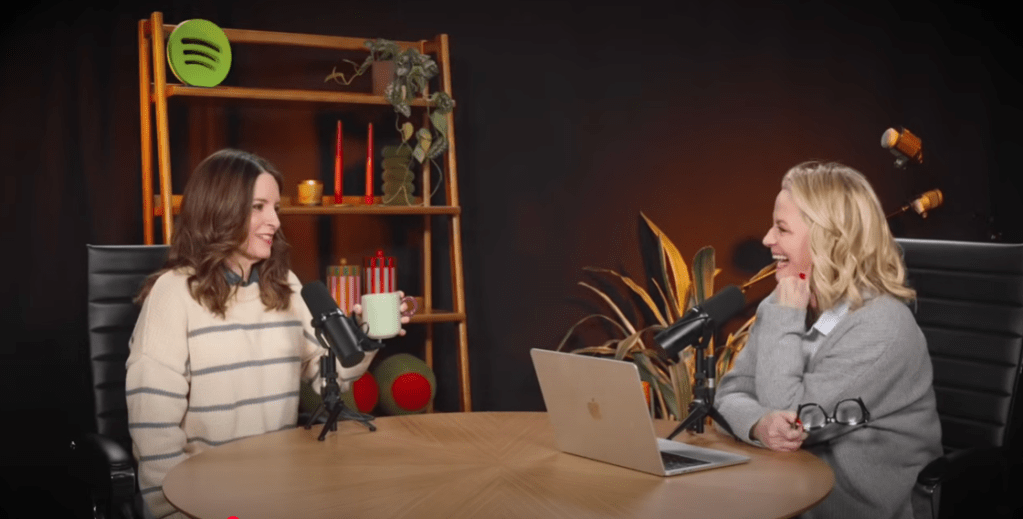
    Amy Poehler kicks off her podcast exactly how you’d expect: with warmth, humor, and a dose of chaos that feels completely real. Having Tina Fey as her first guest sets the tone perfectly. From the first few minutes, it feels like you’ve walked into a coffee meet-up with two longtime friends. They joke, reminisce, and bounce off each other effortlessly, and that chemistry keeps you listening even when the conversation wanders. There’s no forced structure or formal intro; it’s just two funny, smart people talking about life and work in a way that feels unfiltered.

    That relaxed energy is what makes Good Hang so inviting. Amy makes it clear she’s not here to preach or “fix” anyone’s problems. She just wants to hang out and make people laugh. It’s a reminder that not every podcast needs to teach a lesson or follow a rigid outline. Sometimes, the magic is in authenticity and connection.


    Create

    Pre-Production Planning Documents

    When brainstorming ideas for my podcast project, two very different concepts came to mind, and they are both connected to topics I care deeply about but expressed in completely unique ways.

    The first idea, “Preserve the Peaks,” grew out of my previous campaign project about climate change and visitor impact in National Parks. This podcast would continue that mission by exploring how people interact with protected spaces, specifically Rocky Mountain National Park in this episode. I’ve already gathered research and statistics to build a strong call to action, encouraging listeners to follow Leave No Trace principles and take mindful steps to protect the environment when they visit. The biggest challenge will be making sure it sounds natural rather than scripted. I plan to overcome that through practice: recording, listening back, and re-phrasing until it feels like I’m having a genuine conversation with the listener.

    My second idea takes a totally different approach: “The Ballroom Breakdown.” This would be a fun, lighthearted show that recaps and comments on the latest episode of Dancing with the Stars. It’s conversational, cheeky, full of personality, and something that lets me bring my own voice and humor into the mix. While it’s less serious than Preserve the Peaks, it still allows me to build storytelling and audience-engagement skills. I wasn’t completely sure if it fit the project’s criteria, but I wanted to explore it because it reflects another side of my interests: pop culture, performance, and creative commentary. I think this would be a very fun podcast to create and explore further.

    To compare the two, I created mind maps and scripts for each concept, which can be viewed in the planning document linked above. This helped me visualize tone, structure, and content, and gave me clarity on how each could connect with an audience. Even though the topics couldn’t be more different, they both let me practice my voice, structure ideas effectively, and focus on engaging listeners. I’m excited to keep developing one of these into a full podcast episode!

  • Lessons From the Peaks: What I Learned Creating a Passion Project

    Lessons From the Peaks: What I Learned Creating a Passion Project

    Getting the chance to do a passion project is a privilege. You get to dive into research on a topic you care about, create work in a medium you choose, and let your creativity lead the way. Your canvas is entirely your own.

    For me, that meant merging two things I care deeply about: national parks and preservation with my love for design. That’s how my campaign, Preserve the Peaks, an educational project about Rocky Mountain National Park that encourages visitors to enjoy the park responsibly, came to life. It has been an exciting journey, and I learned some lessons while working on this project worth sharing.


    Creating Content Takes Time

    If I had to pick one key lesson, it’s this: creating content takes time. More time than you expect. To truly meet your goals, you have to dedicate enough time for every phase: research, planning, production, and post-production.

    If you think something will take five hours, give yourself ten. Projects always demand more than you think. But here’s the good news: when you’re invested in the process, the time doesn’t feel wasted. Even though the work was time-consuming, I enjoyed every step because I believed in the project.


    Keep Track of Everything

    This project was my first time using a project management system, and I chose Trello. It completely changed the way I worked. I tracked every step, from the tasks I completed to the time each one took.

    Not only did this help me stay on schedule, but it also gave me insight into my workflow. Now I know how long it really takes me to research, draft, design, and polish content. That’s knowledge I’ll carry into every future project.


    Be Flexible: Things Will Change

    No matter how well you plan, your final project will almost never look exactly like the idea you started with. And that’s okay.

    At the beginning of Preserve the Peaks, I thought I was going to create only an interactive posters in Genially. Once I explored the platform, I realized I could build something bigger and more interactive: a game where visitors test their knowledge of responsible park practices. That change made the project more fun and more impactful.

    The lesson? Be open to change. Don’t shut down an idea before you’ve explored it. Sometimes those unexpected turns make your project stronger.


    Planning is Your Best Friend

    When life gets busy, it’s hard to carve out big chunks of time for creative work. That’s why planning is so important.

    I broke my project into small, actionable tasks that I could check off, even if I only had fifteen minutes to spare. Over time, those little steps added up to big progress. Trello made this process smooth, but any system that works for you will do the job. The key is having a plan and sticking to it.


    Have Fun

    At the end of the day, the most important part of a passion project is the joy it brings. You have the opportunity to explore an idea that excites you, so lean into it. Embrace each step, let yourself get lost in the creative process, and enjoy the ride.

    To see the full process behind Preserve the Peaks, check out my case study here.


    Final Thoughts

    Whatever project you choose to embark on, embrace it fully. Be open to change, manage your time wisely, plan your steps, and most importantly, have fun with it. Your passion deserves the time and care it takes to bring it to life.

  • The Starting Line: Finding the Lead in Racing and Writing

    The Starting Line: Finding the Lead in Racing and Writing

    The starting line was packed. Nervous jitters and excitement traveled through my body. Hearts were racing. The only sound I could hear was my own heartbeat. And then, we were off.

    Before I knew it, I was running with professional, sponsored athletes as we bounded down the streets of Indianapolis. Crowds lined the course, their cheers electric. The energy was contagious. With all the excitement, one thought kept popping in my mind: Stick to the race plan.

    The first half of the race flew by in what felt like seconds. I tucked myself into a group of three runners, and together, we shared the work. Taking turns at the front, we discussed goals between labored breaths, forming a bond as we moved through the field.

    As we weaved through crowded streets, mile markers ticked by. When we hit mile 10, the wear and tear of the race began to set in. Grabbing water while running, I kept pushing.

    The final stretch was a blur. Soreness crept through my legs, but the sound of the cheering crowd carried me forward. With one last push, I crossed the finish line. A volunteer placed a medal around my neck, and I stood there knowing I had given it everything I had.

    I completed the half marathon.


    This week, I dove into another challenge: mastering the art of writing leads. Much like the starting line of a race, the lead sets the tone for the journey ahead. It’s a part of writing I occasionally struggle with. Sometimes, a lead comes to me naturally and I know exactly how I want to start a writing piece. Other times, it feels like I’m at mile 10, pushing through to find the right words.

    When I’m stuck, I often jot down ideas for the rest of the project or write a rough draft before circling back to the beginning. In On Writing Well, William Zinsser offers valuable advice on crafting leads: there are no strict rules, but the goal is to always engage the reader with the first sentence of your piece.

    For my race story, I leaned into storytelling – one of Zinsser’s recommended techniques. Storytelling is my favorite approach. It’s why I chose to study Communications and Graphic Design. To me, writing is like designing: my goal is to paint a vivid picture, letting readers feel like they’re experiencing every step with me.

    Of course, not every lead lands perfectly. Some ideas come together with ease, while others require more effort. My advice? Focus on capturing your audience’s attention, and don’t be afraid to revisit and refine.

    So, what do you think? Did my storytelling hook make you want to read the whole story?

  • Writing for Yourself: The Power of Simplicity and Authenticity

    Writing for Yourself: The Power of Simplicity and Authenticity

    The Audience: How Well Do We Really Know Them?
    When we write, design, or create videos, we often focus on tailoring the message to our audience. But how well can we truly define them? Sure, research can help us get closer to understanding their interests and needs, but is it ever possible to know them fully? If we can’t pinpoint every detail, how do we ensure our work will resonate with our audience?

    This week, as I read On Writing Well by William Zinsser, I encountered a thought-provoking paradox:

    You must write for yourself.

    This idea felt counterintuitive at first, even contradictory to everything I have been taught. But as I considered it, I began to understand Zinsser’s statement.

    How Can Writing for Yourself Engage an Audience?
    You might wonder, “If I only write for myself, how will my audience connect with it?” Zinsser’s answer is simple: you can’t control whether your readers will resonate with your writing style or humor. Writing for yourself doesn’t mean ignoring the audience – it means trusting that your authentic voice will attract those who appreciate it.

    In “The Source of Bad Writing,” Steven Pinker argues that confusing prose often results from writers intentionally choosing unclear language. I know this firsthand: when I come across an article packed with complex jargon, I lose interest quickly. Writers sometimes forget that their readers aren’t experts on the subject and fail to clarify concepts or terminology. As a reader, I value simplicity and clarity – qualities that bring readers in rather than push them away.

    Write Like You’re Speaking to a Friend
    One piece of advice from Zinsser particularly resonated with me:

    Never say anything in writing that you wouldn’t comfortably say in conversation.

    In college, and even high school, I used large, complex words in my writing to sound more “academic.” I thought complexity meant quality. My goal was to impress teachers and professors with my vocabulary, but I often sacrificed meaning and clarity. Did my readers fully understand? When I re-read my work, did I even understand it?

    Simplicity is Key
    If readers struggle to grasp your message, they’re likely to stop engaging with your work. Crafting simple, clear sentences is an art that takes years to perfect, but it’s well worth the effort. Zinsser reminded me that if I lose my authentic voice and can’t make sense of my own words, I lose my purpose as a writer.

    I’ll leave you with this thought: great writing isn’t about being complicated or overly polished. It’s about connecting with readers in a way that feels honest and easy to understand. So, write for yourself, stay true to your voice, and simplicity is often the most powerful choice.

  • Exploring the World of Creative Possibilities

    Exploring the World of Creative Possibilities

    From the moment Christian visited The Philadelphia Art Museum as a child, his passion for art was ignited. A trip to the Photography Impressionist Exhibit introduced him to the beauty of landscapes, people, and animals captured through photos, sparking a curiosity that would shape his future interests. He found his love for storytelling and knew that he wanted to pursue a creative career.

    Raised in the small town of Phoenixville, Pennsylvania, Christian explored his artistic interests in high school. His passion for creativity led him to courses in Art and English, where he could express himself both visually and in written form. When he was finishing high school, he did not know the exact creative path to pursue, but he knew that he wanted to blend both art and writing in his future studies and career. He was excited to dive into this next chapter, but this was also daunting since he did not know his exact path.

    Christian continued to explore these interests at Elizabethtown College, where he pursued a double major in Communications and Graphic Design. Taking courses like Visual Communications, Typography, Graphic Arts, Public Relations, and Marketing solidified his choice in pursuing these majors. Christian’s path started to become clearer, and he was eager to learn and become involved in his college’s Communications and Art Departments. His college experience was filled with unique opportunities, including hosting his own radio show, becoming a Journalism tutor, collaborating with a local business to create a company logo, and working as a tour guide in Elizabethtown’s Admissions Office.

    Following graduation, Christian began his professional journey as a Communications Specialist at a special education school and has worked there for the past two years. In this role, he manages the school’s website and social media presence, maintains consistent branding, illustrates student life through photography, and creates promotional materials for the Development Department. Every day presents new opportunities for creativity, whether he’s writing, designing, or photographing moments around campus.

    Looking ahead, Christian hopes to continue down this creative path with dreams of becoming a creative director or design manager in the sports industry. His love for running makes this a very exciting path for him, combining his interest in athletics with his passions for branding, communication, and design. Now pursuing a master’s degree in Interactive Media and Communication, Christian is looking forward to expanding his skillset, building connections, and pushing himself to think more innovatively.

  • Mastering the Art of Simple Writing

    Mastering the Art of Simple Writing

    Have you ever felt lost and confused in a sea of words, trying to decipher complicated sentences? Writing that’s both clear and inviting takes practice. This week, I took a dive into William Zinsser’s On Writing Well, uncovering techniques that transform cluttered text into meaningful, easy-to-follow prose. Here’s a look at two lessons I am going to adopt to write understandable and easily digestible blogs.

    1. Simplicity is Key
    2. Creating Structure

    Simplicity is Key

    In the past, I thought that using complex vocabulary would make my writing more sophisticated and professional. However, Zinsser argues that simplicity is the true indicator of strong writing. Cluttered words and over-complicated phrasing can easily obscure meaning. The goal should be to make your writing as easy as possible for readers to understand, making it feel like a smooth transaction between writer and reader.

    Zinsser emphasizes that clear writing requires cutting out unnecessary words, jargon, and any complex language that might confuse readers. Simplicity requires discipline, and often the final, concise product is the result of several rounds of revision. When I began working as a school’s Communications Specialist a few years ago, I experienced this firsthand. In the first website article I was asked to write, I leaned toward formal language and complex vocabulary, the style of prose that I would use throughout my college essays. My boss pointed out that simplifying my sentences would make the article more accessible to our audience. It was a lesson that stuck with me: the clearer my writing, the more powerful it becomes for the reader.

    Creating Structure

    We’ve all skimmed past a big block of text, right? I know I have. A wall of advanced words can feel overwhelming. Structure invites readers in, breaking down ideas into digestible pieces. As the article “16 Blog Rules” suggests, using headers, lists, short paragraphs, and readable font sizes is essential for online writing. This visual structure not only enhances the reader’s experience but also makes it easier to find specific information.

    The “AU Style Guide” notes that structured writing also improves search engine optimization, increasing the chances of your article reaching a wider audience. With structured, easy-to-read writing, readers are more likely to stay engaged and ultimately get the most out of what you have written.

    Final Thoughts

    Incorporating clarity, simplicity, and structure is essential to create effective communication pieces. I hope these tips make this blog post both enjoyable and easy to read. Let me know, did you find it easy to navigate and understand? Fine-tuning my writing is a work in progress. Remember, simplicity is the way to go!