Social media has transformed how brands communicate with their audiences. In Social Media ROI: Managing and Measuring Social Media Efforts in Your Organization, Olivier Blanchard explains that communication has shifted from a monologue to a dialogue. Before social media, brands relied on one-way messaging. Organizations pushed out ideas through ads, and audiences either accepted or ignored them. There was little opportunity for response or interaction.
Today, social media platforms allow consumers to share opinions, react to content, and engage directly with brands. Consumers can also communicate with each other, which Blanchard refers to as lateral engagement. This shift helps audiences feel included in the brand’s story rather than simply receiving a message.
As Sharon Lee Thony explains in The Marketing Campaign Playbook: A Step-by-Step Guide for Entrepreneurs, Marketers, & Small Business Owners, social media has become an essential tool for brand building, promotion, and community growth through a balance of paid and organic campaigns. New Balance is a strong example of how these strategies work together in practice.
Why New Balance? A Runner’s Perspective
New Balance is an American athletic footwear and apparel company with deep roots in running and performance sports. As a runner and fitness enthusiast, I have been a long-time supporter and consumer of the brand, making their social media strategy especially interesting to analyze. I researched two of their platforms: Instagram and TikTok.
Instagram: Athlete Stories and Brand Identity
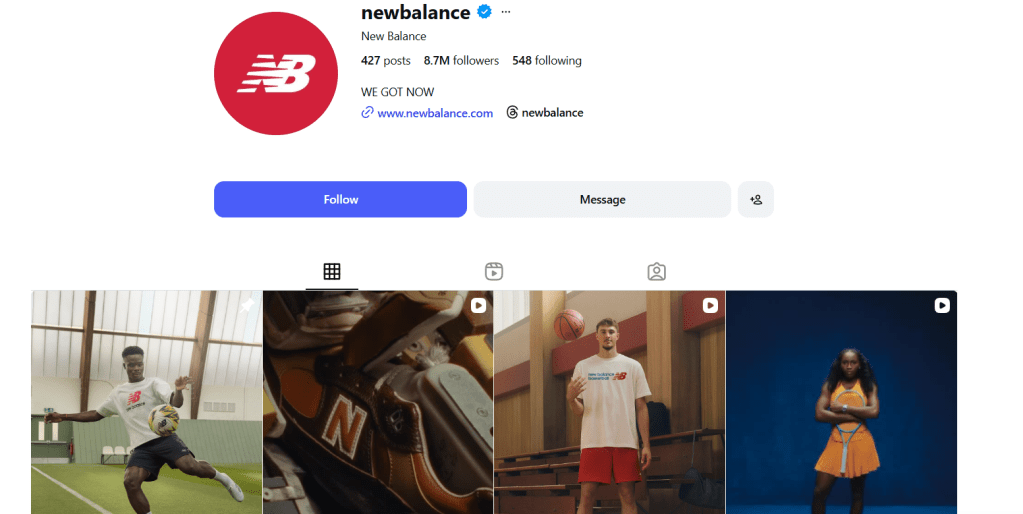
New Balance’s Instagram account has 8.7 million followers and features a mix of organic and paid content. A majority of their organic content focuses on athlete and community storytelling. Many posts highlight sponsored athletes and their accomplishments, helping build an emotional connection with followers.
One example is a post featuring Sydney McLaughlin after she broke the American record in the 400 meters at the Track and Field World Championships. The image shows her holding the American flag and gold medal, celebrating both personal and national success. Posts like this show how New Balance supports athletes beyond products and helps consumers feel like part of the journey.
These organic posts typically receive between 10,000 and 20,000 likes, with some reaching over 200,000. Paid posts on Instagram tend to focus more on product launches, such as Cooper Flagg’s signature sneaker, and often receive higher shares. This suggests that New Balance prioritizes storytelling for connection and paid content for reach.
TikTok: Energy, Authenticity, and Interaction
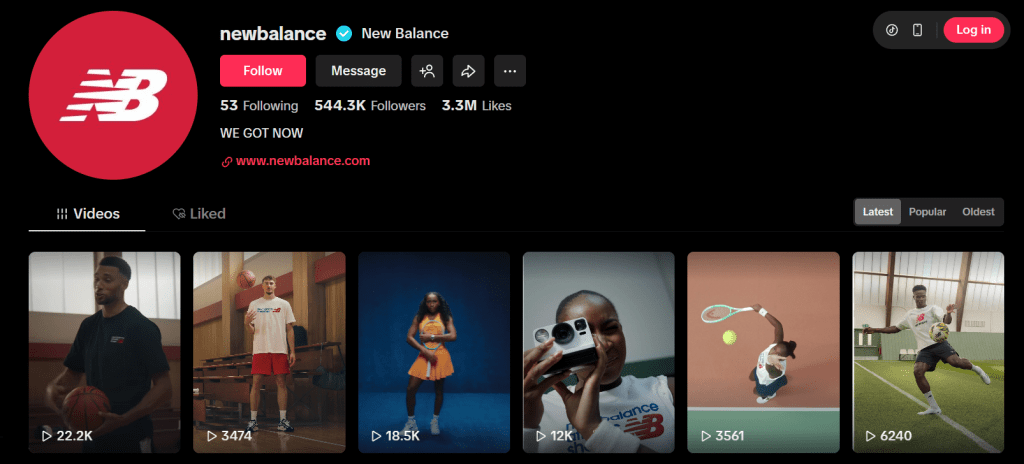
New Balance’s TikTok account has over 544,000 followers and more than 3.3 million likes. Much of the content overlaps with Instagram, but TikTok places greater emphasis on movement, behind-the-scenes moments, and high-energy visuals.
The brand’s “We Got Now” campaign features athletes like Coco Gauff and Kawhi Leonard and focuses on living in the present and chasing goals with confidence. These videos give viewers a closer look at athletes’ training and daily routines, making the content feel more personal. The campaign has a balance between organic and paid posts, where organic posts show the athletes in action, and the paid posts promote the athletes’ specific products.
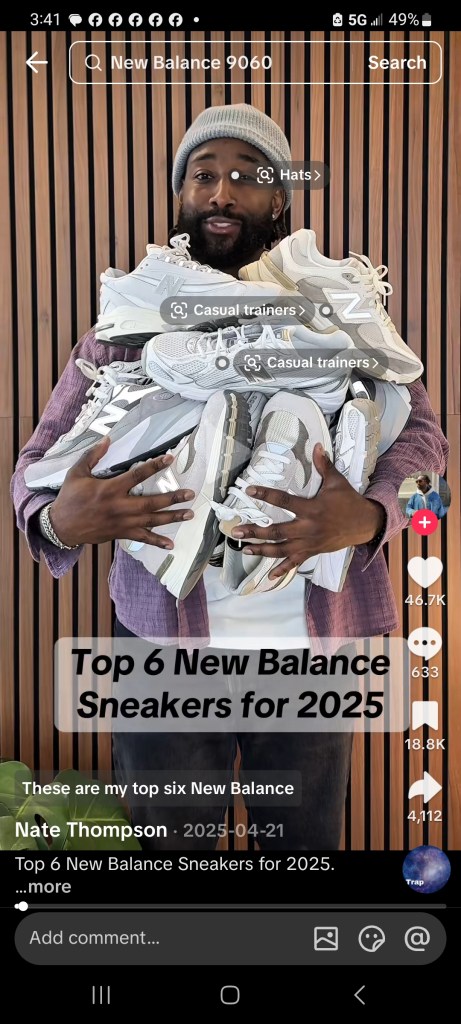
New Balance also uses user-generated content on TikTok, such as reviews and product showcases from everyday runners. These posts rely heavily on likes and saves, allowing users to bookmark content and return to it later. This reflects Blanchard’s idea of lateral engagement, where consumers influence each other through shared experiences and opinions.
Opportunities to Strengthen Engagement
While New Balance has a strong social media presence, there are some opportunities to further improve engagement. One noticeable area is direct interaction in the comments section. When reviewing Instagram and TikTok posts, there were very few replies from the brand, even on posts that sparked conversation. Responding to comments could help strengthen the sense of community and reinforce the idea of social media as a dialogue rather than a monologue.
New Balance could also encourage more participation through interactive features. Instagram tools like polls or question stickers could invite fans to engage with athletes, while TikTok challenges or branded hashtags could inspire more user-generated content.
Finding the Balance: We Got Now
Overall, New Balance does an effective job balancing organic and paid social media content. Organic posts build trust and connection through storytelling, while paid campaigns help amplify reach and product awareness. Engagement metrics such as likes, shares, and saves reveal how the brand tailors content for each platform.
In the spirit of their campaign, New Balance doesn’t just say “We Got Now.” They show it by creating content that builds community and meets consumers where they are. The question now is: We Got Now…will you get New Balance today?
 Christian Schaaf's Blog + Portfolio