Tag: miro

  • Case Study: Designing WalletWize

    Case Study: Designing WalletWize

    Introduction

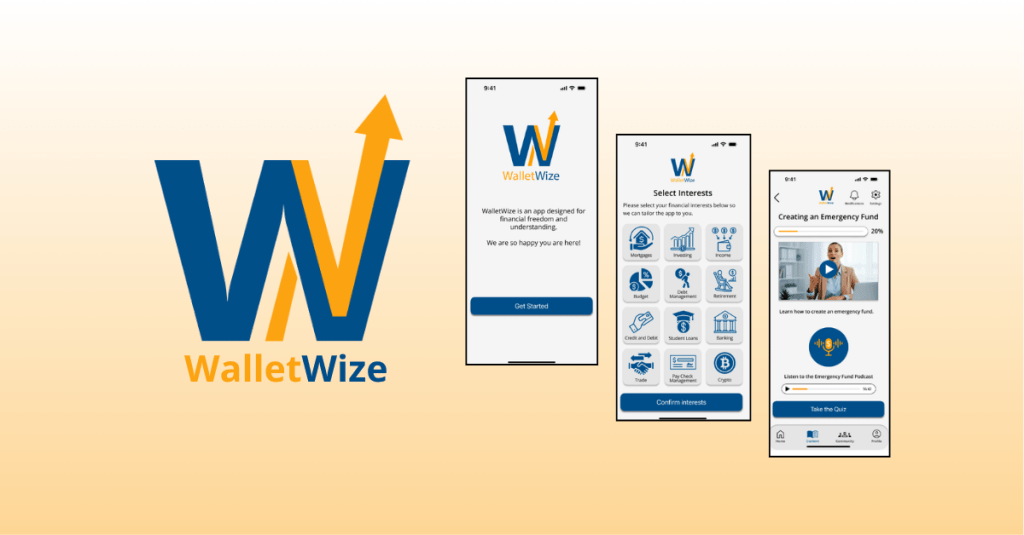
    WalletWize is a financial education app designed to help Gen Z users understand and manage their personal finances. The goal of the app is to create a seamless and engaging user experience that makes learning about money feel intuitive, approachable, and empowering. To create WalletWize, our group followed the Design Sprint method developed at Google Ventures. This method is a five-day process that rapidly takes a product from idea to prototype to user testing.

    For our project, we stretched the five-day Sprint into a five-week format, dedicating one week to each phase of the process. Our team collaborated virtually via Zoom and used Miro for digital whiteboarding and collaboration. What resulted was not just a prototype, but a deeper understanding of teamwork, design thinking, and problem-solving.


    Design Sprint Overview
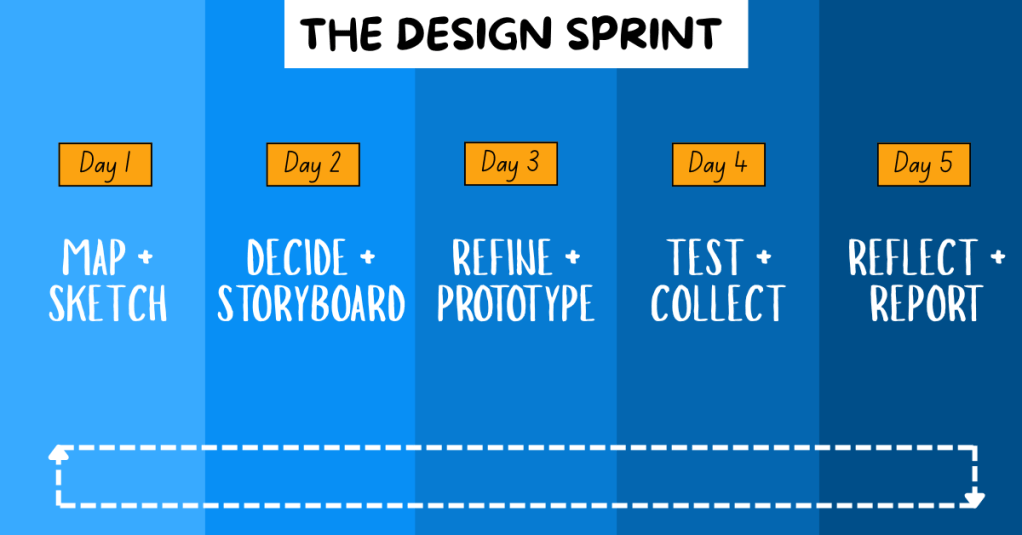
    The Design Sprint is broken into five phases:

    1. Map + Sketch: We defined our problem, conducted research on our target audience, set goals, and sketched potential solutions.

    2. Decide + Storyboard: We used a series of voting techniques to narrow down our best ideas. From these, we created user flows and a storyboard.

    3. Refine + Prototype: With our finalized storyboard, we divided tasks based on our individual strengths and built a functional prototype.

    4. Test + Collect: We conducted remote user testing sessions with Gen Z participants. We gathered feedback on functionality, visual design, and user experience to determine what worked well and what could be improved.

    5. Reflect + Report: We compiled our findings and insights into a final Design Sprint report and individual case studies, summarizing the project and sharing key takeaways.


    Problem Statement and Research

    The problem we focused on was the lack of accessible, engaging financial management tools for Gen Z. To guide our ideation process, we created the following “How Might We” questions:

    • How might we engage Gen Z so they stay on our app instead of switching to another one?
    • How might we make learning about money feel as addictive as scrolling through social media?
    • How might we simplify complex financial concepts to make them easier and more engaging to learn?
    • How might we encourage users to return and build lasting financial habits?

    We also defined a long-term goal: In two years, WalletWize should help Gen Z form consistent money habits by making the app a daily or weekly routine.

    To better understand our target audience, we conducted background research. We found that Gen Z:

    • Relies heavily on parents for financial advice
    • Consumes most content on mobile devices
    • Faces increasing financial challenges including student debt and housing costs
    • Spends a significant amount of time on social media

    These insights shaped both our design decisions and our content strategy.


    Sprint Activities

    Phase 1: Map + Sketch

    We began by naming the app and selecting a color scheme through voting with red dots. We chose “WalletWize” as our final name and adjusted our palette to include a bold royal blue and bright orange to appeal to Gen Z.
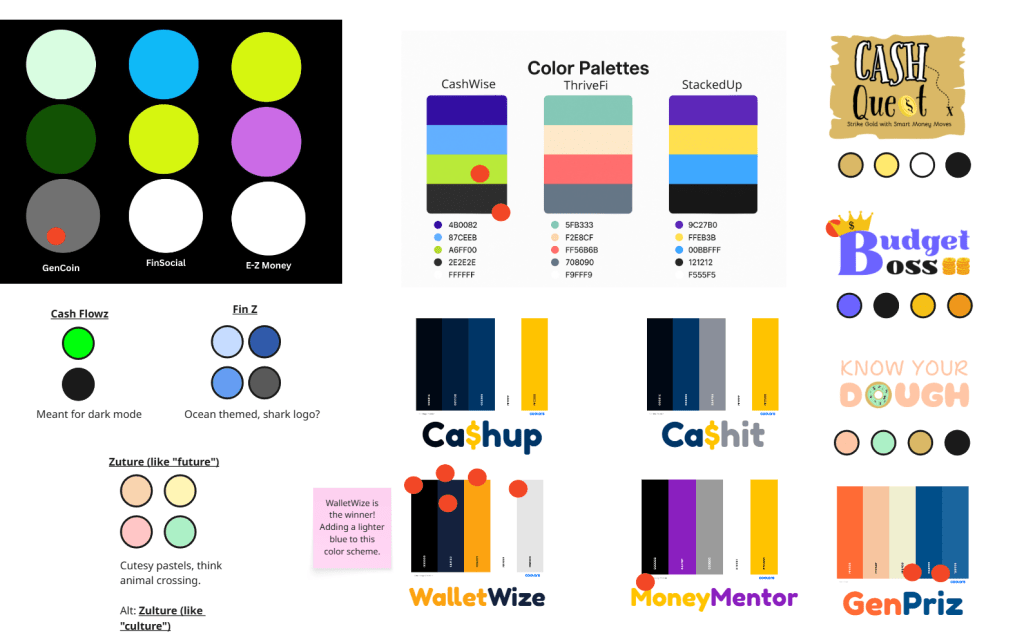
    App Names and Color Scheme Ideas.

    Next, we created a map that began with app onboarding and ended with our goal. The steps in between represented the key features and actions users would take to reach that goal, including navigating through course content, selecting topics, and engaging with rewards.
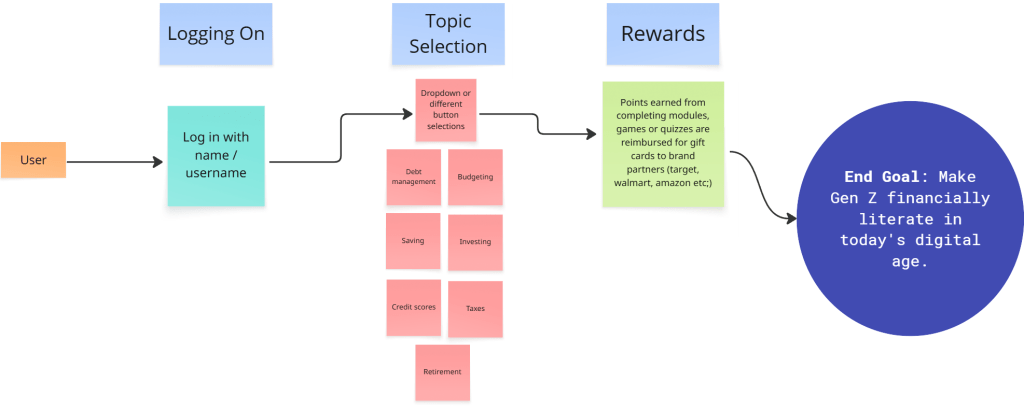
    WalletWize’s User Journey Map.

    We then conducted Lightning Demos. Each team member analyzed apps related to finance and education, collecting visual inspiration and discussing which features we might borrow or adapt.

    Finally, we worked through the 4-Step Sketch process individually:

    • Capturing notes and inspiration
    • Generating quick ideas
    • Exploring variations in Crazy 8s
    • Creating refined solution sketches
    4-Step Sketch: Part 1 (Notetaking) and Part 2 (Ideas).
    4-Step Sketch: Part 3 (Crazy 8s) and Part 4 (Solution Sketches).

    Phase 2: Decide + Storyboard

    To narrow down ideas, we used Heat Map Voting to highlight the best elements of our sketches. Then we used Straw Poll and Supervote techniques to select our top concepts.

    Each group member created a six-step user flow. We voted on the most promising user journey and then expanded it into an eight-step storyboard that showed the elements of each screen.
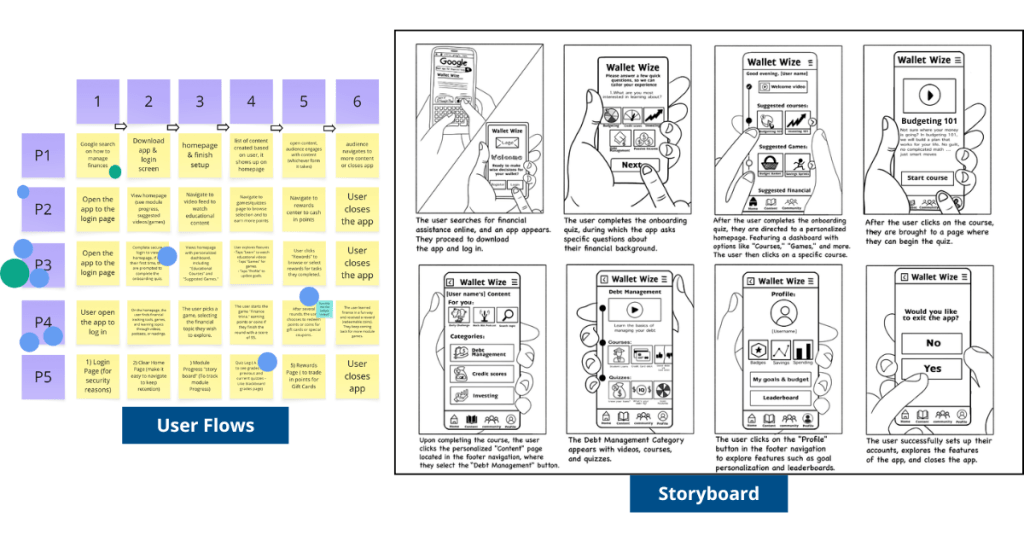
    WalletWize’s User Flows and Storyboard.

    Phase 3: Refine + Prototype

    We divided responsibilities based on skillsets. Some focused on wireframes in Canva, while others built out high-fidelity prototypes in Figma. Our illustrator created visual assets, and our Stitcher ensured consistency and flow across the prototype. The prototype included interactive screens for onboarding, budgeting lessons, quizzes, and progress tracking.
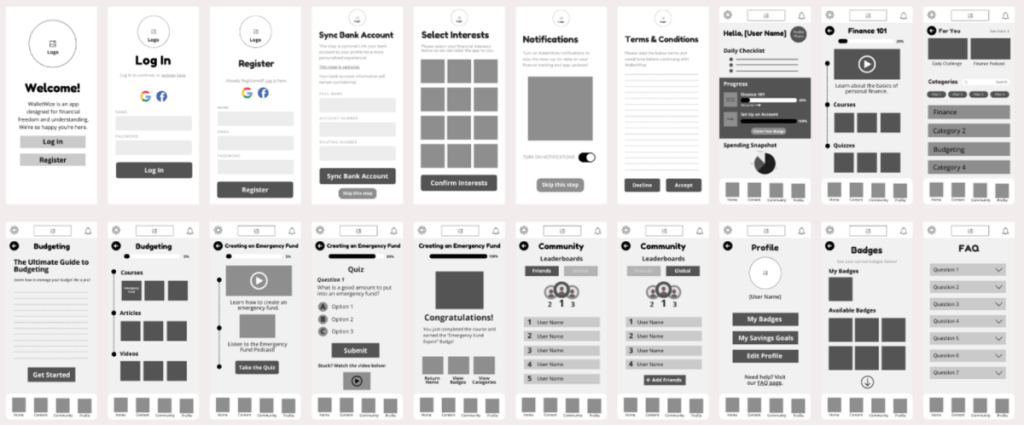
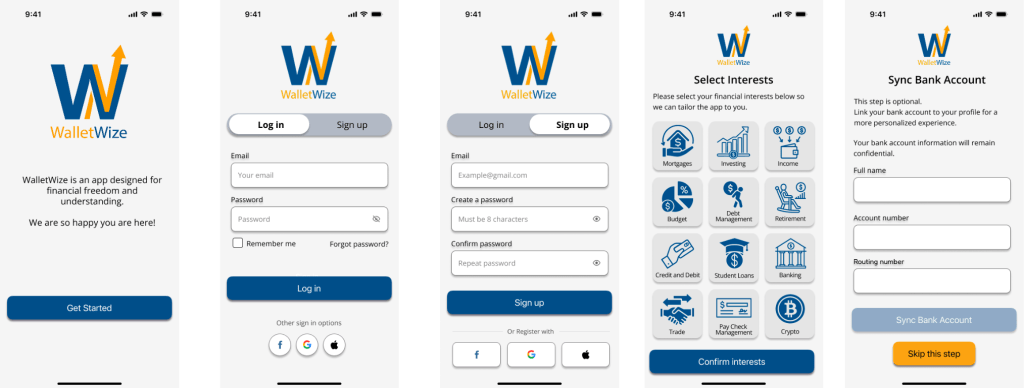
    WalletWize’s Wireframes created in Canva.
    Final Prototype screens created in Figma. To view all final screens, click here.

    Phase 4: Test + Collect

    We prepared a script and conducted five remote user interviews. The sessions were recorded via Zoom. One person led the interview while others took notes.

    We created pre- and post-surveys to collect demographic and usability feedback. The pre-survey gathered background information, while the post-survey measured user satisfaction and experience.

    Phase 5: Reflect + Report

    In our final week, we divided responsibilities to create our final Design Sprint report and individual case studies. We reflected on our learning, analyzed our data, and finalized our deliverables.

    To view our group’s final report, click here.


    Results and Outcomes

    Our final clickable prototype of WalletWize received positive feedback from users. Participants appreciated the modern design, friendly illustrations, clear navigation, and overall user experience.

    One area for improvement identified during testing was the content tab. Several users were unsure how to navigate it. A suggestion to add a FAQ button to the home screen was also noted and would be implemented in future iterations.

    Overall, user feedback affirmed that our design choices were intuitive and engaging. The app met its primary goal of helping Gen Z users feel more confident in managing their money.
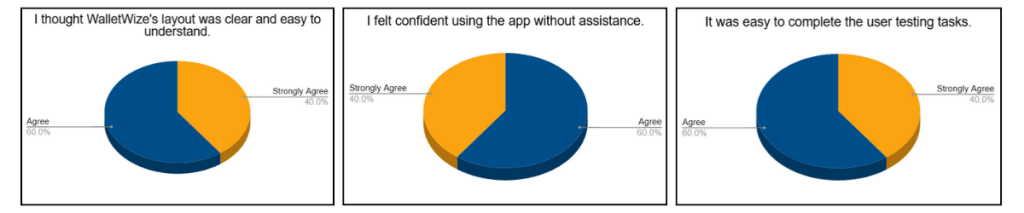
    Pie charts based on user testing feedback.

    Learnings and Reflection

    The Design Sprint was an exciting challenge. It taught us how to work quickly, think strategically, and communicate clearly. We learned how to facilitate discussions, manage tasks virtually, and design with the user in mind.

    Each member of our group brought unique strengths to the project, and we built a workflow that allowed us to support one another and stay organized. Conducting the Sprint virtually had its challenges, but we navigated them well using tools like Miro and Zoom.

    Beyond the technical skills, we learned how to stay adaptable. Whether it was a user who couldn’t complete a task or a design that needed to be reworked, we stayed open to change and focused on improvement.


    Conclusion and Next Steps

    The Design Sprint was more than just a framework; it was a powerful learning experience. From problem definition to user testing, we moved through each phase with purpose and creativity. WalletWize is the result of thoughtful collaboration, honest feedback, and user-centered design.

    As we look to the future, we are excited about the potential of WalletWize. With further development, we hope it becomes a trusted tool for Gen Z users who want to improve their financial literacy. The lessons we learned in this Sprint will continue to inform our approach to product design and collaboration in our future careers.

  • Setting the Pace: How to Gear Up for a Successful Design Sprint

    Setting the Pace: How to Gear Up for a Successful Design Sprint

    In my last post, I explored how using tools like Miro and intentional introductions can help build camaraderie before your Design Sprint begins. Think of that phase as stretching before a relay race. You’ve sized up the course, you’ve met your teammates, and you’re lacing up your shoes. Now, you might be wondering: what comes next?

    Much like running an actual race, you wouldn’t step up to the starting line without knowing the course, having the right gear, and understanding who’s handing off to who. In a Design Sprint, preparation is your pre-race routine. It’s not just a warm-up; it’s what prepares your team for innovation at full speed.

    Let’s take a deeper dive into what proper preparation looks like and why it’s a game changer.


    Why Preparation Matters: The Competitive Edge

    In The Sprint Handbook: A Step-by-Step Guide to Running Innovative Sprints, Pattie Belle Hastings outlines the many benefits of preparing for a Design Sprint:

    • Efficiency & Effectiveness: A prepared team accomplishes more in less time, produces higher-quality work, and minimizes delays. Preparation leads to better output because everyone comes ready to contribute.
    • Team Dynamics: Clarity with roles and goals boosts morale. When everyone understands the playbook, collaboration flows naturally.
    • Stakeholder Relations: Early engagement builds trust and ensures stakeholders feel heard. Their input is built into the process, not added as an afterthought.
    • Risk Mitigation: Preparation allows for early problem identification and helps set predefined metrics, so you’re solving the right problems more effectively.
    • Long-Term Value: Well-prepared sprints become easier to replicate, scale, and refine. Your team develops a rhythm and learns from each iteration.

    The takeaway? Preparation isn’t just about making things run smoothly; it’s about unlocking the full potential of your team and your process.


    Building Your Dream Team

    Jake Knapp, John Zeratsky, and Braden Kowitz, authors of Sprint: How to Solve Big Problems and Test New Ideas in Just Five Days, describe the role of a Sprint team:

    “A sprint resembles that perfectly orchestrated heist. You and your team put your talents, time, and energy to their best use, taking on an overwhelming challenge and using your wits to overcome every obstacle that crosses your path.”

    To pull off this “heist,” you need the right crew. A sprint team should be small but mighty with seven members or fewer. Each person should bring a unique skillset and perspective. Here are some key roles to fill:

    • Decider: The final call-maker. Often a CEO, product manager, or team lead.
    • Finance Expert: Knows the budget and where resources come from.
    • Marketing Expert: Shapes messaging and brand voice.
    • Customer Expert: Brings the user’s voice to the table.
    • Tech Expert: Understands feasibility and builds logistics.
    • Design Expert: Brings ideas to life through visuals.

    Most importantly, ensure everyone knows their role. A well-rounded, cross-functional team makes for a powerful and efficient sprint.


    Creating Structure: Rules, Schedules, and Space

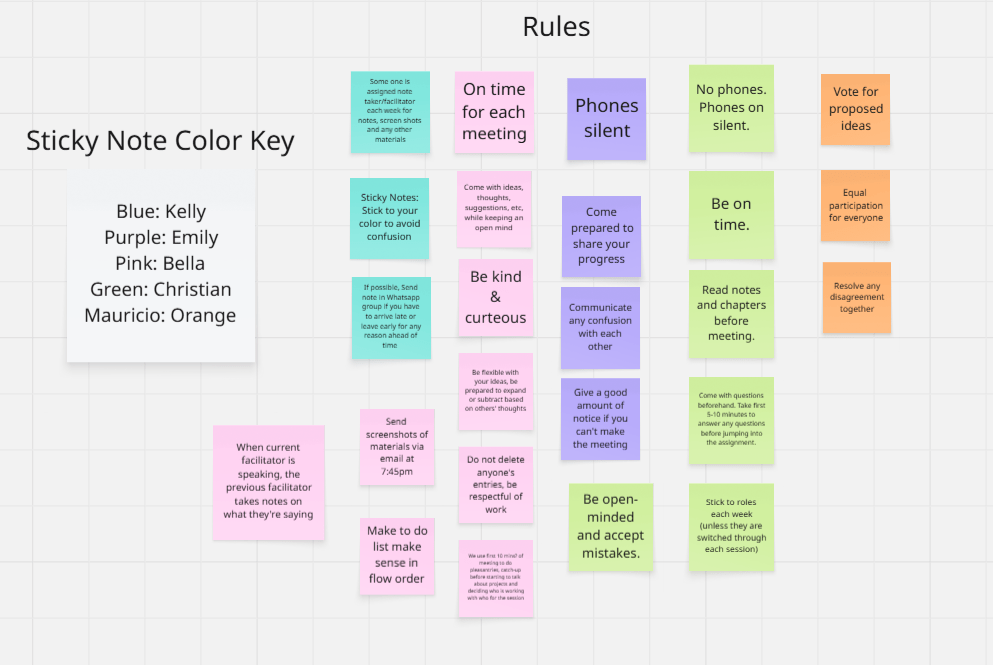
    Once your team is set, establish a few ground rules. One suggestion? A “No Devices” policy. Encouraging participants to silence phones and limit distractions can help keep focus sharp. If everyone agrees on expectations, it’s easier to stay on track.

    Next, block off time. Design Sprints require energy, and fragmented schedules create barriers for momentum. As the authors of Sprint emphasize:

    “Sprints require energy and focus, but the team won’t be able to give that effort if they’re stressed out or fatigued.” – Knapp, Zeratsky, & Kowitz

    Dedicate six focused hours a day for five consecutive days. This window keeps energy levels high and decision-making tight. A time-boxed format also reduces the chance of getting stuck in the weeds.


    Supplies & Tools: Your Sprint-Day Kit

    Whether you’re sprinting in-person or virtually, having the right tools is crucial. Hastings and Knapp both recommend purchasing whiteboards, which are great for mapping and collaboration. Securing sticky notes and using colors to sort ideas is a fun and effective way to organize ideas. Who doesn’t love color coding? Timers will keep everyone accountable and help team members stay on track, and moveable furniture encourages physical collaboration and flexibility. Also, don’t forget some healthy snacks to help fuel the brain!

    Conducting a virtual Sprint? Platforms like Miro and Google Docs allow participants to edit documents simultaneously, helping the team visualize their work and make decisions in real time. Using quick capture video tools like Loom or Descript will create more visual aids and supercharge productivity.

    These tools might seem small, but they support a smooth, distraction-free environment where your team can focus on creating solutions.


    Final Prep Steps: Checklists and Communication

    Want to know one of the best tips from Hastings? Create a checklist to confirm the essentials:

    • Who is the Decider and will make the final decisions?
    • What’s the topic or challenge?
    • Where and when will the Sprint happen?
    • Who’s participating?

    Also, don’t overlook the power of communication. As Hastings writes:

    “Effective pre-Sprint communication sets the stage for successful outcomes. Your team will appreciate clear, engaging, and informative communication before the Sprint begins…you’ll build a well-organized, focused, and engaged team that’s ready to tackle the challenges ahead.”

    Set up a shared, collaborative document with background research, the schedule, and access to all necessary tools. Before the Sprint, hold a debrief meeting to go over expectations, answer questions, and align the team.


    What This Looked Like For Me

    My group’s shared Miro board outlining our Design Sprint rules.

    This week, my team and I had our first virtual meeting in preparation for our Design Sprint challenge. We’re new to this process, so there were a few hiccups, but that’s okay.

    We shared backgrounds and skillsets, identified our roles, and created a shared Google Doc and Miro board. These spaces helped us capture ideas, questions, and progress. Most importantly, we fostered an open environment where everyone felt heard. We experimented with templates, asked questions, and embraced the learning process.

    Perfect? No. Productive? Absolutely. And that’s the point! Don’t get discouraged if your first session isn’t “perfect.” Buckle up, embrace the imperfect, and enjoy the ride.


    Final Thoughts

    Here’s your final reminder: Prep. Prep. And more prep. Design Sprints move quickly. If you invest time upfront and choose the right people, set clear expectations, and gather tools, you’ll create an environment for a smooth, creative, and productive experience.

    Your Design Sprint is about to begin. Are you ready?

    Stick around as I continue documenting this journey. Next up, we take off sprinting!