I was scrolling through social media the other day when I noticed something interesting. I kept stopping on certain posts, even when I didn’t know who they were from. Some felt fun and light. Others felt bold and confident. A few felt warm and welcoming.
That’s when it clicked. It wasn’t just the visuals pulling me in. It was the voice.
That moment stuck with me. It showed me that a strong brand voice is more than words on a screen. It’s a feeling. It’s the reason we connect with certain brands and not others.
As I’ve worked on building my own brand, I’ve realized how important it is to shape that feeling with intention. Your brand voice helps people understand who you are, what you stand for, and why they should care. Let’s break down how you can build a brand voice that truly connects and resonates with your audience.
What Is Brand Voice (and What Isn’t)?
Before we build a brand voice, we need to define it.
“A brand voice is your company’s unique identity and perspective inspired by your core values, mission, and personality.”
Ankit Vora, Senior Content Writer at SemRush, in Brand Voice: What It Is and How to Define It (+ Template)
Vora asserts that your brand voice is your brand’s personality. It’s how your brand thinks and feels. It comes from your mission, your values, and what you believe in.
Brand tone, on the other hand, is how you express that voice. It’s the words you choose, the style you use, and how you adjust your messaging depending on the situation.
Think of it like this:
- Voice = your personality (this stays consistent)
- Tone = your mood (this can shift slightly)
A great example of this is Brooks Running. They don’t follow the typical “grind and hustle” sports messaging. Instead, their voice is joyful, inclusive, and focused on the everyday runner. Check out their most recent Instagram post:
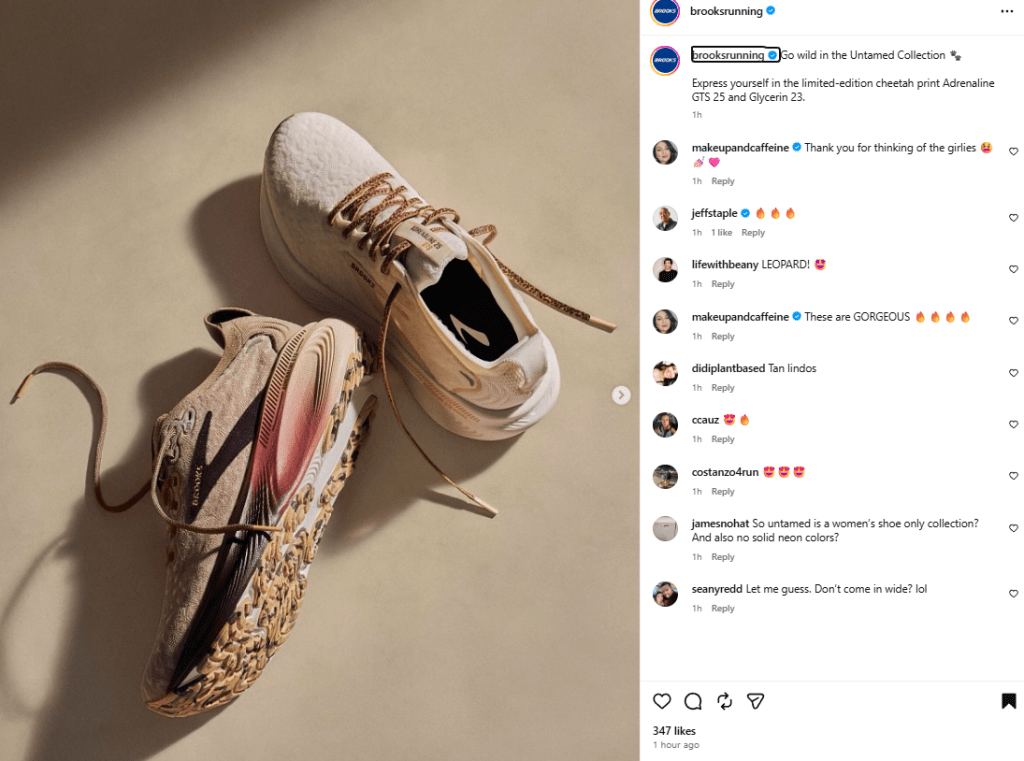
You can see their excitable and runner-centric language in their caption: phrases like “go wild” and “express yourself” feel fun and inviting. They even use emojis to keep things light and energetic. Their tone supports their voice, but the core identity stays the same.
And that’s the goal: consistency with personality.
Why Brand Voice Really Matters
Here’s the truth: people connect with feelings. We’re emotional by nature. When we support a brand, we want it to reflect who we are and what we believe in.
In “Brand voice: What is it and why it matters,” Jamia Kenan, Senior Social Media Specialist at Sprout Social, states that brand voice will help your company stand out in a saturated landscape. Logos and visual identity are just the first steps in building recognition. Your written content and video scripts deserve the same level of care and attention.
A strong brand voice helps you:
- Stand out in a crowded market
- Build trust with your audience
- Create memorable experiences
- Make your content instantly recognizable
Think about it. When brand voice is done well, you can recognize a brand before you even see the name.
In today’s world, where content is everywhere, originality is what makes people stop scrolling. Your voice is what makes them stay. With the rise of AI and automation, this matters even more. The brands that win are the ones that still feel human.
How to Develop Your Brand Voice
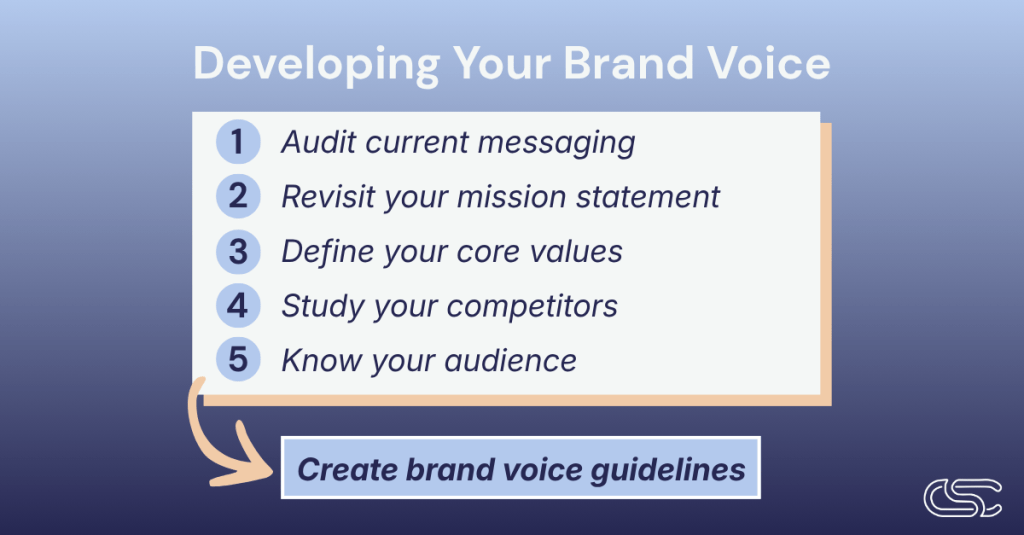
Building a strong brand voice doesn’t happen overnight. It takes intention, reflection, and a bit of research.
In “What is a brand voice? Plus, 7 tips to develop one,” Whitney Vige, Content Writer at Asana, offers some practical steps to help you get started.
1. Audit Your Current Messaging
Start with where you are right now. Look at your website, social media posts, emails, and any other content. Ask yourself:
- Does this sound like one consistent brand?
- What emotions does this create?
- Where are the gaps or inconsistencies?
This gives you a baseline. You can’t grow if you don’t know your starting point.
2. Revisit Your Mission Statement
Your mission is your “why.” It should guide everything you say and how you say it. If your mission is about empowering others, your voice should reflect that. If it’s about innovation, your voice might feel bold and forward-thinking. Your voice should always connect back to your purpose.
3. Define Your Core Values
Your values shape your personality. If your brand values community, your voice should feel inclusive. If your brand values performance, your voice might feel strong and focused.
Are no values defined? That’s a great starting point. This will serve as your foundation.
4. Study Your Competitors
Take a look at brands in your space. Ask yourself:
- What does their voice sound like?
- What makes them stand out?
- Where is there room for you to be different?
The goal isn’t to copy. It’s to find your unique lane.
5. Know Your Audience
Who are you talking to? Your audience’s age, interests, and behaviors all shape how you communicate. The way you speak to a group of high school students will be different from how you speak to corporate professionals. Meet your audience where they are.
6. Create Brand Voice Guidelines
After you’ve done the research, document it. This is where everything comes together. Your brand voice guidelines should include:
- Your brand personality (3–5 key traits)
- Words you use often
- Words you avoid
- Tone examples (do’s and don’ts)
This helps keep your messaging consistent across your team, your platforms, and your content.
Your Next Step: Build It and Stick With It
Developing a strong brand voice comes down to one thing: intention. You can’t just hope your brand “sounds right.” You have to build it, test it, and refine it over time.
If you’re not sure where to start, try this simple checklist:
- Review your current content
- Define your mission and values
- Study your competitors
- Understand your audience
- Write out your brand voice guidelines
- Apply it consistently across everything
Conduct the research. Build the brand voice document. Stay consistent.
When you do, your brand won’t just be seen; it will be felt. Happy creating!




 Christian Schaaf's Blog + Portfolio