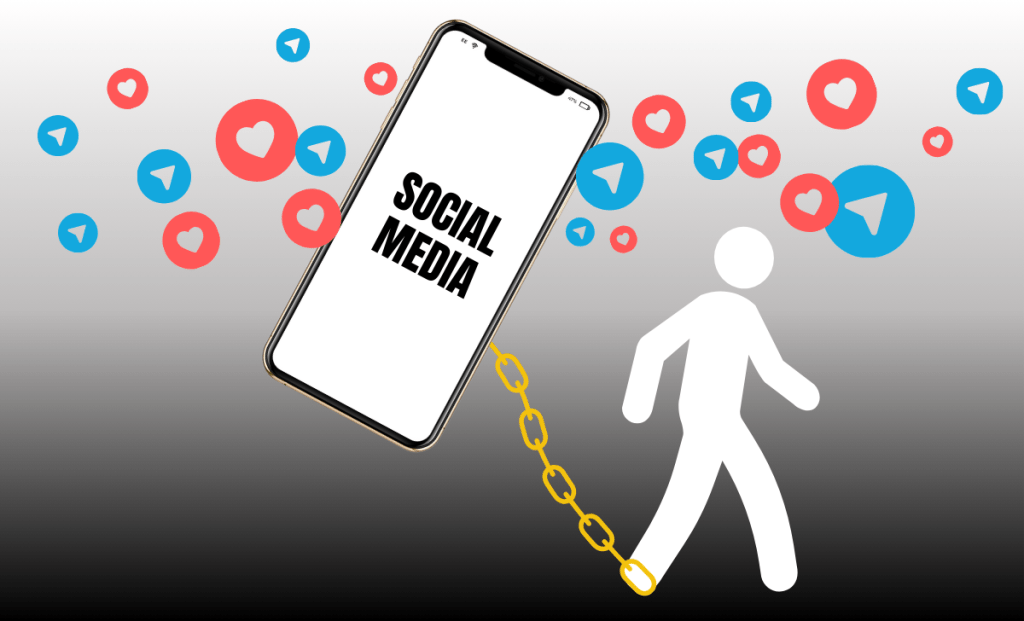
Do the negative aspects of social media outweigh the positives?
I was late to the social media game, mainly because my parents encouraged me to stay off the platforms in high school. Looking back, I’m actually thankful they did. It wasn’t until the summer after graduation that I created my first social media account—a rare occurrence in today’s world. The reason? To stay in touch with high school friends as we went to college.
Since then, I’ve found myself falling into the same social media traps that millions of people experience. During the pandemic, I joined TikTok and quickly found myself scrolling endlessly. Platforms like TikTok are designed to keep us hooked, and the more time we spend on the app, the more we engage with its content.
The “Foundations of Humane Technology” course from the Center for Humane Technology sheds light on this. It defines “persuasive technologies” as scientifically tested design strategies that manipulate our behavior toward a specific goal, such as spending more time on a website or app. TikTok’s algorithm tracks the content you interact with—videos you like, recent searches—and then curates a feed to keep you scrolling. This might sound harmless, but it’s all part of a larger strategy to maximize user engagement, even if it means hijacking our attention.
The more I learn about inhumane technology, the more I realize how platforms are intentionally designed to capture and hold my attention. TikTok, for example, delivers an endless stream of content it knows we’ll enjoy – not just to entertain, but to keep us scrolling. It’s a time trap we fall into without even realizing it.
That being said, there is one feature on TikTok that hints at a step in the right direction—an occasional pop-up that encourages users to take a break after extended periods of scrolling. It’s a nice gesture toward promoting mental health, but from my experience, it doesn’t appear until hours of usage. By then, has the app already achieved its goal of keeping me engaged for as long as possible?
Overall, I believe technology, especially social media, takes advantage of users to serve its own purposes. Yet, there’s a shift happening. According to the Center for Humane Technology, harmful technologies are no longer getting a free pass. More people are recognizing the value of their attention and pushing back against these manipulative designs.
The question remains: How long will it take for significant change? While we wait for stronger regulations, we have to take matters into our own hands—setting screen limits, finding other ways to connect with loved ones, and spending more time outdoors. In this fast-paced digital world, taking care of our mental health and protecting our attention has never been more important.
 Christian Schaaf's Blog + Portfolio