In today’s digital world, we are constantly scrolling, clicking, and consuming content. Ads blend together. Posts get skipped. Messages are forgotten almost as quickly as they appear.
So what actually sticks?
Stories.
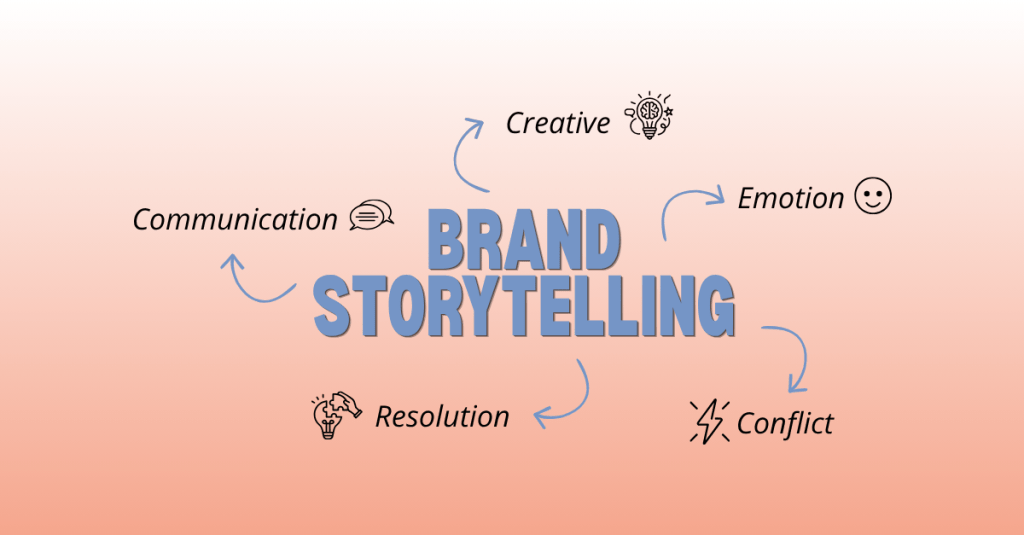
People don’t remember facts. They remember stories. That’s where brand storytelling comes in.
“Brand storytelling is the strategic practice of using narrative techniques to communicate your brand’s values, mission, and personality across digital channels to create emotional connections with audiences.”
Dan Hughes, What Is Brand Storytelling? The Complete Guide for Digital Marketers in 2025
In a world where consumers see thousands of messages every day, storytelling is how you stand out, and more importantly, how you’re remembered.
What Is Brand Storytelling (Really)?
At its core, brand storytelling is not about your product. It’s about your people. It’s about the problems they face, the journey’s they’re on, and how your brand fits into that journey.
- the problems they face
- the journey they’re on
- and how your brand fits into that journey
The biggest mindset shift? The audience is the hero. Not the brand.
Your role is to guide them.
How to Craft an Effective Brand Story
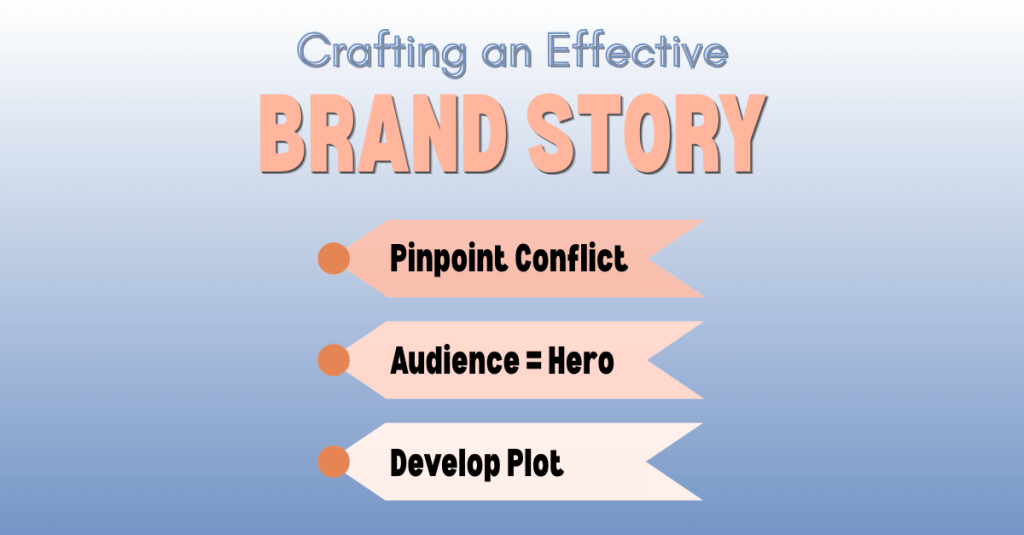
A strong brand story doesn’t happen by accident. It’s built with intention. Drawing from insights by Ally Heinrich, here’s a simple framework:
1. Pinpoint the Conflict
First, identify the conflict. What is your audience struggling with? What problem are they trying to solve? Without a clear challenge, there’s no reason for a story to exist.
2. Make Your Audience the Hero
Next, position your audience as the hero. Your brand is not the center of the story. Your audience is. You are there to support them, guide them, and help them move forward.
3. Develop the Plot
Finally, develop the journey. Think about where your audience starts, what obstacles they face, and how things change by the end. That transformation is what makes your story meaningful.
Great brand stories don’t just inform; they transform.
What Content Formats Work Best?
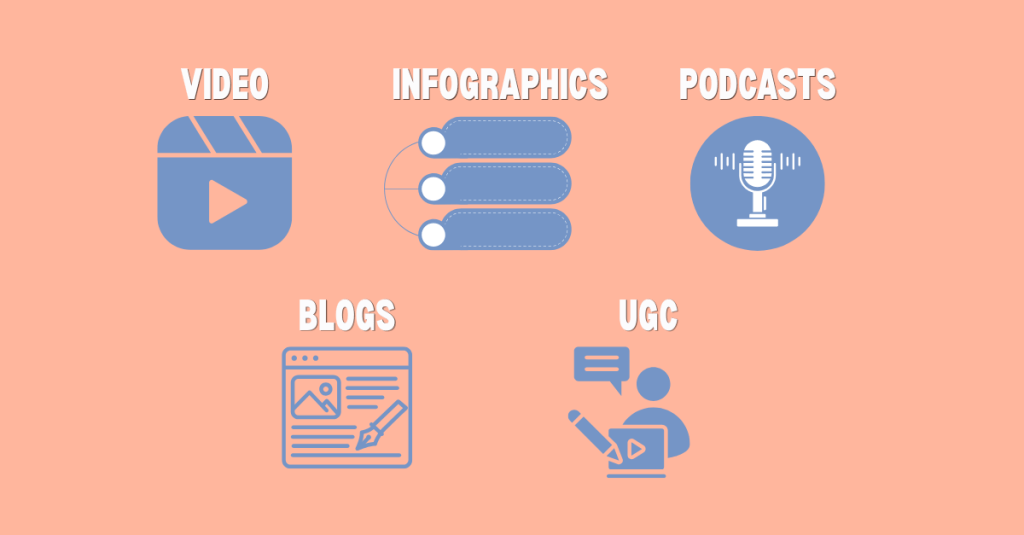
There are many ways to tell a story. What matters most is how clearly and effectively the story is told. The Breezy Company offers some tips on which channels to use to create your brand story:
Video
Video is one of the most powerful formats because it combines visuals, motion, and emotion. Whether it’s a short-form clip or a longer narrative, video can capture attention quickly and hold it.
Infographics & Data Visuals
Visual formats like infographics and data visualizations also play an important role. When done well, they turn information into something engaging and easy to understand.
Podcasts
Audio, such as podcasts, offers a more personal connection. It allows people to engage with your story while they go about their day, making it both accessible and impactful.
Blogs
Written content, like blogs, allows you to go deeper. You can build a narrative, guide the reader step by step, and create a more detailed experience.
UGC
And then there’s user-generated content. When your audience tells their own stories about your brand, it often feels more authentic and trustworthy than anything you could create yourself. UGC can boost conversion rates by up to 4.5%.
What Metrics Actually Matter?
Not all metrics tell the full story. Hughes asserts that it’s important to look at how people are actually engaging with your content instead of focusing only on surface-level numbers.
Story completion rate is one of the most telling indicators. The goal is 70% for video and 60% for written content. If people are watching or reading all the way through, it means your story is holding their attention.
Engagement quality also matters. A thoughtful comment or meaningful interaction is often more valuable than a simple like.
Conversion rates help show whether your storytelling is leading to action. Comparing story-driven content to more traditional, product-focused content can reveal what truly resonates.
Why Brand Storytelling Matters More Than Ever
The digital landscape is louder than ever.
With endless scrolling, constant ads, and the rise of AI-generated content, people are overwhelmed with information. It’s easy for brands to get lost in the noise.
“The brands that stand out are not the loudest. They’re the most relatable.”
Everest Digital, Stories That Sell: Why Brand Storytelling Matters More Than Ever in 2025
People are looking for something real. They want to feel connected, understood, and engaged. Storytelling gives brands a way to create that connection in a way that feels natural and human.
Your Next Steps to Becoming a Brand Storyteller
If you’re looking to become a stronger brand storyteller, start simple.
Focus on your audience first. Think about their challenges, their goals, and what matters to them. From there, build a story that feels clear and intentional.
Experiment with different formats. Pay attention to what connects. Refine your approach over time.
Most importantly, keep practicing. Storytelling is not something you perfect overnight. It’s something you develop by doing.
Bring Your Story to Life
A strong brand story does more than explain what you do. It shows people where they’re going and how you can help them get there.
If you’re ready to start creating more intentional, story-driven content, start with this simple prompt:
Who is your audience, what challenge are they facing, and how does your brand help them move forward?
You don’t need a perfect answer right away. The goal is to begin thinking in terms of story rather than features or products. Focus on the journey, not just the outcome.
From there, you can begin to shape your narrative: what your audience is working toward, what obstacles they encounter, and how your brand plays a role in helping them get there.
Start with the story. The rest will follow. Happy creating!
 Christian Schaaf's Blog + Portfolio