Category: Social Media Analytics

  • Analyzing the Effectiveness of a TikTok Ad: Litter-Robot 5

    Analyzing the Effectiveness of a TikTok Ad: Litter-Robot 5

    In today’s digital landscape, data should inform every smart marketing decision. In The Marketing Campaign Playbook, Sharon Lee Thony explains that the right data allows brands to personalize content and adjust campaigns in real time. When ads are tied to clear objectives and measured properly, marketers can improve performance and maximize return on investment.

    For this audit, I analyzed a TikTok ad from the Pet Household Products industry promoting the Litter-Robot 5, a self-cleaning litter box by Whisker. Below is the ad.

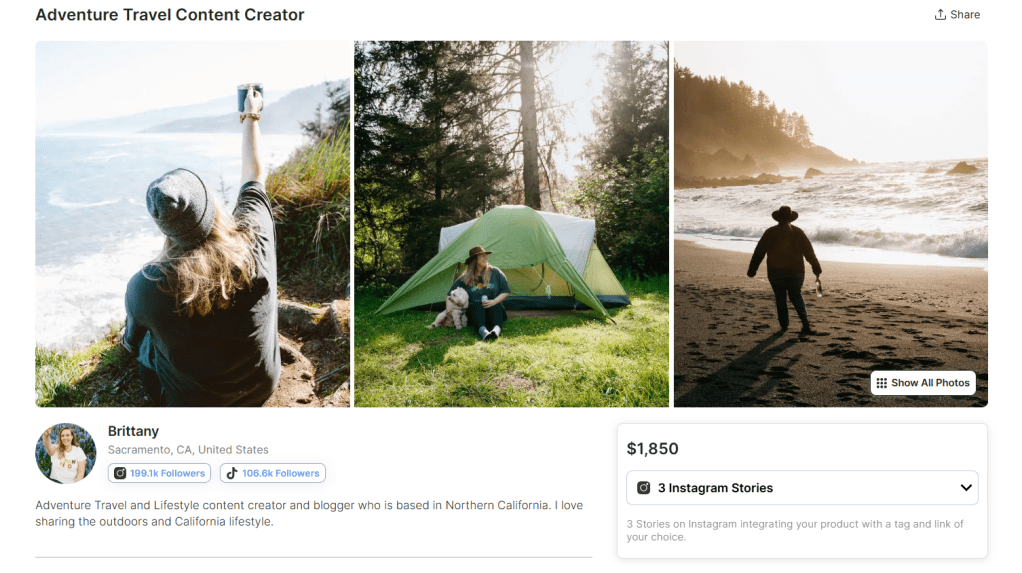
    @_brittanylc

    Slow mornings, warm coffee, and a simplified routine thanks to @Litter-Robot 🤍 #litterrobot #litterbox #catsoftiktok #catmom #catmomlife

    ♬ Winter Love – EcoTech

    Campaign Objective: Conversions

    The objective of this ad is conversions. The goal is for users to click the link and purchase the product.

    Because this is a conversion-focused campaign, the most important metrics include:

    • Click-Through Rate (CTR)
    • Conversion Rate (CVR)
    • Cost Per Click (CPC)
    • Cost Per Acquisition (CPA)

    In Social Media ROI, Olivier Blanchard examples that measurable business objectives give purpose and direction to campaigns. In this case, success is not just engagement; it is conversions.


    Evaluating the Creative Elements

    Visuals and Storytelling

    The ad is a 14-second short-form TikTok video. It opens with a calm winter morning scene. The woman walks through her home, pours a drink, and sets a peaceful tone. Her cat appears at 6 seconds, and the Litter-Robot 5 appears at 8 seconds.

    The setting is warm and relatable. It reflects a slow, quiet morning routine. When the creator says, “When one part of my routine takes care of itself, it makes everything else easier,” she connects the product to convenience and stress reduction. The message is clear: the Litter-Robot simplifies daily life.

    Visually, the product is shown in action, which helps viewers imagine how it would fit into their own homes. Showing the product in use is important for a conversion campaign because it reduces uncertainty and builds trust.

    This is an example of user-generated content. It feels natural and authentic instead of overly polished or sales-focused. That authenticity likely helps drive the high conversion rate.

    Caption and Copy

    The caption reads: “Slow mornings, warm coffee, and a simplified routine thanks to @Litter-Box.”

    The caption matches the calm tone of the video. It reinforces the idea of ease and simplicity. However, it does not strongly highlight key product benefits such as:

    • Self-cleaning technology
    • Odor control
    • Time savings
    • 3-year warranty

    Because this is a conversion-focused campaign, the caption could include one clear benefit or value statement to strengthen purchase intent.

    Call-to-Action (CTA)

    The CTA is subtle. It does not directly say “Buy Now.” Instead, it relies on the visual storytelling and the link to the landing page to drive action.

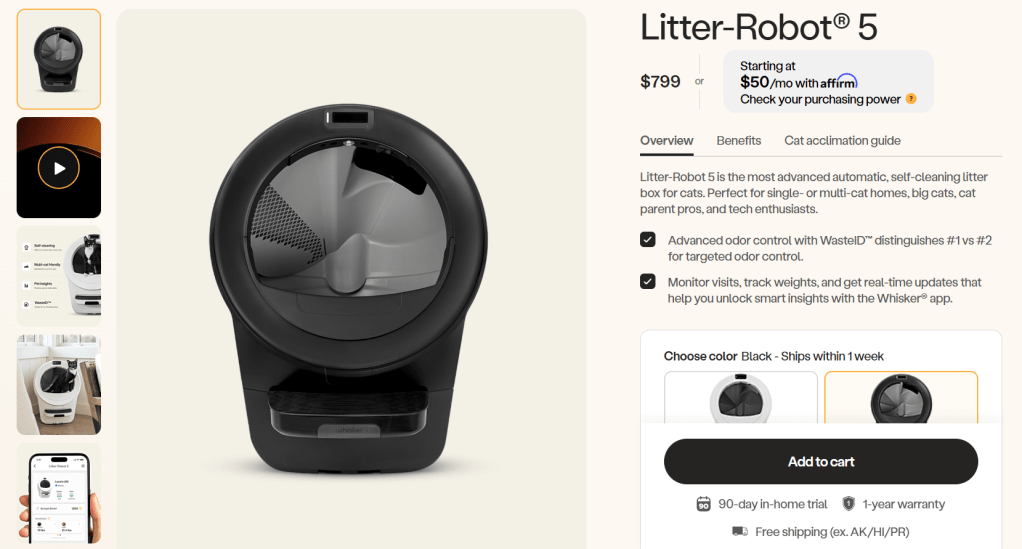
    The landing page itself is strong. It includes:

    • The product name and price
    • Product images and video
    • Feature breakdowns
    • Benefits explanation
    • A cat acclimation guide
    • A 3-year warranty
    • An “Add to Cart” button
    Landing page for Litter-Robot 5.

    This creates a smooth transition from TikTok to purchase. The page supports the conversion objective well through providing clear information about the product that can be viewed without scrolling. The most important information, like the price, name, description, and “Add to cart” button, are all easy to locate and navigate.


    Assessing Targeting Assumptions

    The ad likely targets:

    • Cat owners
    • Tech-forward pet owners
    • Busy professionals
    • Families with limited time
    • Higher-income households (due to premium pricing)
    • People who have purchased pet products online

    Because this is a higher-priced product, targeting likely focuses on users who are comfortable with online purchases and premium pet care solutions.


    Performance Analysis

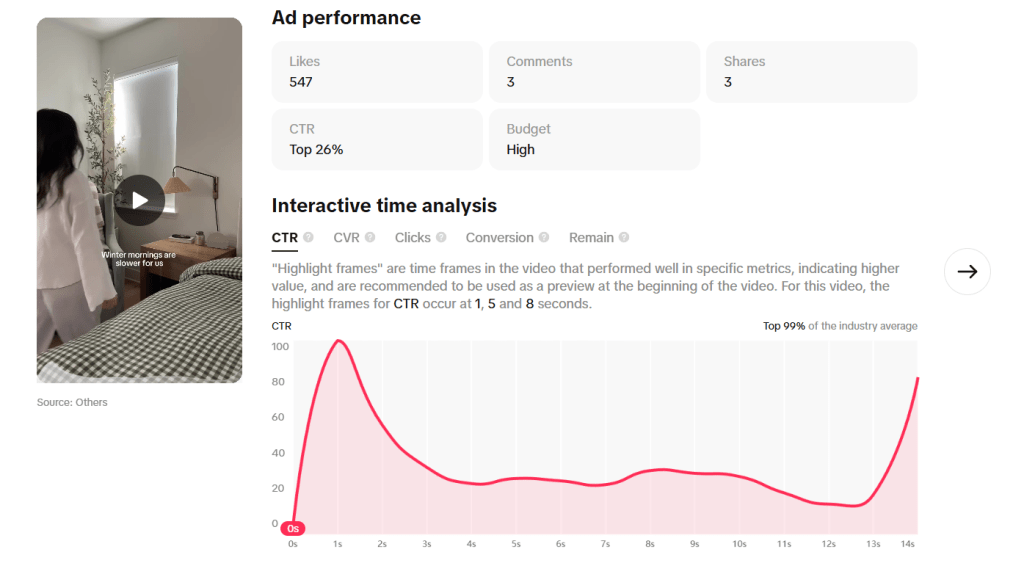
    Overview of ad performance on TikTok’s Creative Center.

    The ad performed in the top 99% of the industry average across CTR, CVR, Conversions, and Retention benchmarks.

    Click-Through Rate (CTR)

    • CTR peaked at 100 at 1 second.
    • It leveled between 20–40 from seconds 3–13.
    • It spiked again to 81 at 14 seconds.

    This tells us that the hook is strong. Users are clicking early. The spike at the end suggests some users wait until they see the product fully before clicking.

    However, the steady decline between 3–13 seconds shows the middle portion may lose urgency.

    Conversion Rate (CVR)

    • CVR peaked at 100 at 6 seconds (when the cat appears).
    • There was also a spike at 1 second.
    • This performance ranks in the top 99%.

    This is extremely strong. The appearance of the cat clearly drives action. Emotion plays a major role in conversion behavior.

    Click and Conversion Timing

    • Clicks peaked at 1 second.
    • Conversions peaked at 1 second and again at 6 seconds.
    • There were 33 conversions at 6 seconds (cat appearance).

    This suggests two powerful moments:

    1. The opening hook
    2. The moment the cat walks across the screen

    Retention

    Retention dropped sharply after 1 second and stayed low for the remainder of the video. Even though this ranks high compared to benchmarks, the drop-off suggests viewers could lose interest quickly.

    For a conversion campaign, this is important. If most viewers drop off early, the message must deliver product value faster.


    Benchmark Context

    According to pet industry benchmarks, average CTRs and conversion rates vary based on competition and seasonality. The pet industry often sees strong engagement because pet content is emotional and relatable.

    Since this ad ranks in the top 99% across metrics, it is performing exceptionally well compared to industry averages. However, strong performance does not mean it cannot improve.


    What Is Working?

    • Strong early hook
    • Emotional connection when the cat appears
    • High CTR and CVR
    • Clear landing page experience
    • Relatable storytelling

    Areas for Improvement

    • Sharp retention drop after 1 second
    • Product appears slightly late (8 seconds into the video)
    • CTA could be clearer for a conversion campaign

    Optimization Plan

    1. Move the Cat to the First Second

    Data Insight:

    • CVR peaked at 6 seconds (value of 100) when the cat appeared.
    • Conversions also spiked to 33 at 6 seconds.
    • Retention dropped sharply after the first second.

    This tells us that the cat drives emotional engagement and purchase behavior.

    However, many viewers are dropping off before reaching the 6-second mark. That means a portion of the audience never sees the moment that drives conversions.

    Optimization Strategy:
    Place the cat in the first second of the video or in the thumbnail.

    Why This Matters:
    If the emotional trigger happens earlier, more viewers may stay engaged and convert before scrolling away. This aligns with the conversion objective because it increases the likelihood that users experience the highest-performing moment.


    2. Introduce the Product Earlier in the Video

    Data Insight:

    • Clicks peaked at 1 second.
    • The product does not appear until 8 seconds.
    • Retention remains low after the first second.

    This means users are deciding whether to click before fully seeing the product benefits.

    Optimization Strategy:
    Test a version where:

    • The Litter-Robot appears within the first 2–3 seconds
    • The value proposition (“one less thing to think about”) is stated earlier

    Run this as an A/B test against the current version.

    Why This Matters:
    For a conversion campaign, viewers need to quickly understand what is being sold and why it matters. If retention is low, the message must be delivered faster.


    3. Strengthen the Call-to-Action for Conversions

    Data Insight:

    • CTR and CVR are strong.
    • The CTA is subtle and does not create urgency.

    Because the objective is conversions, the ad could push slightly harder toward action.

    Optimization Strategy:
    Test stronger but still tone-aligned CTAs such as:

    • “Upgrade your cat care today.”
    • “Simplify your mornings now.”
    • “Tap to see how it works.”

    This can be tested through caption variations or on-screen text.

    Why This Matters:
    According to Social Media ROI, measurable business objectives require purposeful messaging. If the goal is purchase, the CTA should clearly support that action. The current CTA fits the calm tone, but adding light urgency may increase conversion volume without sacrificing brand voice.


    Final Thoughts

    This ad is already performing at a high level. It ranks in the top 99% across key metrics and aligns well with its conversion objective.

    Optimization is an ongoing process. By aligning metrics with objectives, monitoring performance data, testing creative variations, and refining targeting, brands can continue to improve ROI.

    Data does not just tell us if an ad is good. It tells us how to make it better.

  • From Strategy to Sign-Ups: Designing a Conversion-Driven Paid Social Campaign

    From Strategy to Sign-Ups: Designing a Conversion-Driven Paid Social Campaign

    Designing a paid social media ad is never just about creating something visually compelling; it’s about developing a strategy that aligns creative decisions, targeting, and budget with a clearly defined business objective. When organizations invest in paid advertising, effective targeting is everything. Who the business targets and how they reach them will ultimately determine whether the campaign achieves its goals.

    So how did I approach designing a paid social media ad and the strategy behind it?

    To guide my planning process, I followed Sharon Thony’s framework outlined in The Marketing Campaign Playbook, which emphasizes intentional campaign design rooted in clear objectives, audience understanding, and measurable outcomes. Using this framework helped ensure that every decision made during the planning phase directly supports the campaign’s primary goal.


    Campaign Framework: Strategy First, Creative Second

    Before building the ad itself, I grounded the campaign in six strategic steps inspired by Thony’s guidelines:

    1. Define campaign objectives – Clearly establish what success looks like.
    2. Identify the target audience – Understand who the campaign is designed to reach.
    3. Develop a content strategy – Align messaging and creative with campaign goals.
    4. Set timelines and budgets – Establish realistic constraints for execution.
    5. Define key performance indicators (KPIs) – Determine how success will be measured.
    6. Prepare for execution and optimization – Plan how performance will be monitored and refined once the campaign is live.

    This framework ensured the campaign was built strategically from the start.


    Business & Campaign Overview

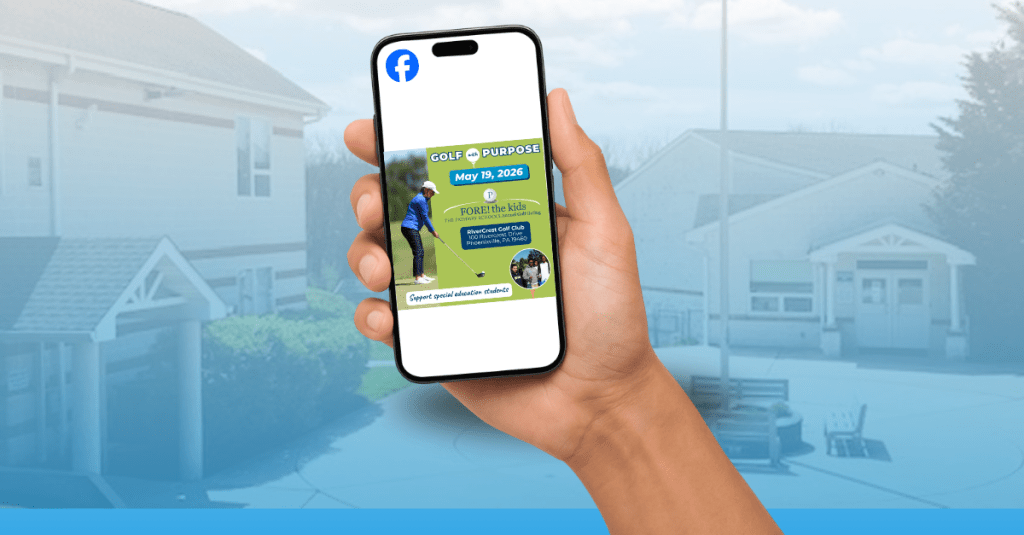
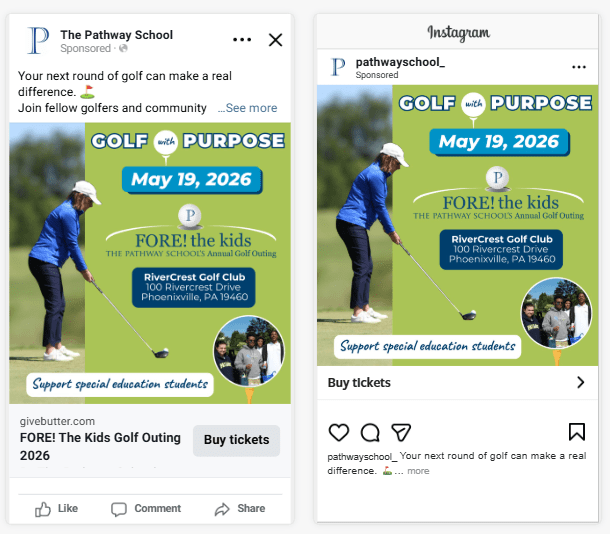
    For this campaign, I designed a paid social media ad for The Pathway School, a nonprofit special education school where I work. The campaign promotes the school’s annual spring golf fundraiser, FORE! The Kids Golf Outing, taking place on May 19.

    This event is one of the school’s key fundraising initiatives, supporting programs and resources for students. Historically, the outing sells approximately 100 golfer spots out of a maximum of 120. This campaign is designed to help close that gap and move the event toward a sellout.


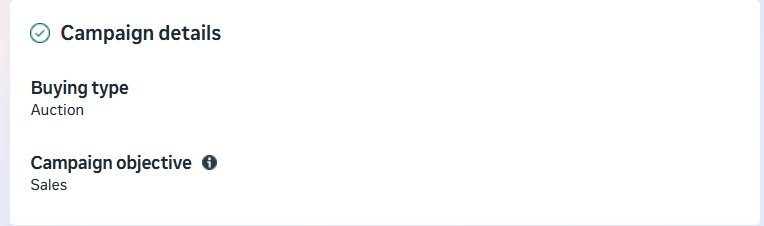
    Campaign Objective: Driving Conversions

    The primary objective of this paid social campaign is to increase golfer registrations (sales) through Facebook and Instagram advertising.

    Specifically, the campaign is designed to:

    • Drive at least 10 additional golfer registrations
    • Increase golfer participation by 10%
    • Generate registrations through link clicks leading to completed sign-ups

    Rather than focusing on awareness or engagement, the campaign is intentionally structured around conversion-driven outcomes, ensuring that budget and targeting decisions support measurable revenue growth.


    Campaign Optimization Goal

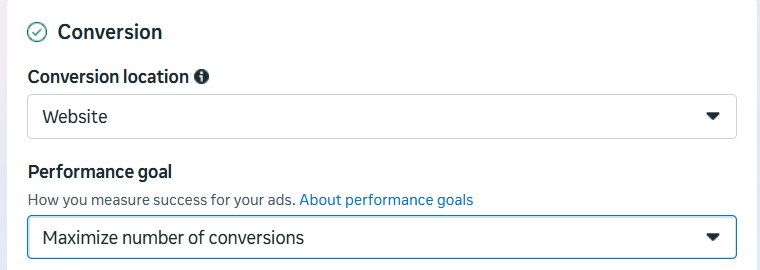
    The ad’s performance goal is to maximize number of conversions, with completed golfer registrations serving as the key action.

    Optimizing for conversions allows the advertising platform to prioritize users most likely to complete the registration process, rather than users who may only view or click on the ad. This approach aligns directly with the campaign’s revenue-focused objective.


    Platforms & Ad Placements

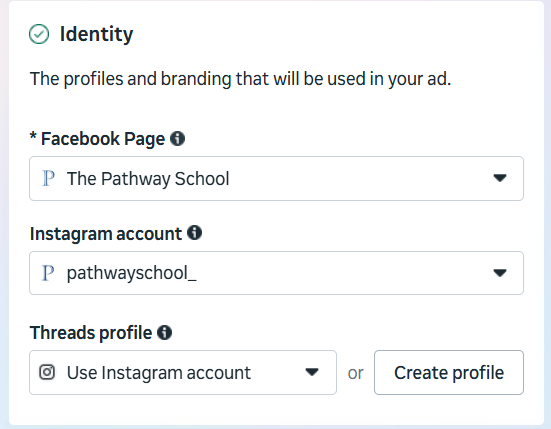
    Ads will run on Facebook and Instagram, where The Pathway School already has an established presence and strong engagement with donors and community supporters.

    Placements are intentionally selected to appear in high-visibility feed and story environments, ensuring the ad reaches users in spaces where they are most likely to engage and take action.


    Target Audience Strategy

    The targeting strategy combines demographic targeting, interest and behavior-based targeting, and first-party data to reach both existing supporters and high-quality new prospects.

    Core Demographics

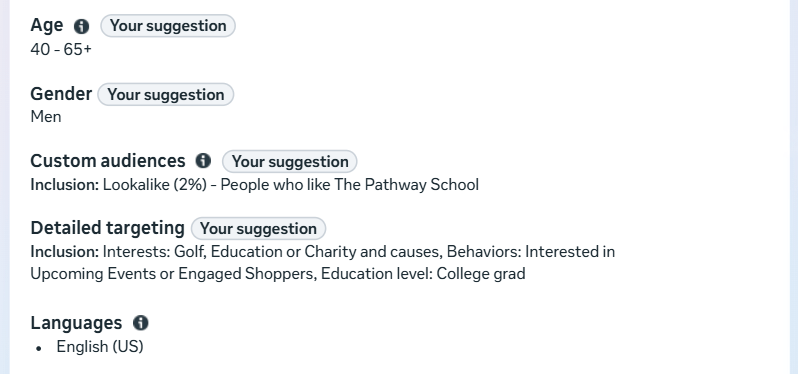
    • Gender: Male
    • Age: 40–69
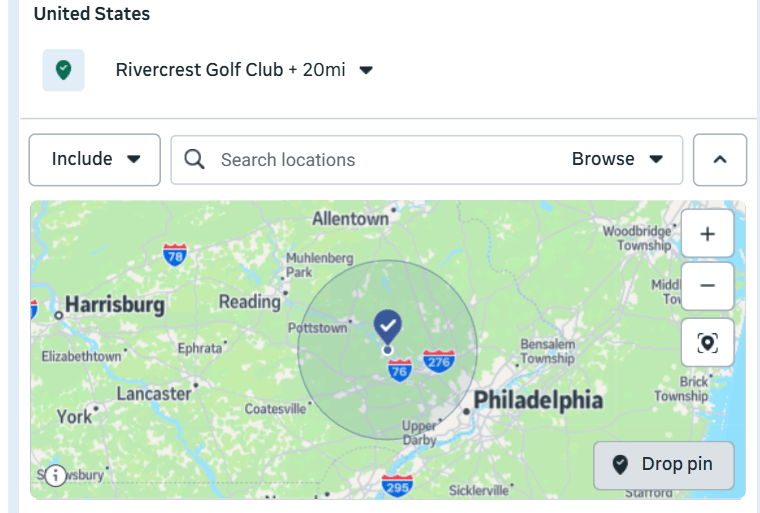
    • Location: Within a 20-mile radius of the golf course (which includes the school)
    • Education Level: College Grad

    This demographic profile closely aligns with past golf outing participants and typical charity golf event audiences.

    Interests & Behaviors

    The campaign targets users with demonstrated interest in:

    • Golf and golf-related activities
    • Community involvement and charitable causes
    • Education advocacy

    Behavioral targeting prioritizes individuals who:

    • Interested in upcoming events
    • Engage with nonprofit or fundraising content
    • Interact with Facebook Events and local organizations
    • Click on or engage with sponsored content

    These behaviors indicate a higher likelihood of completing an online registration, supporting the campaign’s conversion-focused goal.

    Lookalike Audience

    To strengthen targeting efficiency, the campaign leverages first-party data from previous golf outings:

    • Lookalike Audience: New users who share similar characteristics and behaviors

    Using a lookalike audience will attract new golfers to the outing that have the same interests as current golf attendees.


    Budget & Timeline

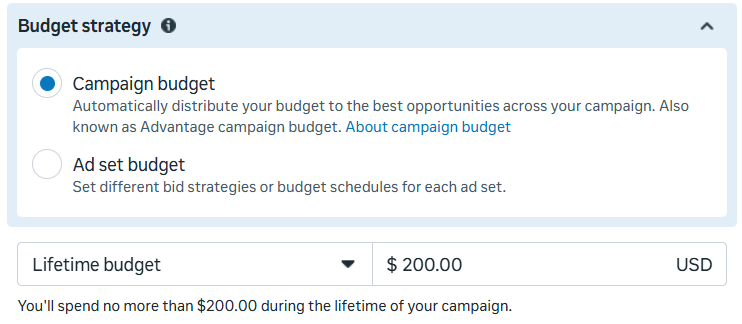
    The total campaign budget is set at $200, consistent with prior years’ promotional spending for the event. The budget will be distributed over a 2 week period leading up to May 12, the registration deadline, allowing time for optimization and sustained visibility.

    Given the focused audience and conversion-driven objective, this budget is expected to contribute meaningfully toward the goal of selling out the event.


    Success Metrics & KPIs

    Success metrics are intentionally aligned with the campaign’s primary objective.

    Primary Metric

    • Cost Per Acquisition (CPA): Measures the cost of each golfer registration and serves as the primary indicator of success.

    Secondary Metrics

    • Conversion Rate: Evaluates how effectively ad traffic converts into completed registrations.
    • Cost Per Mille (CPM): Assesses audience efficiency and helps identify opportunities to reduce wasted impressions.

    While click-through rate (CTR) will be monitored as an indicator of creative relevance, overall success will be evaluated based on completed registrations rather than engagement alone.


    Planned Monitoring & Optimization

    When the campaign launches, performance will be monitored regularly to ensure it is reaching the intended audience and driving conversions efficiently. If CPA or CPM trends higher than anticipated, targeting parameters and creative elements will be adjusted to improve performance and maximize budget efficiency.


    Final Takeaway

    This campaign planning process highlights the importance of grounding paid social media advertising in clear objectives and intentional strategy. By aligning targeting, placements, budget, and success metrics with a single conversion goal, the campaign is designed to move beyond visibility and drive meaningful action.

  • From Presence to Purpose: Leveraging Organic Social Media to Drive Engagement and Conversions at The Pathway School

    From Presence to Purpose: Leveraging Organic Social Media to Drive Engagement and Conversions at The Pathway School

    Having a social media presence is often treated as a box to check. Many organizations post consistently and share updates but struggle to connect those efforts to meaningful outcomes. In Social Media ROI, Olivier Blanchard argues that simply being present on social media is ineffective unless organizations use those platforms to achieve business objectives. This is where organic social media content becomes critical. Organic content includes any unpaid posts, photos, videos, Stories, or Reels shared on social platforms. While it does not require an advertising budget, it does require strategy, intention, and measurement.

    When used effectively, organic social media can build awareness, foster community, and drive meaningful actions. However, success depends on aligning content with clear goals and understanding audience behavior. This post analyzes the organic social media performance of The Pathway School and proposes a data-driven strategy to improve engagement, reach, and conversions.

    Setting the Foundation: SMART Goals and Audience Understanding

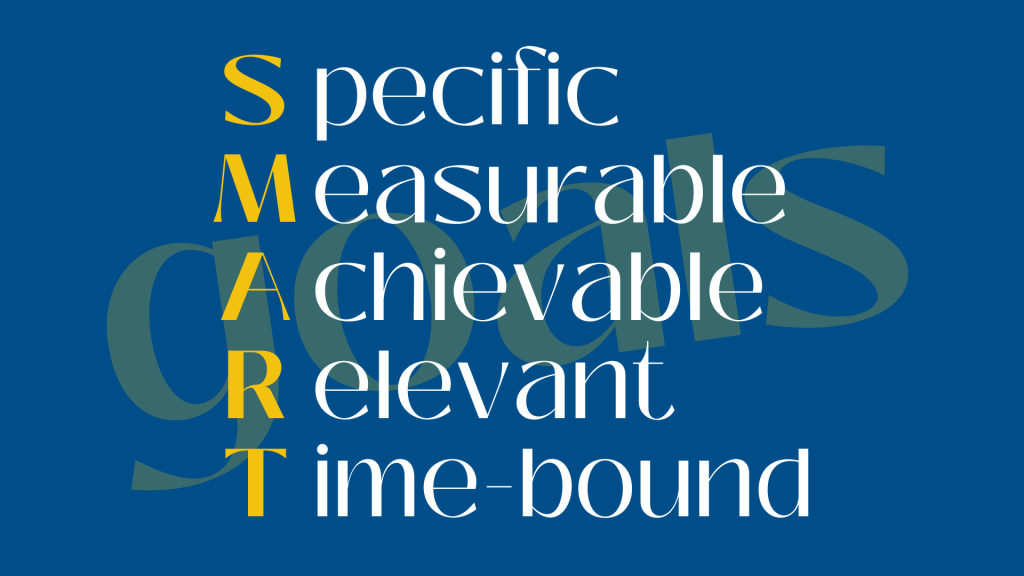
    In The Marketing Campaign Playbook, Sharon Lee Thony emphasizes the importance of setting SMART objectives when developing a marketing strategy. SMART goals are specific, measurable, achievable, relevant, and time-bound. These types of goals create a roadmap for content creation and measurement.

    Thony also stresses that understanding the audience is essential. Organizations must know who their audience is, what platforms they use, when they are active, and what type of content resonates with them. Without this understanding, even consistent posting can fall flat.

    Brand Background: The Pathway School

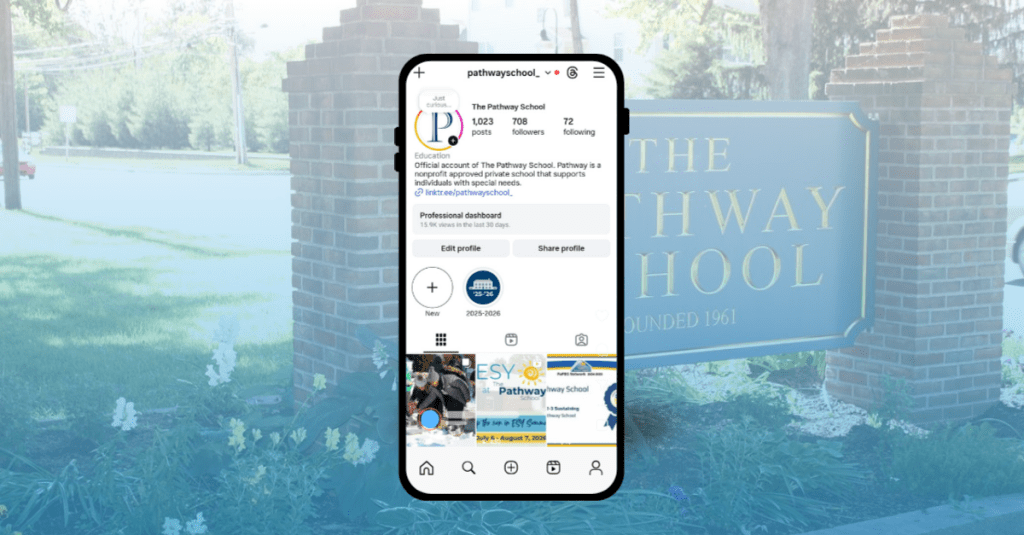
    The Pathway School is a nonprofit K–12 special education school whose mission is to support students with special education needs. The school maintains an active presence on Instagram and Facebook to reach families, donors, alumni, and community supporters. These platforms are used to share school news, highlight student successes, promote fundraising efforts, and showcase programs across campus.

    To evaluate organic performance, I used Instagram Insights, Facebook’s Professional Dashboard, and Sprout Social to analyze content performance over the past 90 days.

    Instagram Performance Analysis

    The Pathway School’s Instagram account currently has 708 followers. Over the past four months, content received 90,431 views, with 59.1% coming from followers and 40.9% from non-followers. This indicates that content is reaching beyond the existing audience, which is a strong signal for organic growth. Accounts reached increased by 61% compared to the previous 90-day period, reaching 1,573 accounts. Profile activity also rose significantly, with 2,437 actions, representing a 53.7% increase.

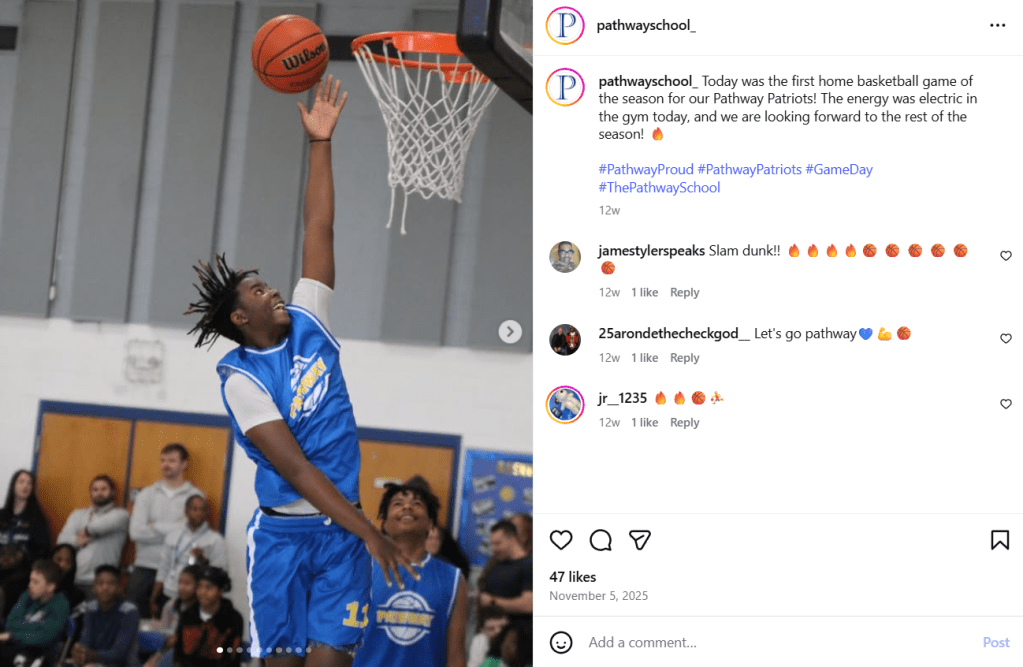
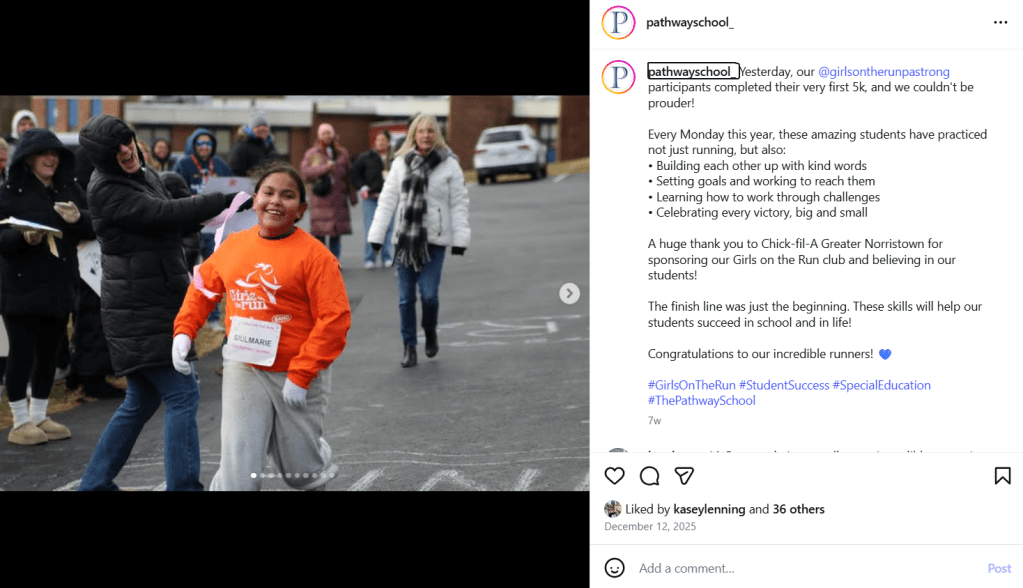
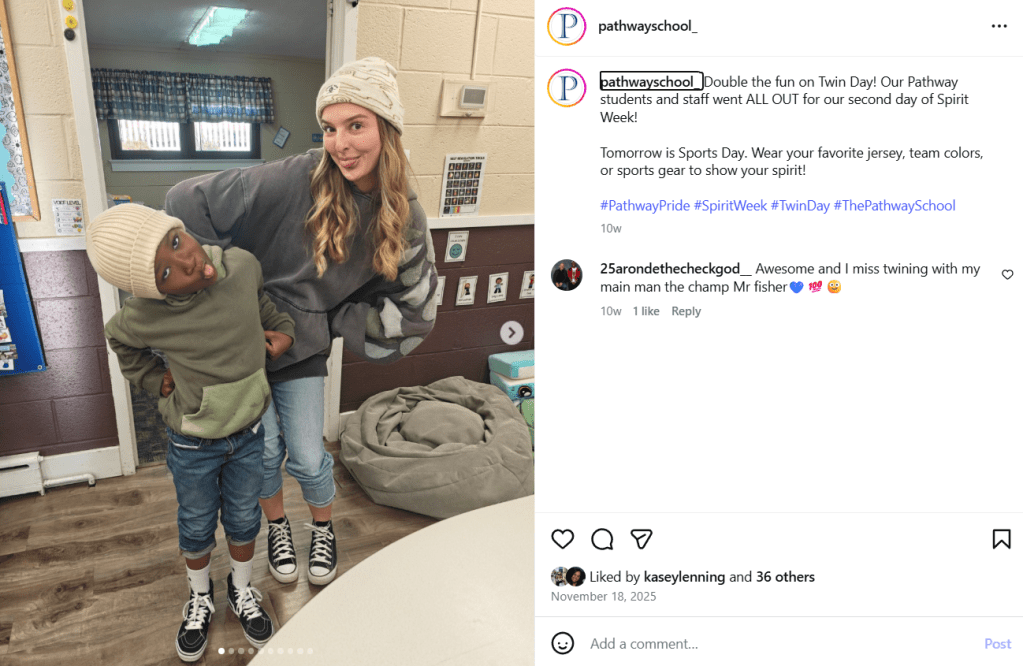
    In terms of interactions, Instagram content generated 1,423 total interactions over the past 90 days. These included 875 likes, 41 comments, 37 saves, 197 shares, and 41 reposts. The content that performed best in terms of views and likes consisted of still-photo posts highlighting student-centered stories, including a basketball team win, Spirit Week celebrations, and the first Girls on the Run 5K hosted on campus. These posts used storytelling to showcase student achievements and community pride. The posts can be viewed below.

    Follower growth increased by 3.1%, adding 21 new followers. Audience demographics show that the largest age groups are 35–44 (28.1%), 25–34 (24.4%), and 45–54 (18.2%), with women representing 64% of followers. Most followers are located in the Philadelphia area, aligning well with the school’s geographic focus.

    However, posts related to upcoming fundraisers were among the lowest-performing content in terms of likes, comments, and saves. This suggests that purely promotional content struggles to gain engagement without a strong storytelling component.

    Facebook Performance Analysis

    Facebook analytics reveal a larger but slightly older audience. The Pathway School’s Facebook has 2,142 Facebook followers, a 1% increase over the past 90 days. Content received 70,719 views during this period, representing a 52% increase from the previous quarter. Total engagement reached 7,340 interactions.

    Multi-photo posts performed the strongest, accounting for 53.1% of engagement, followed by Reels at 25.2% and single-photo posts at 18.1%. Reactions were the most common form of engagement at 1,800, followed by 150 comments and 58 shares. The top age group on Facebook was 45–54 (26%), followed by 35–44 (21.9%) and 55–64 (18.9%). This older demographic aligns well with donors, alumni, and family members.

    Cross-Platform Insights from Sprout Social

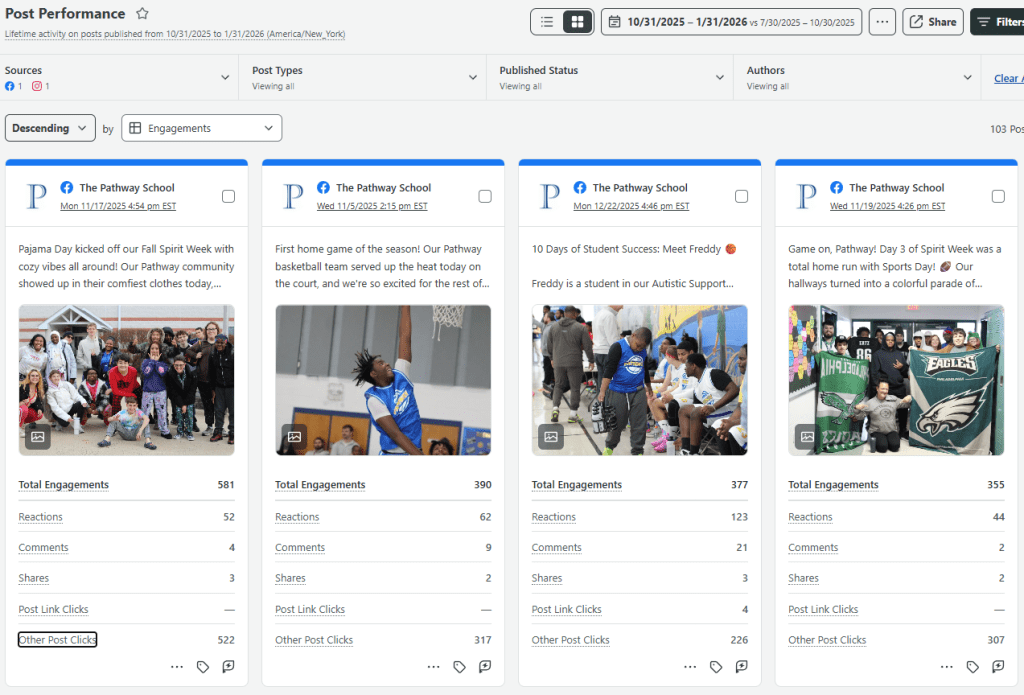
    My Sprout Social Dashboard, featuring the posts with the highest number of engagements.

    Using Sprout Social to compare organic posts across Instagram and Facebook revealed several key trends. Posts with the highest total engagement were consistently on Facebook, likely due to the platform’s larger follower base. The top-performing posts across both platforms featured student successes and campus-wide events, particularly basketball games and Spirit Week celebrations.

    These posts featured multiple images highlighting a variety of students and activities, which contributed to higher reactions and comments. Their primary goal was to drive engagement through storytelling and community connection.

    In contrast, the post with the highest number of post link clicks was tied to a fundraising effort for the school’s year-end appeal. This post was part of the “10 Days of Student Success” campaign, which highlighted a different student story each day with a clear call-to-action to donate. Compared to fundraising posts that did not include photos of students, these campaign posts generated more shares and higher conversion activity. This reinforces that storytelling-driven fundraising content is more effective than promotion-only posts.

    Strengths, Trends, and Opportunities

    This data highlights key strengths, trends, and opportunities that can further strengthen The Pathway School’s organic social media strategy.

    Strengths

    A primary strength across both platforms is authentic storytelling. Posts featuring real students, real moments, and real outcomes consistently outperform graphic-only or announcement-based content. This approach not only drives higher engagement but also builds trust, which is critical for a nonprofit organization.

    Consistent posting frequency is another strength. Posting two to four times per week maintains visibility without overwhelming followers and supports algorithmic reach, as platforms favor accounts that post regularly within a defined niche.

    Visual variety also contributes to performance. Multi-photo posts and carousels perform especially well on Facebook, while Instagram benefits from a mix of still images and video. This variety allows the school to showcase diverse students and activities, reinforcing inclusivity across campus.

    Finally, active community management strengthens relationships. Liking and responding to comments signals that the school values conversation and connection with its audience.

    Trends

    Engagement is highest when posts highlight shared campus experiences. Events such as Spirit Week, athletics, and school celebrations generate more reactions and comments than individual announcements by fostering collective pride.

    Another clear trend is that story-driven fundraising outperforms promotion-driven fundraising. Posts that feature student stories and photos receive more shares and engagement than graphic-only fundraising posts, indicating that emotional connection motivates action.

    Audience demographics reveal a platform split. Instagram skews younger (35–44), while Facebook skews older (45–54), suggesting that families may be more active on Instagram, while donors and long-term supporters are more reachable on Facebook.

    Opportunities for Improvement

    One major opportunity is to better balance engagement and conversion content by pairing clear calls-to-action with emotional storytelling, especially during fundraising campaigns.

    There is also an opportunity to expand storytelling beyond current students by regularly featuring alumni success stories, reinforcing long-term impact for donors and families.

    Increasing behind-the-scenes classroom content would showcase learning in action, helping move audiences from awareness to consideration by demonstrating how the school fulfills its mission daily.

    These types of content could be shared as short-form video. Although Reels already generate meaningful engagement, they are not yet used to their full potential. Because algorithms prioritize watch time and completion rates, expanding this format presents an opportunity for growth.

    Proposed Organic Social Media Strategy

    Using the strengths, trends, and opportunities identified above, the following organic social media strategy is designed to intentionally balance engagement and conversions for The Pathway School.

    1. Clearly Defined Goals

    To move from posting consistently to posting strategically, The Pathway School’s goals include:

    • Increase brand awareness and reach by showcasing student success, campus life, and inclusive education practices. Increased reach by 10% over the next three months.
    • Strengthen engagement and community trust through storytelling, conversation, and two-way interaction. Increase engagement rates by 5% over the next three months.
    • Support conversions by developing fundraising content that features real student stories rather than graphic-only promotions. Increase conversion rates by 10% over the next three months.

    2. Target Audience Persona

    The data reveals a primary persona across platforms:

    Primary Persona: “The Pathway Supporter”

    • Age: 35–54
    • Gender: Primarily women
    • Location: Greater Philadelphia area
    • Relationship to Pathway: Parent, caregiver, donor, alum, or community advocate
    • Motivations: Supporting student success, inclusion, long-term impact, and community well-being
    • Platform Behavior: Engages most with student stories, campus-wide events, and impact-driven content

    This persona explains why storytelling posts perform well and why donor-focused content is more successful when it features students rather than graphics.

    3. Tailored Content

    Content includes the following categories:

    • Student & Alumni Success Stories (Engagement + Conversion): These posts generate the highest likes, comments, and shares, especially when tied to fundraising campaigns.
    • Campus Life & Community Moments (Engagement): Events like Spirit Week and athletics consistently drive reactions and comments by highlighting shared experiences.
    • Learning in Action (Engagement): Behind-the-scenes classroom content addresses an opportunity to better showcase academic and therapeutic impact.
    • Donor & Supporter Voices (Conversion): Testimonials can humanize fundraising efforts and strengthen emotional motivation to donate.
    • Fundraising & Calls-to-Action (Conversion): Data shows fundraising posts perform best when paired with student stories rather than standalone graphics.

    4. Consistent Posting Schedule and Content Calendar

    Based on current posting success and algorithm best practices, I recommend three to five posts per week across Instagram and Facebook. Consistency supports algorithmic reach while reinforcing the school’s niche and brand voice. Below is an example content calendar. The posts are during the week because that is when The Pathway School’s audience is most active on Instagram and Facebook.

    5. Active Community Engagement

    Data shows that engagement increases when the school actively participates in conversation. The school should:

    • Reply to comments with thoughtful responses, not just likes
    • Ask questions in captions to invite dialogue
    • Acknowledge donors, families, and supporters in comments when appropriate
    • Re-share tagged content from families, staff, or supporters

    This approach reinforces trust and aligns with the goal of strengthening community engagement.

    6. Performance Tracking and Optimization

    To ensure accountability and improvement, performance should be tracked monthly using platform analytics and Sprout Social. Key metrics should include:

    • Engagement metrics: likes, comments, shares, saves, reactions
    • Reach metrics: accounts reached, non-follower reach, video views
    • Conversion indicators: link clicks, shares on fundraising posts, profile actions

    Posts should be reviewed by goal category (engagement vs. conversion) to evaluate success appropriately, and tracking performance with these metrics ensures that organic social media efforts are aligned with organizational objectives.

    Conclusion

    Organic social media content is most effective when it is intentional, measured, and aligned with organizational goals. The Pathway School’s current strategy successfully builds engagement through storytelling and community-focused content. By strengthening short-form video, expanding storytelling into fundraising efforts, and setting clear objectives for each post, the school can better balance engagement and conversions. Grounded in data and guided by strategic frameworks, organic social media can move from simple presence to purposeful impact.

  • Where Athletes and Audiences Meet: New Balance’s Social Media Strategy

    Where Athletes and Audiences Meet: New Balance’s Social Media Strategy

    Social media has transformed how brands communicate with their audiences. In Social Media ROI: Managing and Measuring Social Media Efforts in Your Organization, Olivier Blanchard explains that communication has shifted from a monologue to a dialogue. Before social media, brands relied on one-way messaging. Organizations pushed out ideas through ads, and audiences either accepted or ignored them. There was little opportunity for response or interaction.

    Today, social media platforms allow consumers to share opinions, react to content, and engage directly with brands. Consumers can also communicate with each other, which Blanchard refers to as lateral engagement. This shift helps audiences feel included in the brand’s story rather than simply receiving a message.

    As Sharon Lee Thony explains in The Marketing Campaign Playbook: A Step-by-Step Guide for Entrepreneurs, Marketers, & Small Business Owners, social media has become an essential tool for brand building, promotion, and community growth through a balance of paid and organic campaigns. New Balance is a strong example of how these strategies work together in practice.


    Why New Balance? A Runner’s Perspective

    New Balance is an American athletic footwear and apparel company with deep roots in running and performance sports. As a runner and fitness enthusiast, I have been a long-time supporter and consumer of the brand, making their social media strategy especially interesting to analyze. I researched two of their platforms: Instagram and TikTok.


    Instagram: Athlete Stories and Brand Identity

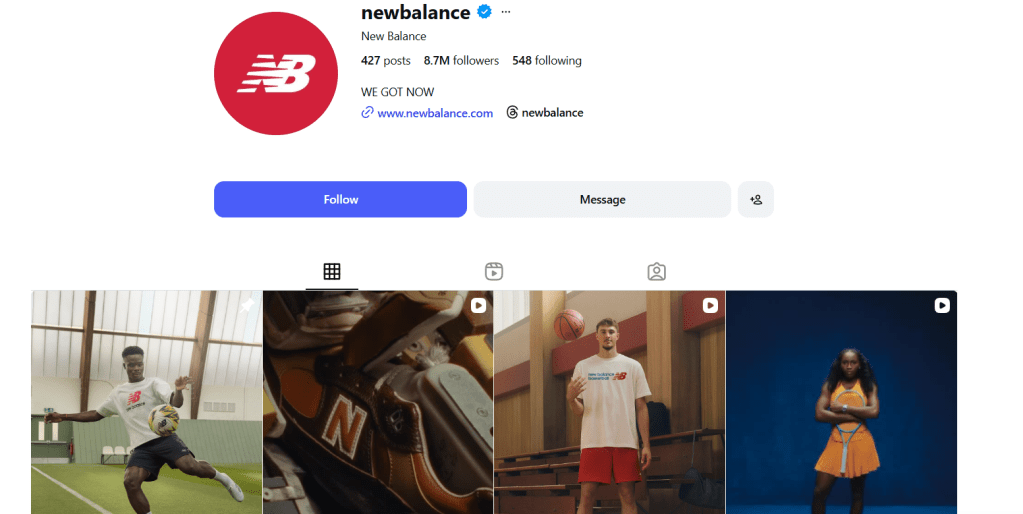
    New Balance’s Instagram account has 8.7 million followers and features a mix of organic and paid content. A majority of their organic content focuses on athlete and community storytelling. Many posts highlight sponsored athletes and their accomplishments, helping build an emotional connection with followers.

    One example is a post featuring Sydney McLaughlin after she broke the American record in the 400 meters at the Track and Field World Championships. The image shows her holding the American flag and gold medal, celebrating both personal and national success. Posts like this show how New Balance supports athletes beyond products and helps consumers feel like part of the journey.

    These organic posts typically receive between 10,000 and 20,000 likes, with some reaching over 200,000. Paid posts on Instagram tend to focus more on product launches, such as Cooper Flagg’s signature sneaker, and often receive higher shares. This suggests that New Balance prioritizes storytelling for connection and paid content for reach.


    TikTok: Energy, Authenticity, and Interaction

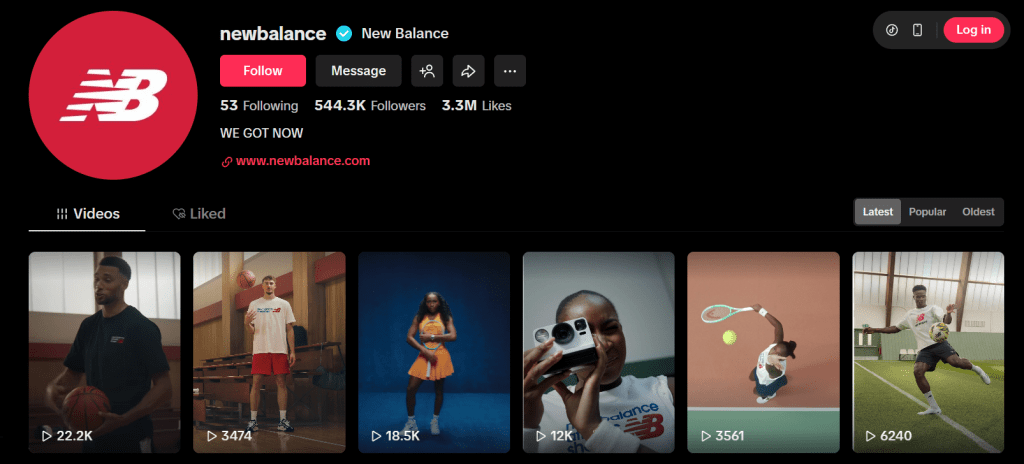
    New Balance’s TikTok account has over 544,000 followers and more than 3.3 million likes. Much of the content overlaps with Instagram, but TikTok places greater emphasis on movement, behind-the-scenes moments, and high-energy visuals.

    The brand’s “We Got Now” campaign features athletes like Coco Gauff and Kawhi Leonard and focuses on living in the present and chasing goals with confidence. These videos give viewers a closer look at athletes’ training and daily routines, making the content feel more personal. The campaign has a balance between organic and paid posts, where organic posts show the athletes in action, and the paid posts promote the athletes’ specific products.

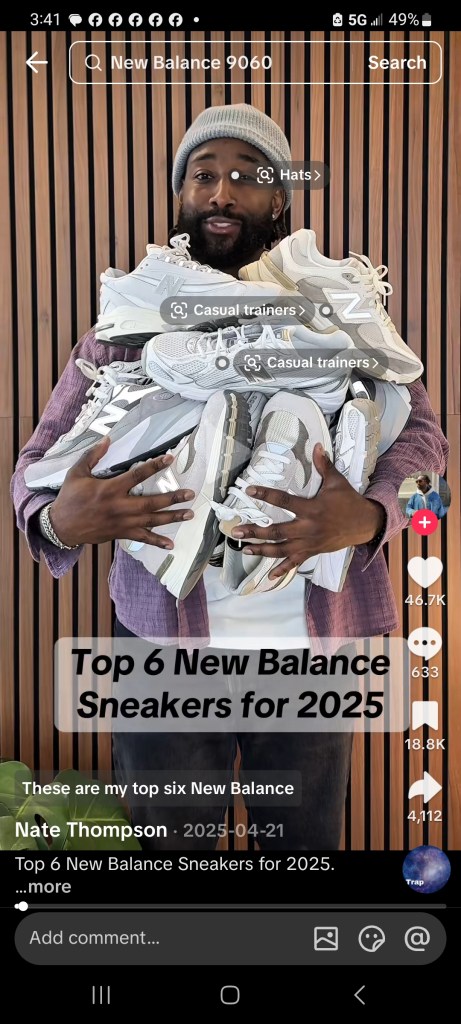
    New Balance also uses user-generated content on TikTok, such as reviews and product showcases from everyday runners. These posts rely heavily on likes and saves, allowing users to bookmark content and return to it later. This reflects Blanchard’s idea of lateral engagement, where consumers influence each other through shared experiences and opinions.


    Opportunities to Strengthen Engagement

    While New Balance has a strong social media presence, there are some opportunities to further improve engagement. One noticeable area is direct interaction in the comments section. When reviewing Instagram and TikTok posts, there were very few replies from the brand, even on posts that sparked conversation. Responding to comments could help strengthen the sense of community and reinforce the idea of social media as a dialogue rather than a monologue.

    New Balance could also encourage more participation through interactive features. Instagram tools like polls or question stickers could invite fans to engage with athletes, while TikTok challenges or branded hashtags could inspire more user-generated content.


    Finding the Balance: We Got Now

    Overall, New Balance does an effective job balancing organic and paid social media content. Organic posts build trust and connection through storytelling, while paid campaigns help amplify reach and product awareness. Engagement metrics such as likes, shares, and saves reveal how the brand tailors content for each platform.

    In the spirit of their campaign, New Balance doesn’t just say “We Got Now.” They show it by creating content that builds community and meets consumers where they are. The question now is: We Got Now…will you get New Balance today?