Author: cschaaf933

  • From Idea to Action: Building My First Digital Product

    From Idea to Action: Building My First Digital Product

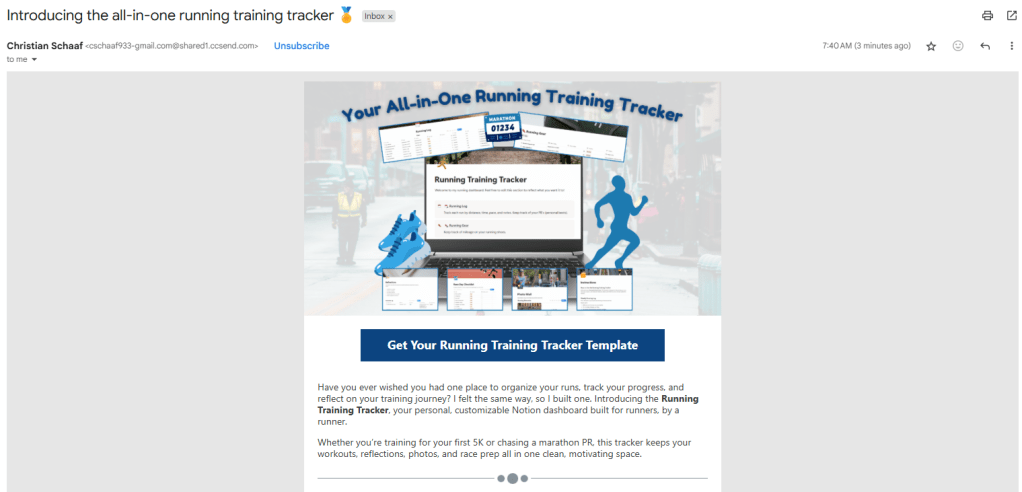
    Have you ever had an idea for something you wanted to create, only to realize you weren’t sure where to begin? That’s exactly how I felt when I started working on my first digital product: a running training tracker. I knew I wanted to create something useful for runners like me, but I also knew it would take planning, patience, and learning new tools along the way. This post is all about the first steps of that journey: the planning stage and the beginning of production.


    Laying the Groundwork with Planning

    Before I opened a single app, I knew I needed a plan. I created a Trello board to break the project into small, actionable tasks spread over three weeks. This helped me avoid feeling overwhelmed and gave me a roadmap to follow. Each task was sized so that I could chip away at the project consistently rather than trying to tackle everything at once.

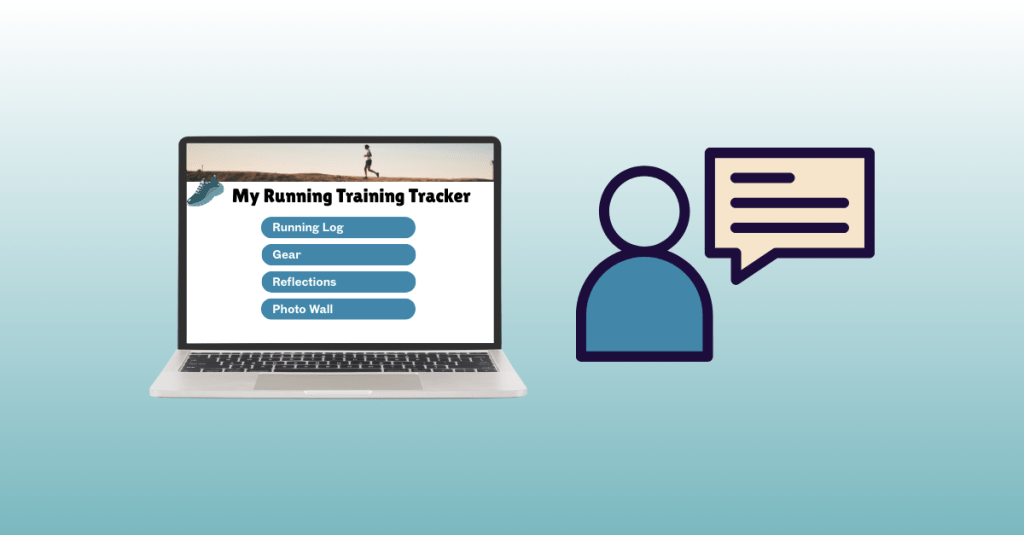
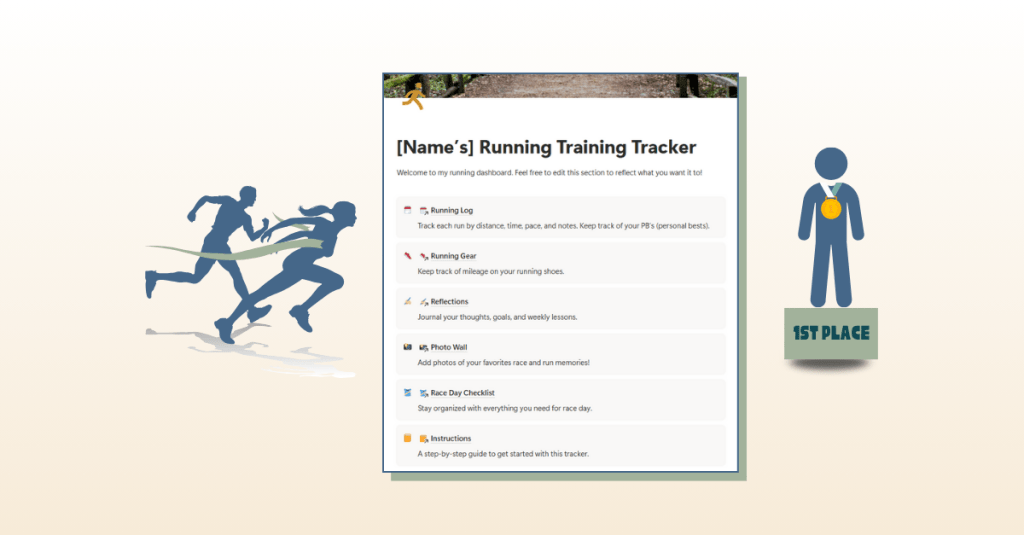
    I also used Canva to sketch out mockups of the tracker pages. These visual drafts gave me a clearer picture of what I wanted to build before diving into the software itself.

    View my Canva mockups here.


    Choosing the Right Platform

    After researching my options, I decided to build the tracker in Notion. What drew me in was its flexibility: tables, linked databases, and the ability to connect everything in one place. I thought these features would allow me to build something robust while still being user-friendly.

    The catch? I had never used Notion before, so my first week was all about learning.


    Learning the Tools

    To get up to speed, I leaned heavily on tutorials and resources. Here are a few that helped me the most:

    I can’t overstate how important these were. At first, everything felt foreign, but after a few videos and articles, I began to see how the pieces fit together.


    Starting to Build

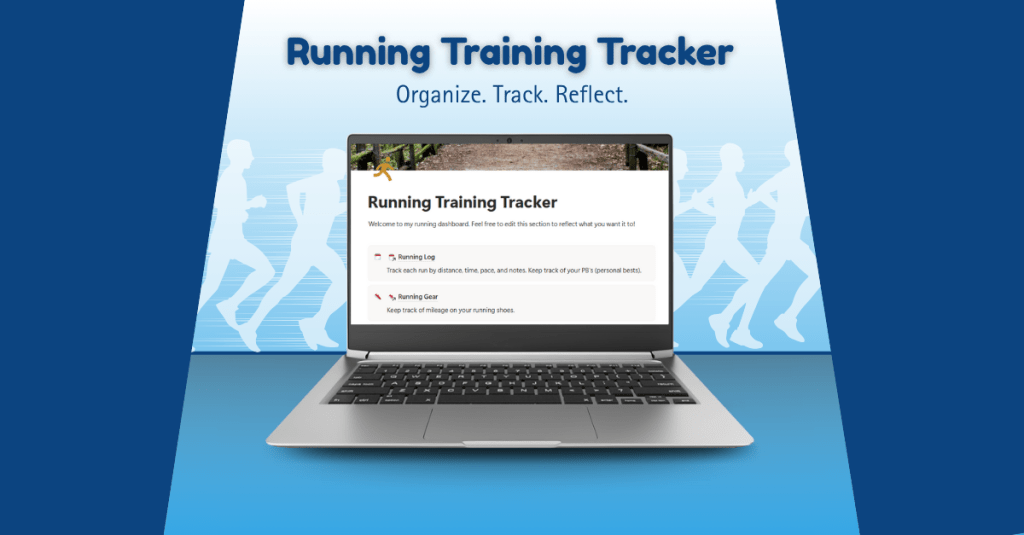
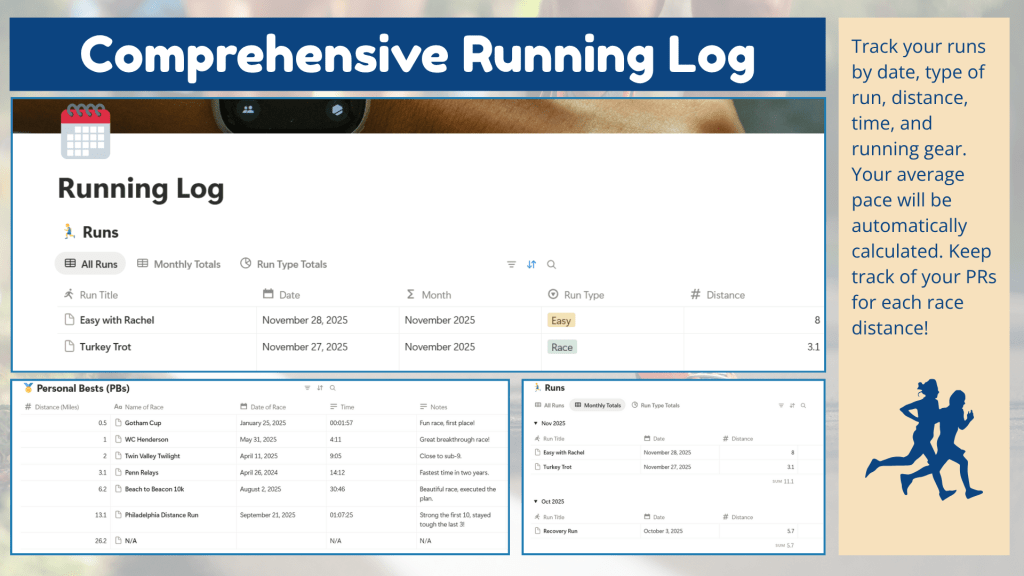
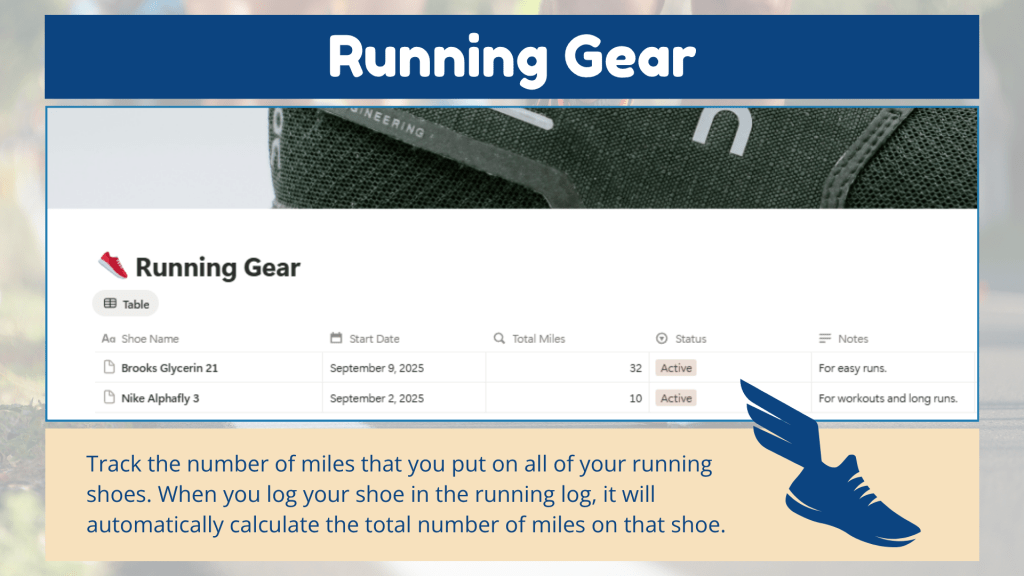
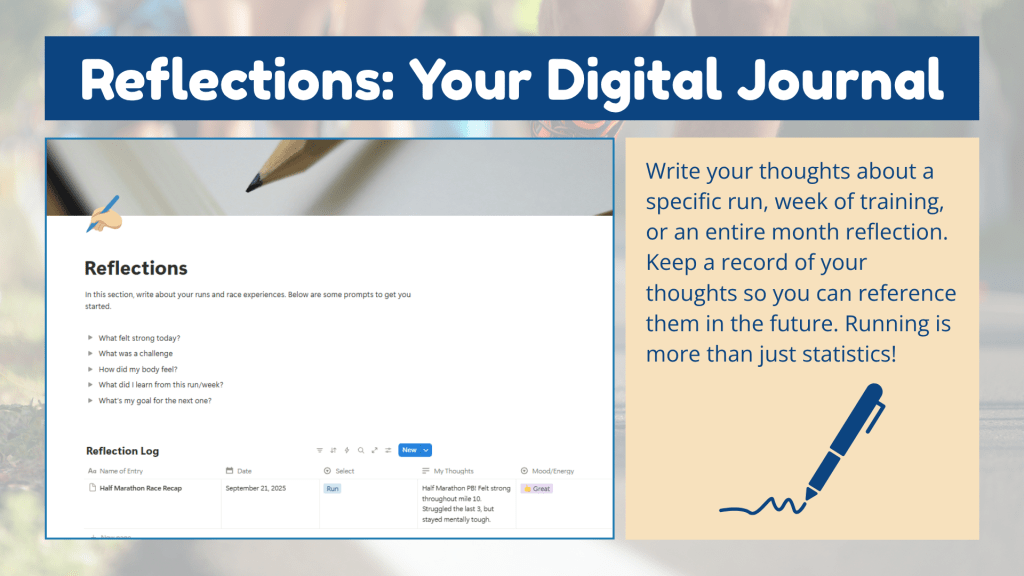
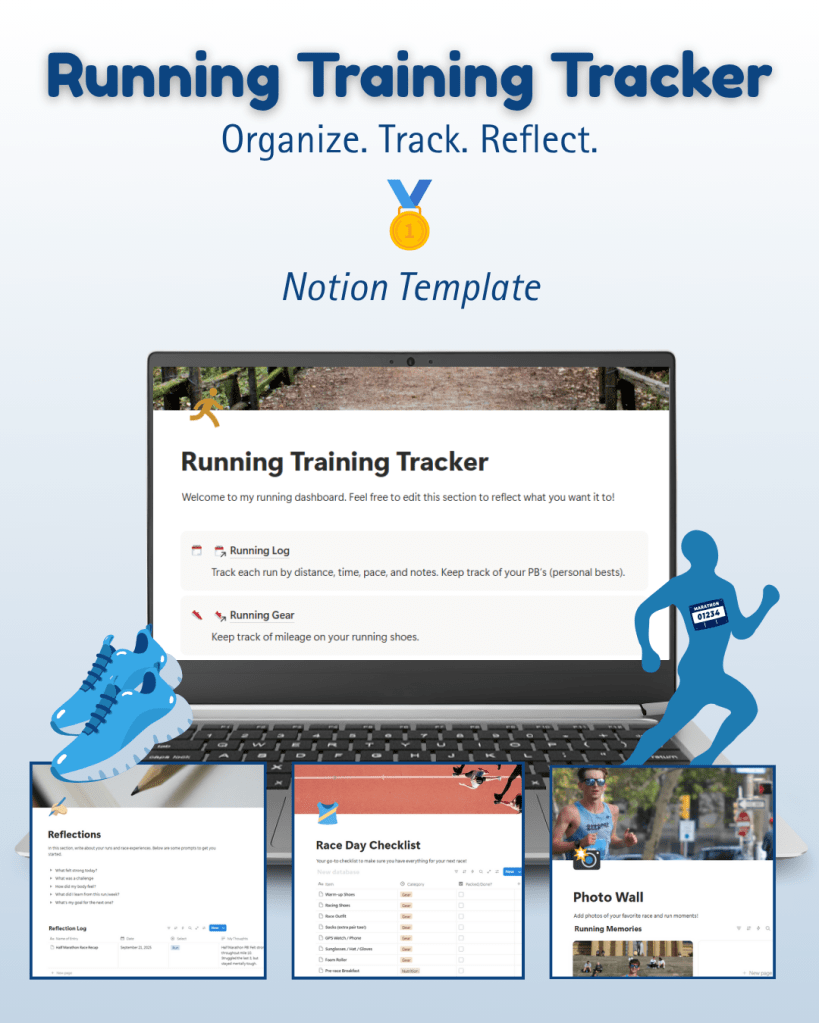
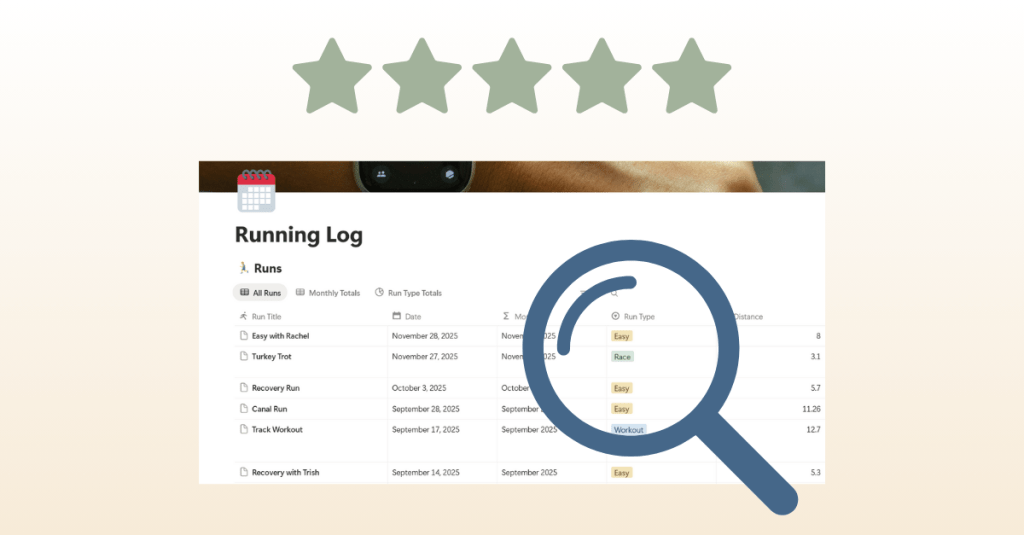
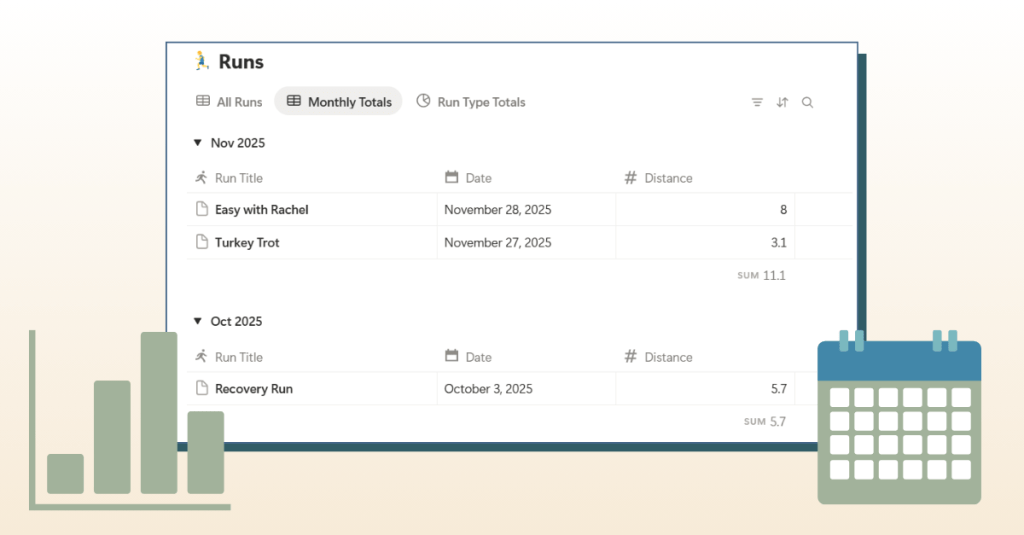
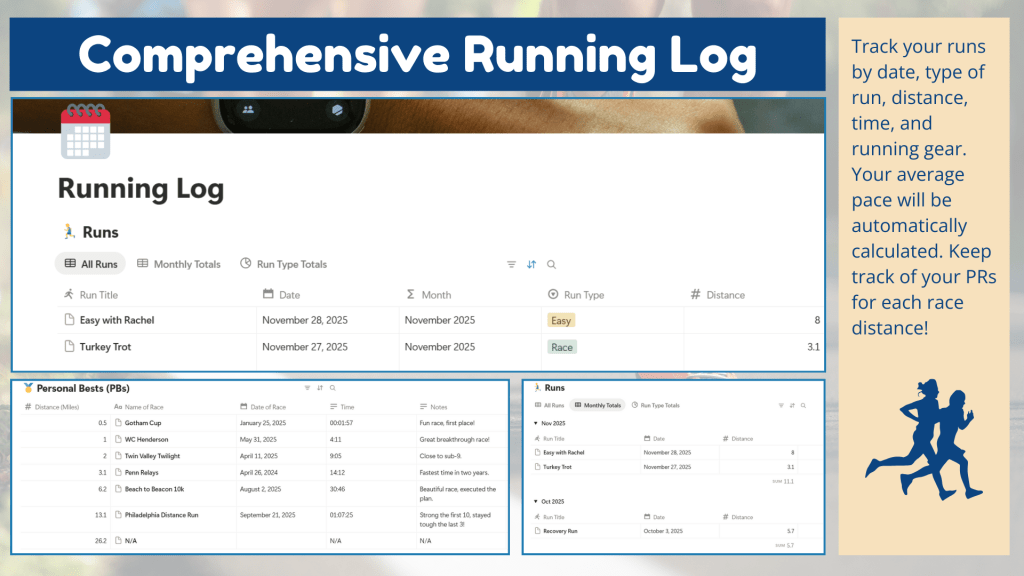
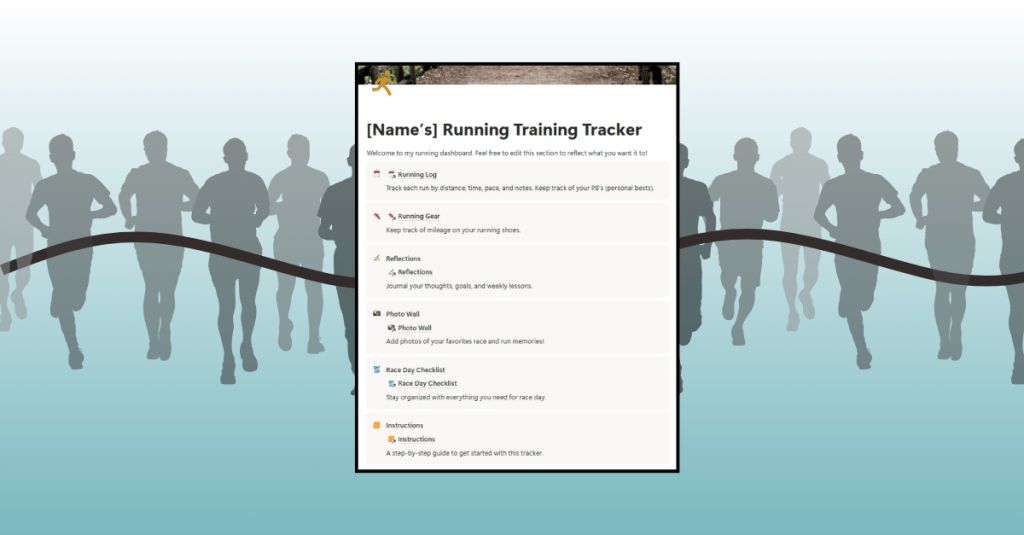
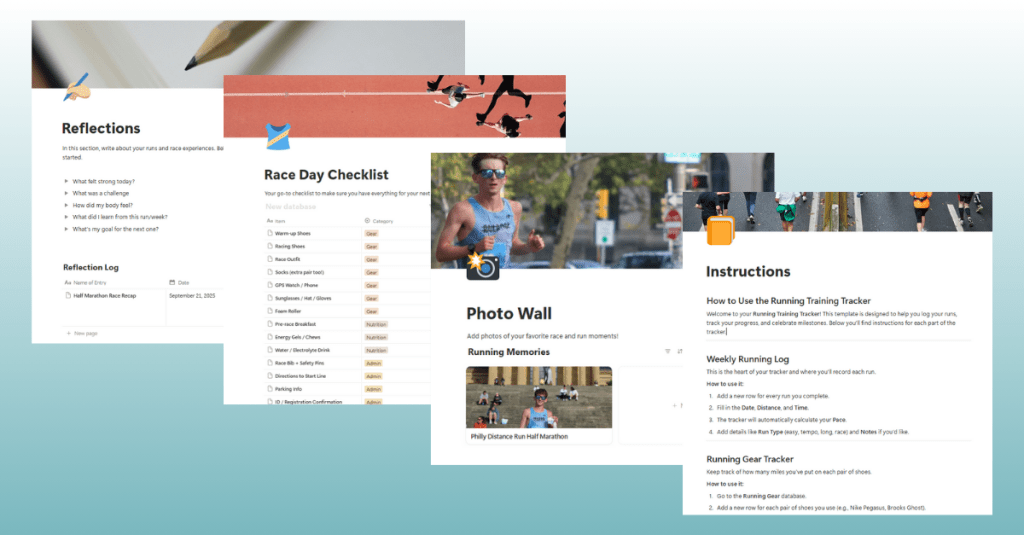
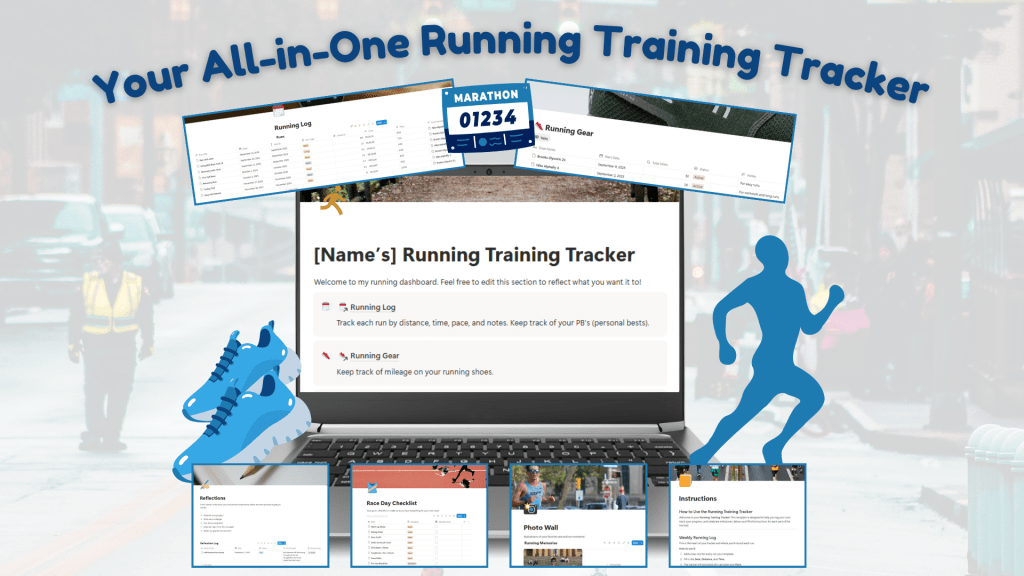
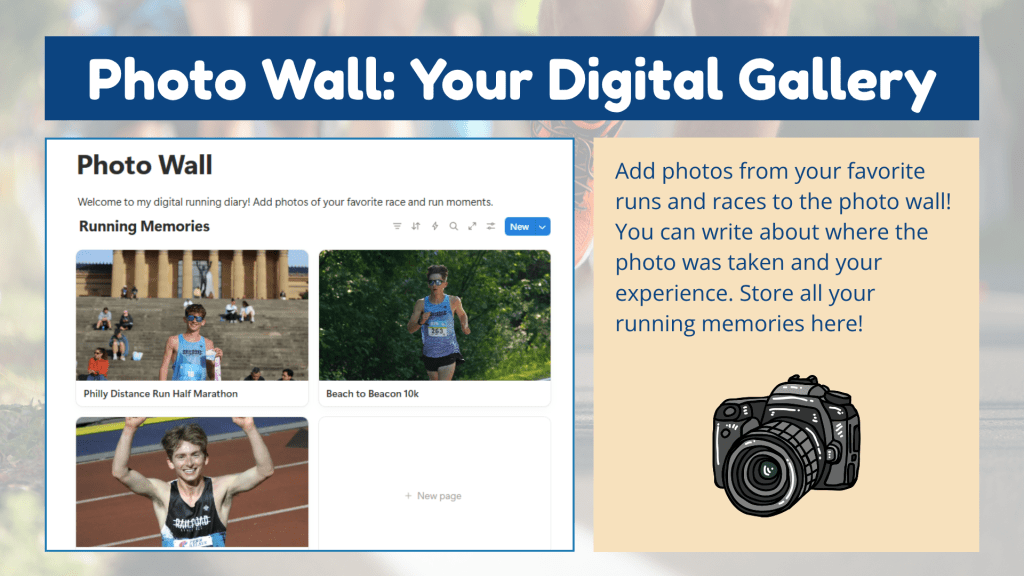
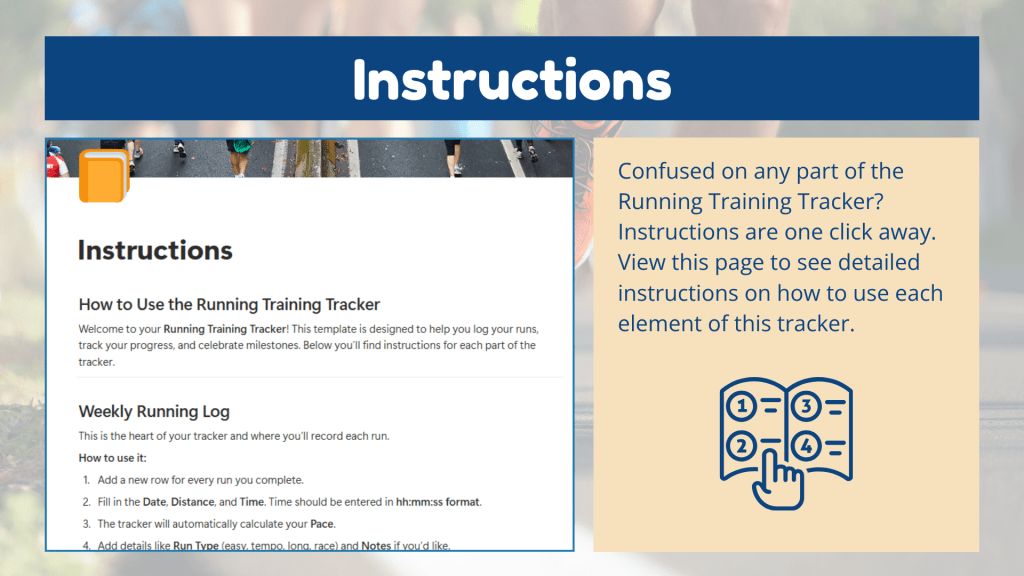
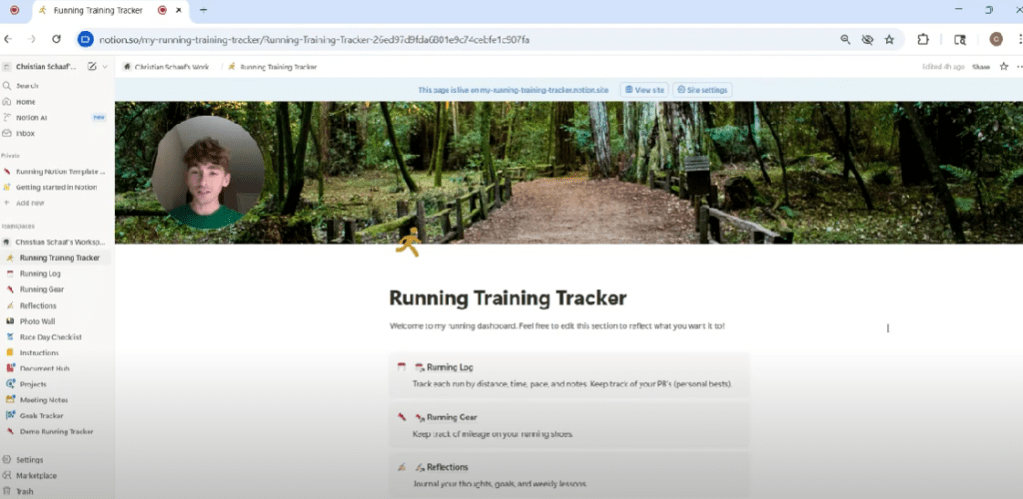
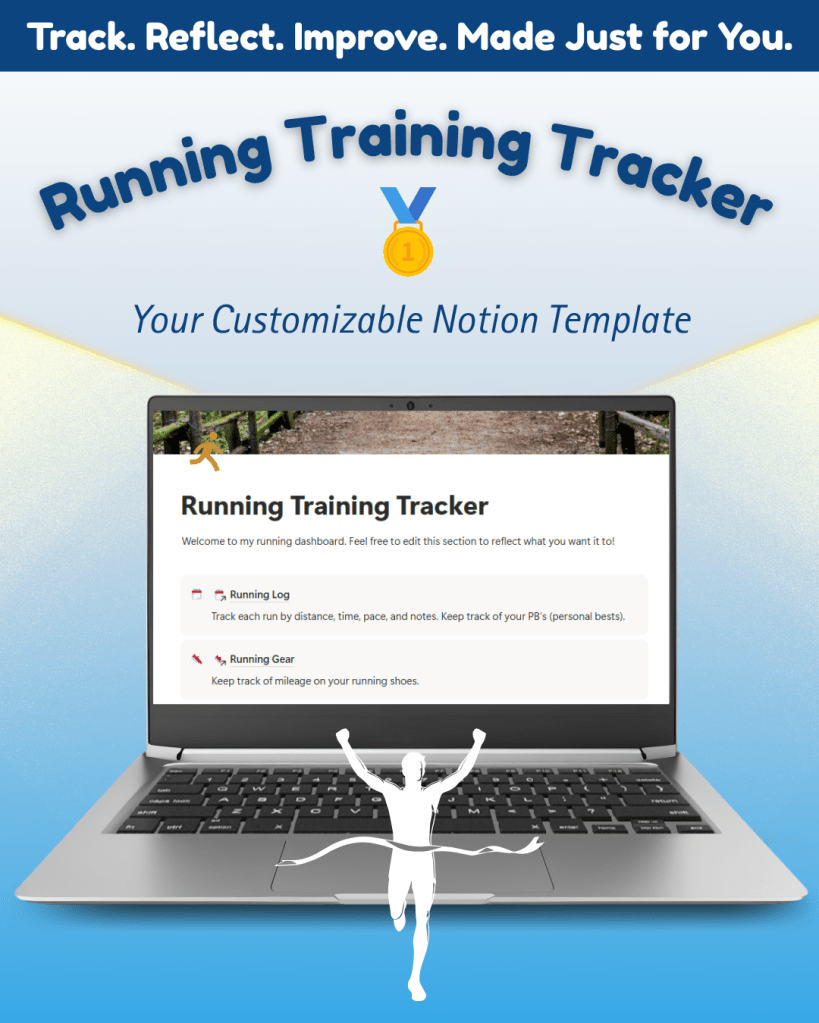
    When I felt more confident, I opened Notion and began building the Running Log, which is the core element of the tracker. This is where runners can enter their daily workouts, including distance, time, pace, and notes. I also added a section for Running Gear so runners can log which shoes they wore and see how many miles they’ve put on each pair.

    Click here to view the progress I’ve made on my running training tracker in Notion.

    The first 30–40% of the build is now complete. The foundation is there; what’s left are refinements, smaller features, and, eventually, testing with real runners.


    What Worked and What Didn’t

    Some tools felt like second nature. Trello and Canva were smooth sailing since I’ve used them before. Building in Notion was a different story.

    The biggest challenge? Coding formulas in Notion. For example, I wanted the tracker to calculate average pace when users enter their distance and time in “hh:mm:ss” format. It sounds simple, but formatting time in a way that Notion understands is complex. I spent a long time testing formulas, reading threads, and watching tutorials. It was frustrating at times, but I learned to be patient and keep trying different approaches until it worked.

    Another tricky area was linking databases. I set up a system where the Weekly Log connects to the Running Gear database. That way, each shoe automatically adds up the total miles logged. Getting the databases to connect to each other correctly was a learning curve, but when I figured it out, it became a game-changer.


    Reflection

    Looking back, I’m proud of the progress I made this week. Taking time to plan with Trello and mockups in Canva made the actual building phase much smoother. I also proved to myself that I could learn a new platform like Notion with enough patience and persistence.

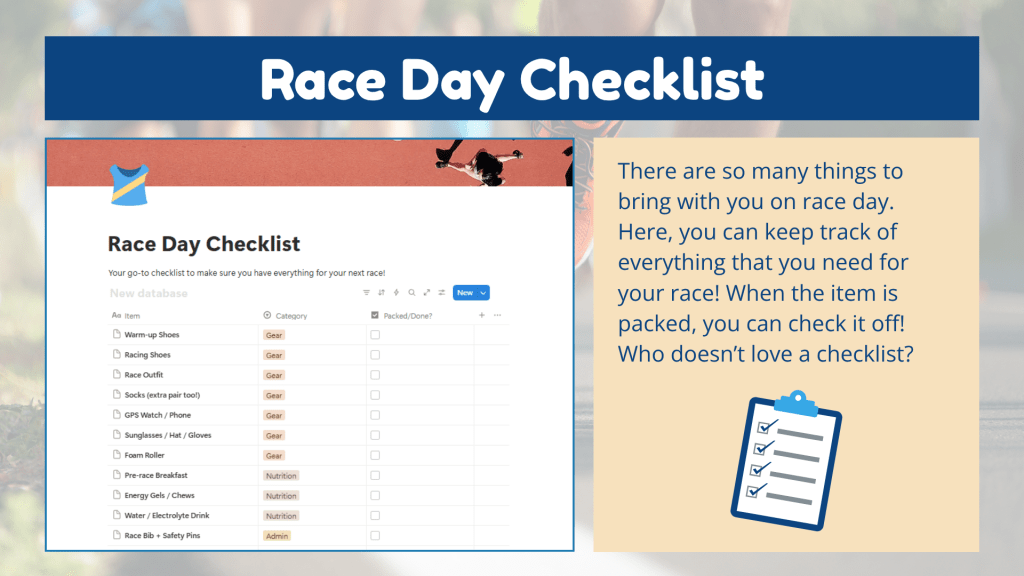
    Next week, I’ll continue building by adding sections for PRs and Goals, building out the more simple features like the race-day checklist, refining the design, and preparing for user testing. I plan to test the tracker with family members, teammates, and running club friends to gather feedback from runners of all levels. This will help me ensure the tracker is practical, motivating, and accessible for everyone.

    Want to read more about my first week of building this product? Click here to view my production journal.


    Next Steps

    My plan moving forward is simple:

    • Finish building the must-have features of the tracker.
    • Start testing with real users.
    • Refine and brand the product before the final launch.

    This journey is already teaching me so much about building a digital product, but also about staying patient, problem-solving creatively, and breaking down big goals into manageable steps.

    And that’s what building your first digital product is really about: trial and error, showing up, learning as you go, and celebrating small wins along the way.

    Stay tuned as I continue to build the running training tracker.

  • Pitch Perfect: My Journey into Digital Product Pitches

    Pitch Perfect: My Journey into Digital Product Pitches

    Need to pitch your product idea and don’t know where to start? You’ve come to the right place! I recently took on the challenge of researching digital products and then creating a pitch to help decide which idea I should move forward with. If you’re curious about my research process, you can check out my last blog post.

    When it came time to pitch, I had all the same questions you might be thinking: How do I structure my pitch? What makes a pitch effective? How do I condense my research into just a few minutes? Through trial, error, and a lot of practice, I learned a few valuable tips that made the process smoother. Let’s dive in.


    Creating a Presentation

    In the article How to Successfully Pitch Your Business Idea to Investors,” Caroline Cummings suggests starting with a presentation. A clear and simple pitch deck can keep you on track and highlight the most important points. I took that advice and created a slide deck that walked through my product ideas. It helped me get organized, and that made all the difference.

    I also wrote a script in addition to the slides, and this helped me gather my ideas in a concise way. A script is like your safety net: it makes sure you do not forget any key details while also keeping you from rambling. You want to get to the point quickly, but you also want to be thorough. There are even templates on Canva and Google Slides if you need inspiration. Click here to view my slide deck for reference.


    Structuring the Pitch

    Cummings also stresses the importance of outlining the problem and then offering a compelling solution. That advice was echoed by Pattie Belle Hastings, who provides a simple outline for creating an effective pitch:

    • Problem Statement: What specific problem does this solve?
    • Target Customer: Who exactly needs this solution?
    • Solution Overview: What are you building?
    • Key Features: What are the 3–5 main features of the product?
    • Competitive Advantage: Why will customers choose this over alternatives?
    • Revenue Model: How will you monetize, and what platform will you use?
    • Success Metrics: How will you measure success?

    I used this exact outline, and it kept me focused. It also made my pitch easy to follow for the audience.


    Practice Makes Progress

    The next tip is one that cannot be stressed enough: practice your pitch. I rehearsed my script several times, timing myself to make sure I stayed within my three-minute limit. Practicing helped me simplify my message and cut out anything unnecessary.

    If you are recording your pitch, tools like Loom are a lifesaver. Even if you are presenting live, practicing with a recording tool can help you see how you sound and where you might stumble. Watching yourself back can be uncomfortable, but it is incredibly useful for improving your delivery.

    Check out my product pitch video below.


    The Power of Feedback

    Another big part of the process is feedback. After presenting my pitch, my colleagues shared what they thought about each product. The votes on my three product ideas were split almost evenly, which made the feedback even more valuable.

    For the Running Training Tracker, they said I bring a lot of passion and knowledge to this idea because of my experience as a distance runner. One classmate pointed out, though, that some people might prefer existing apps like Strava instead of a tracker.

    For the Event Kits, which included flyer and social media templates, my classmates agreed there is a strong market for small business owners who do not have a design background. One person suggested making sure the kits stand out by emphasizing what unique value they provide.

    For the Brand Kits, classmates noted that tailoring them to a specific audience, like solopreneurs, coaches, and nonprofit managers, would help them stand out from generic branding templates already on the market.


    My Decision

    It was tough to choose because I feel a personal connection with all three products. The running tracker connects to my passion for running. The flyer and brand kits tie into my professional work in design and communications.

    After thinking it over, I decided to move forward with the Running Training Tracker. I plan to position it as a more personal and customizable tool, different from the social-sharing and data-heavy platforms like Strava. My version will focus on helping runners stay motivated and track progress in a way that feels encouraging and personal rather than overwhelming.


    Key Takeaways

    If you are preparing your own pitch, here are the biggest lessons I learned:

    • Keep it concise and organized.
    • Follow a clear outline: problem, solution, customer, features, revenue, and success metrics.
    • Practice until the message feels natural.
    • Ask for feedback and refine your pitch, even if you think it is already solid.

    Most importantly, remember that pitching is a skill. The more you practice, the better you will get.


    Wrapping Up

    This experience taught me that pitching is not about perfection. It is about clarity, confidence, and connecting with your audience. Whether you are pitching to investors, classmates, or future customers, keep refining your message and believe in the value of your idea.

    I am excited to keep developing my Running Training Tracker and to see how it evolves. Best of luck on your own pitching journey. You’ve done the research, and now it is time to share it with the world. You got this.

  • What I Learned as a Total Newbie to Digital Product Creation

    What I Learned as a Total Newbie to Digital Product Creation

    Have you ever wondered what the world of digital products was all about? Have you felt a mix of excitement, confusion, or even a little overwhelm when thinking about selling something online? Me too. Coming from someone with no prior experience in selling digital products, this was completely new territory for me. I stepped into this research process with curiosity and a healthy dose of nerves, not knowing where to begin or how to stand out in such a busy space. What I found along the way was a fascinating landscape of creativity, strategy, and endless possibilities.

    Let’s start with the basics. What is a digital product? A digital product is anything you can create once and sell repeatedly without the need for physical shipping. Think of templates, online courses, e-books, trackers, or even design bundles. They are scalable, creative, and accessible, which makes them an exciting way for designers, entrepreneurs, and everyday creators to share value with the world.


    Exploring the Marketplaces

    My first step was to explore the marketplaces where people sell their digital products. I looked at popular platforms like Etsy, Gumroad, Creative Market, Payhip, and the Canva Marketplace. I also learned about the growing Notion Marketplace, which has become a go-to place for productivity templates.

    Each platform has its own personality. Etsy is buzzing with creative energy, but it is also saturated. Gumroad is simple and flexible, though you have to do a lot of your own promotion. Creative Market feels polished and professional, but competition is steep. Payhip offers useful tools like upselling and email marketing, though it has less organic traffic. Canva’s Marketplace has a massive built-in audience, but the challenge is standing out because so many templates are already available. The Notion Marketplace impressed me because of its engaged community of users who actively seek functional and customizable tools.

    Looking at all these platforms helped me understand not just what is being sold, but also how people discover products and what makes one listing catch your eye over another.


    Narrowing My Ideas

    At first, my brainstorming list was long. I looked at everything from productivity tools to UX design kits to calendars. Eventually, I realized that my best shot would be to focus on areas where I already have experience and passion. That led me to two categories: design and branding templates and running and training logs.

    Design templates make sense for me because I already create so many flyers, branding materials, and digital designs in my professional role. Running trackers also connect perfectly with my personal life as a long-distance runner who trains daily. Both ideas felt authentic to who I am, which made them more exciting to explore further.


    Learning from Competitors

    To better understand what works and what doesn’t, I studied three digital products in detail: a branding template bundle, event flyer templates, and a digital running journal.

    The branding bundle stood out because it was comprehensive. It included everything you might need for a brand identity, which showed me that people value all-in-one solutions. The event flyer template was clean and adaptable, but I felt it could be more valuable if bundled with matching social media posts or invitations. The running journal was functional and straightforward, but many versions online were plain. I saw an opportunity to create one that was more engaging, with motivational visuals and holistic features like recovery tracking.

    This comparison taught me three big lessons. First, comprehensiveness adds value. Second, adaptable design works but can be even stronger when tailored to a specific niche. Third, functionality is important, but visual appeal and user experience can make a product stand out.

    To view my full analysis and market research report, click here.


    The Ideas I’m Most Excited About

    After conducting research, the one idea that stands out to me is a Running Training Tracker that blends structure with motivation. It would help runners log mileage, track pace, and celebrate milestones, while also looking visually appealing and easy to use.

    What remains unclear is the platform I should use for the tracker. Google Sheets and Excel are widely accessible, Notion offers a strong productivity community, and digital planners work well for journal-style designs. Each has advantages, and my next step is to test which option runners prefer.

    I am also still interested in exploring branding templates. Because I am brand new to this field, I want to keep my options open and conduct more research before finalizing a digital product idea.


    What’s Next

    My research has given me clarity and confidence, even as a complete beginner to digital product creation. I plan to continue researching and start building a prototype of the Running Training Tracker in Google Sheets and/or Notion and sharing it with a small group of runners for feedback.

    This is only the beginning of my journey, but the process has already taught me so much about how digital products succeed, where opportunities exist, and how I can merge my professional design skills with my personal passions. I may be a newbie to digital product creation, but I am excited to keep learning, experimenting, and eventually launching something that helps others in a meaningful way.

  • Lessons From the Peaks: What I Learned Creating a Passion Project

    Lessons From the Peaks: What I Learned Creating a Passion Project

    Getting the chance to do a passion project is a privilege. You get to dive into research on a topic you care about, create work in a medium you choose, and let your creativity lead the way. Your canvas is entirely your own.

    For me, that meant merging two things I care deeply about: national parks and preservation with my love for design. That’s how my campaign, Preserve the Peaks, an educational project about Rocky Mountain National Park that encourages visitors to enjoy the park responsibly, came to life. It has been an exciting journey, and I learned some lessons while working on this project worth sharing.

    Creating Content Takes Time

    If I had to pick one key lesson, it’s this: creating content takes time. More time than you expect. To truly meet your goals, you have to dedicate enough time for every phase: research, planning, production, and post-production.

    If you think something will take five hours, give yourself ten. Projects always demand more than you think. But here’s the good news: when you’re invested in the process, the time doesn’t feel wasted. Even though the work was time-consuming, I enjoyed every step because I believed in the project.


    Keep Track of Everything

    This project was my first time using a project management system, and I chose Trello. It completely changed the way I worked. I tracked every step, from the tasks I completed to the time each one took.

    Not only did this help me stay on schedule, but it also gave me insight into my workflow. Now I know how long it really takes me to research, draft, design, and polish content. That’s knowledge I’ll carry into every future project.


    Be Flexible: Things Will Change

    No matter how well you plan, your final project will almost never look exactly like the idea you started with. And that’s okay.

    At the beginning of Preserve the Peaks, I thought I was going to create only an interactive posters in Genially. Once I explored the platform, I realized I could build something bigger and more interactive: a game where visitors test their knowledge of responsible park practices. That change made the project more fun and more impactful.

    The lesson? Be open to change. Don’t shut down an idea before you’ve explored it. Sometimes those unexpected turns make your project stronger.


    Planning is Your Best Friend

    When life gets busy, it’s hard to carve out big chunks of time for creative work. That’s why planning is so important.

    I broke my project into small, actionable tasks that I could check off, even if I only had fifteen minutes to spare. Over time, those little steps added up to big progress. Trello made this process smooth, but any system that works for you will do the job. The key is having a plan and sticking to it.


    Have Fun

    At the end of the day, the most important part of a passion project is the joy it brings. You have the opportunity to explore an idea that excites you, so lean into it. Embrace each step, let yourself get lost in the creative process, and enjoy the ride.

    To see the full process behind Preserve the Peaks, check out my case study here.


    Final Thoughts

    Whatever project you choose to embark on, embrace it fully. Be open to change, manage your time wisely, plan your steps, and most importantly, have fun with it. Your passion deserves the time and care it takes to bring it to life.
  • Crossing the Finish Line: Tips for Reviewing Your Final Project

    Crossing the Finish Line: Tips for Reviewing Your Final Project

    You’ve put in the hours. You’ve done the research. You’ve designed the deliverables. Now, you’re approaching the finish line of your passion project. But before you hit submit, there’s one last step that can make the difference between “good enough” and “wow.” The review process.

    Whether you’re wrapping up a paper, a presentation, or (in my case) a digital guide for a campaign, taking the time to review your final project is what ensures all of your hard work shines. Let’s talk about some best practices for reviewing your project before submission and how I applied them to my Preserve the Peaks campaign.


    Why Reviewing Matters

    It’s tempting to rush at the end of a project. After all, you’re tired, excited, and looking forward to wrapping it up. However, Kingson S in The Documentation Review Process: A Practical Guide notes that reviewing your work is non-negotiable. It’s how you catch the little details that may trip up your audience and make sure your project feels polished.

    Kingson points out a few areas to check:

    • Quality of the writing: Make sure grammar, spelling, and punctuation are clean.
    • Structure: Is the information organized logically? If you have a table of contents, double-check it matches the sections.
    • Flow of sentences: Do your ideas connect smoothly? Avoid abrupt stops or choppy transitions.
    • Readability: Is your document written at a level that your audience can easily follow? Tools like the Flesch Reading Ease score can help here.

    In short: clarity and consistency are everything.


    My Review Process

    This week, I wrapped up the final step of my passion project: creating a digital PDF guide for Rocky Mountain National Park as part of my Preserve the Peaks campaign. The guide supplements the first two phases of my project: infographics and interactive content created in Genially. It serves as a comprehensive resource on the park’s history, landmarks, climate challenges, and tips for being a responsible visitor.

    When I reviewed my PDF, I focused on:

    • Spelling and grammar checks: A small typo can make a big impact, so I read through each section carefully.
    • Consistency in design: Fonts, headings, and colors needed to feel cohesive, not distracting.
    • Clarity of content: Each paragraph had to feel approachable for a wide audience, written at about an eighth-grade reading level.

    It was worth the effort. The final product feels like something I’d be proud to share with both park visitors and fellow designers.

    If you’re curious about how to plan and structure a PDF project like this, check out my previous post on best practices for creating a digital PDF guide.

    To view my Rocky Mountain National Park PDF guide, click here.


    My Tips Before You Hit Submit

    Here are a few lessons I learned that might help you as you wrap up your own project:

    Slow Down and Review

    Don’t treat the review process like an afterthought. Build it into your timeline so you aren’t scrambling at the last minute.

    Get Another Set of Eyes

    Fresh perspectives matter. Ask a friend, family member, or colleague to look at your project. They’ll spot things you might miss after weeks of work.

    Check Against Your Goals

    Ask yourself: does this project achieve what I set out to do? In my case, the goal was to inform and inspire people to visit Rocky Mountain National Park responsibly. Reviewing with that goal in mind helped me cut out extra fluff and keep the focus clear.

    Look at Both Content and Design

    Good design enhances good content. Make sure your visuals support your message rather than overwhelm it.

    Celebrate Your Hard Work

    Finally, remember to enjoy this stage. When you’ve put in so much effort, reviewing isn’t just about catching errors; it’s about appreciating how far you’ve come.


    The Final Push

    Finishing a project is a lot like finishing a race. You’ve trained, you’ve paced yourself, and now the finish line is in sight. The review process is your sprint to the line. It’s the last bit of effort that ensures your work stands strong.

    When you do finally hit submit, it will be the best feeling knowing you gave your project the attention it deserved from start to finish. So slow down, take the time to review, and trust yourself. You’ve got this.

    Final Thought: Review, review, review. Your future self will thank you.

  • From Vision to Design: How to Create a PDF Your Audience Will Resonate With

    From Vision to Design: How to Create a PDF Your Audience Will Resonate With

    You’re deep into your passion project. The research is done, your ideas are flowing, and the deliverables are taking shape. For my project, Preserve the Peaks, a multimedia campaign about protecting Rocky Mountain National Park and encouraging responsible park visits, I’ve already created infographics, an interactive game, and a clickable poster in Genially.

    Now it’s time for my next challenge: building a digital PDF guide that’s both informative and fun to read. The goal? A go-to resource for anyone planning a trip to Rocky Mountain National Park, packed with relatable, easy-to-digest content that inspires visitors to both enjoy and preserve the park.

    If you’re ready to create a digital guide that truly connects with its audience, let’s talk best practices.


    Start With Planning (and Then Plan Some More)

    Here’s the first truth I learned: jumping straight into design without a plan is a one-way ticket to a messy, ineffective PDF.

    Before I touched a single design element, I built a detailed outline of the sections I wanted to include. I based this outline on my research and my audience’s needs, and then I went through each source in my bibliography, pulling out 5–10 key facts, stats, or tips that could shape the guide’s copy.

    This prep work meant that when it came time to write, I wasn’t staring at a blank page; I already had a roadmap.

    My biggest takeaway: Give yourself more time for planning than you think you’ll need. That up-front investment will make the writing and design process smoother, faster, and far less stressful.

    Want to see my own outline and research notes? Click here to view them.


    Content First, Design Second

    When you’re making something visually appealing, it’s tempting to start with design. But for a PDF guide to be effective, content is the foundation. The design should exist to enhance that content, not overshadow it.

    In Best Practices for Accessible PDF Design, Albee highlights the importance of accessibility from the start. That means:

    • Logical reading order
    • Descriptive alt text for all images
    • Strong color contrast
    • Easy-to-read fonts

    These features aren’t extras; they make sure your content can be enjoyed by everyone. If you wait until the end to think about accessibility, you’ll risk having to redo major portions of your guide.


    Make It Findable, Followable, and Scannable

    In Findable, Followable, & Scannable: 3 Principles for Creating Clear Digital Guides, Jonathan DeVore breaks down how to create an effective PDF guide:

    • Findable: Use search-friendly keywords, clear file names, and logical organization so your guide can be easily located online or on a device.
    • Followable: Keep instructions clear and in the right order so your readers can easily follow along without getting lost.
    • Scannable: Use headings, bullet points, and concise language so readers can quickly grasp the key points, even if they’re just skimming.

    As I build my PDF guide, I will make sure each section is clearly labeled and packed with short paragraphs, bold subheadings, and sidebars for fun facts. That way, whether someone wants to read every word or just grab a quick tip, they’ll get value.


    Always Keep Your Audience in Mind

    This is the heartbeat of any good project: your audience is everything.

    Ask yourself:

    • What do they need to know?
    • How do they prefer to read and absorb information?
    • What tone will resonate with them?

    For Preserve the Peaks, my audience is a mix of first-time visitors and returning nature lovers who care about the environment. That means keeping the tone conversational, using accessible language, and sprinkling in excitement about the park’s beauty with practical tips for responsible travel.

    To view my progress on my digital PDF guide, click here.


    Final Thoughts: Planning Wins Every Time

    If you take away one thing from my experience, let it be this: plan first, design second.

    A well-planned guide flows naturally, communicates clearly, and invites readers to explore every section. Combine that planning with thoughtful accessibility and design choices, and you’ll have a PDF that’s not only visually appealing but also memorable and easy to use.

    Whether your goal is to inspire travel, teach a skill, or share important information, your guide has the power to connect deeply with your audience.

    So grab your notes, outline your ideas, and build something worth reading. Your audience is waiting.

    Happy creating!

  • Click, Explore, Learn: Creating Interactive Magic with Genially

    Click, Explore, Learn: Creating Interactive Magic with Genially

    There’s something exciting about being deep into a passion project when ideas start to click and your creativity shifts into high gear. If you’re like me, you reach a point where you’re ready to bring your vision to life through actual deliverables. That’s where things get interesting…and sometimes a little intimidating, especially when using a new tool for the first time.

    This week in my content creation project Preserve the Peaks, focused on preservation of Rocky Mountain National Park, I dove into something completely new: Genially, a platform that lets you create interactive digital content. My goal? Build a poster and a game that didn’t just tell a story, but invited people to participate in one.

    Here’s what I learned along the way, what Genially has to offer, and a few tips if you’re ready to try something new in your own project.


    Getting Started with Genially

    Genially is like the digital playground you didn’t know you needed. You can make interactive infographics, posters, presentations, games, quizzes, and more without needing to code or design from scratch.

    Before I jumped in, I took some time to learn the ropes. And I highly recommend you do the same. It’s tempting to dive right into your project, but learning the platform first will save you time and stress later.

    Genially’s tutorials are super helpful. They walk you through how to choose templates, add interactive features, animate your content, and share your finished product. You can start here with Genially’s first steps guide.

    Think of it like hiking. You wouldn’t hit the trail without checking the map first. Take time to learn the features so you can explore without getting lost.


    Tips for Creating with Genially

    After you explored the program, here are a few tips that really helped me when creating projects this week:

    1. Storytelling Is Everything

    Whether you’re designing a poster or a quiz, remember that you’re not just sharing information, you’re telling a story. Use animation, visuals, and an engaging layout to guide your audience through an experience, not just a page.

    2. Keep Your Audience Engaged

    Genially lets you create buttons, clickable elements, pop-ups, and hover effects. These features make static info feel dynamic and personal. Instead of just reading something, your audience is participating in it.

    3. Make It Fun

    Whether it’s a game or an interactive infographic, your audience should enjoy exploring your project. Keep things clear, concise, and surprising. Give them something to click on. Make them wonder what happens next.

    These tips are inspired by Lopez’s suggested best practices in Interactive, animated, and disruptive: How to create digital content with Genially. A great source I referenced in my project was the National Park Service, especially their page on visitor guidelines and planning visits, which helped me stay accurate and impactful.


    How My Project Evolved

    When I first started, I planned to create an interactive poster encouraging responsible behavior in Rocky Mountain National Park. I wanted it to be informative, visual, and straightforward.

    But after exploring Genially’s features, I realized: Why not make it a game? A playful, click-through experience could make the content even more engaging.

    Interactive Game

    So, I created Choose Your Path, a gamified experience where users select an avatar and navigate through real-life scenarios in the park. Should you stay on the trail? Pack out your trash? Approach that elk for a selfie? Each level presents choices and consequences, with interactive pop-ups and animations that reinforce park values in a fun, visual way.

    Interactive Map of the Park

    I also built a clickable map of Rocky Mountain National Park. Users can click on hotspots like Bear Lake, Trail Ridge Road, or Grand Lake to learn more about each area. This allowed me to teach geography, ecology, and travel tips in an interactive format.

    To view my outlines, wireframes, and Genially projects, click here.


    Lessons Learned

    What did I learn after creating projects in Genially for the first time?

    1.) Leave Time to Explore

    Don’t rush through learning the program. Block out time to experiment, test features, and maybe even start over. That exploration leads to better design and fewer headaches.

    2.) Let Your Ideas Change

    Originally I thought I’d stick with one format. But after experimenting with Genially, I realized I could pivot and create something more interactive. That flexibility made my project stronger.

    3.) Design with Your Audience in Mind

    Make sure what you’re designing is easy to understand, fun to use, and visually appealing. Test it. Click through it yourself. Ask someone else to try it. If they enjoy the experience, you’re on the right track.


    Keep Creating!

    Every creative tool has a learning curve. But when you get the hang of it, it can become a powerful way to share your message.

    Genially gave me a way to not just talk about protecting Rocky Mountain National Park, but to show it and let people interact with it. Whether you’re creating a guide, an educational game, or a simple visual story, this platform has the tools to bring your project to life.
    So go ahead. Try something new. Get your hands dirty. Click every button. Break things and build again.

    Because that’s where the real magic happens.

  • From Plan to Pixels: Creating Your First Passion Project Deliverables

    From Plan to Pixels: Creating Your First Passion Project Deliverables

    You’ve done the research, built your project management board, and collected your sources. Maybe you used Trello, Asana, or Monday.com to organize every little task. Now you’re staring at your screen thinking, “Okay, now what?” It’s time to roll up your sleeves and start bringing your ideas to life.
    Getting Started: Trust the Plan You Already Made

    Starting your deliverables can feel overwhelming, but here’s the good news: you’ve already laid the groundwork. If you created a detailed project management plan, you’ve already mapped out what you need to do. That’s exactly what helped me when I began creating my infographics this week. I returned to my Trello board, looked at the tasks under “Week 3,” and followed them step by step: conduct research, outline content, and design the drafts.

    Still unsure what to do next? Go back to your board. It’s like a creative GPS for your project.

    Let the Process Evolve

    Here’s a little secret: the plan doesn’t need to stay perfect.

    As I moved through my Week 3 checklist, I realized I needed an extra step. Creating wireframes wasn’t originally in my plan, but when I added it, everything clicked into place. These quick sketches helped me visualize the structure of my infographics before I even opened up my design software. So, if you find yourself needing to shift things around, go for it. That’s not a failure; that’s part of the process.
    Your project tasks should work for you, not the other way around.

    Designing Impactful Infographics: Tips from the Experts

    If your project involves creating infographics, you have come to the right place! I began this process by reviewing two fantastic resources that gave me a solid framework and design confidence. In Educator’s Blueprint: A How-To Guide for Creating a High-Quality Infographic, Gottlieb, Ibrahim, Martin, Yilmaz, and Chen break down creating an infographic into six helpful steps:

    • Know your audience
    • Curate relevant content
    • Create a clear structure
    • Use strong visual design
    • Choose your tools wisely
    • Ask for and apply feedback

    These tips helped me when creating my infographics this week. In Creating Effective Infographics: Visualizing Data for Impact, Eddy emphasizes balancing text with visuals and making sure data shines without overwhelming the viewer. That advice really stuck with me. I made sure to write my content first, then build visuals that supported and enhanced the message, not the other way around.

    When designing your own infographics, don’t forget about:

    • Consistent branding
    • Thoughtful color choices based on color theory
    • Clear typography with limited, legible fonts

    These small choices make a big difference.

    A Peek Behind the Curtain: My Process

    To see my outline, wireframes, and final infographic drafts, click here.

    The transition from sketches to polished designs took time, but having a structure in place helped me stay focused. The wireframes acted like a blueprint that made design choices easier.

    Stay on Track with a Production Journal

    Want to keep tabs on your weekly progress? Start a production journal.
    I learned this tip from Pattie Belle Hastings, who recommends documenting:

    • The tasks you completed
    • How long it took
    • The current status (in progress or done)
    • The tools or software you used

    It doesn’t have to be fancy. Just keep it consistent. By the end of your project, you’ll have a clear picture of how your work unfolded and a record you can reference later or include in your portfolio. Here is my production journal:

    One Last Thing: Embrace the Process

    The most important thing I’ve learned while creating deliverables?
    Enjoy the ride.

    Creative projects are never perfectly linear. Plans change. Ideas evolve. You’ll make mistakes, try new things, and discover better ways to communicate your message. Let yourself experiment, and have fun with the process.

    You’re building something you’re passionate about, so let that excitement show in every step you take.

  • A 101 Guide to Organizing Your Passion Project

    A 101 Guide to Organizing Your Passion Project

    You’ve got a big idea, the creative juices are flowing, and your passion project is finally taking shape. Now comes the tricky but fun part: getting organized. Whether you’re crafting a social campaign, building a website, or developing a multimedia series, staying organized will make the creative process much smoother.

    Let’s be honest: starting something new can be overwhelming. Where do you begin? How do you wrangle all your ideas into something cohesive? What tools actually help?

    Good news: I’m in the thick of this myself, and I’ve got your back. Here’s your go-to guide for organizing your passion project, featuring real tips from my experience working on “Preserve the Peaks,” a multimedia conservation campaign about Rocky Mountain National Park.


    Why Project Management Tools Are Game-Changers

    My “Preserve The Peaks” Project Plan in Trello.

    When you’re juggling tasks, ideas, deadlines, and research, using a project management system is a must. It gives you a visual structure for your work, helps you prioritize, and ensures you actually finish what you start.

    Some of the most popular tools out there include Trello, Asana, Notion, and Monday.com. Which one should you use? It all depends on your personal preferences and project style. Explore the features of each, and see which fits your organization style best.

    I chose Trello for my campaign. I love the card-based system, which lets me:

    • Create task checklists (there’s nothing more satisfying than checking something off)
    • Set due dates
    • Assign collaborators
    • Attach images and resources
    • Leave notes and updates

    For “Preserve the Peaks,” I divided my Trello board into sections by week and topic. Here’s a glimpse into how I broke it down:

    • Week 1: Research
    • Week 2: Organization
    • Weeks 3–4: Infographics and interactive posters
    • Weeks 5–6: Digital guide (PDF)
    • Week 7: Final packaging and project promotion

    Within each section, I created individual task cards and broke them into bite-sized and actionable to-do lists. The more detailed your checklists, the easier it is to stay on track.


    Mastering the Art of Annotated Bibliographies

    When your project management system is up and running, it’s time to dig into your research. You’ve probably already gathered sources, which is great! Now comes the part where you actually make sense of them.

    Start annotating your bibliography. For each source, write a few short paragraphs answering:

    • What is the source about?
    • Why is it important to your project?
    • How will you use the information?

    This make your research easier to reference later and also gives you a clearer picture of the themes and takeaways you want to emphasize.

    Some of the resources I used include:

    There are plenty of great resources out there on how to write an annotated bibliography if you want a template or tips!


    Creating a Project Plan That Works for You

    You’ve got your management tool. Your research is being annotated. Now it’s time to bring it all together in a clean, strategic project plan.

    Here’s what I included in my project plan:

    1. Project Management Approach: A quick overview of what platform I’m using (Trello) and how I’ve structured my boards and cards.
    2. Week-by-Week Action Plan: Each week has a clear focus with tasks tied to it, making progress feel achievable and steady.
    3. Visuals & Screenshots: Including screenshots of my Trello board helped make the plan more dynamic and transparent.

    Design your plan to match the tone of your campaign. Mine features the earthy, natural tones of the Rockies and a clean layout that’s easy to navigate. Treat it like an extension of your brand, and it will set the tone for the rest of your work.


    Let’s Get Creating

    Organization might not sound glamorous, but it’s the secret sauce to making your ideas a reality. By using tools that work for you, breaking tasks down into actionable items, and making sense of your research, you’re setting yourself up for success.

    I’ll be diving into infographic design next week. Stay tuned as I bring “Preserve the Peaks” to life!

  • Peaks and Projects: Turning a Passion for National Parks into a Content Creation Campaign

    Peaks and Projects: Turning a Passion for National Parks into a Content Creation Campaign

    How do you turn something you love into something you create? That was the question I had to answer recently when I started my Content Creation course at Quinnipiac University. For our class, we were given a big task: pick any subject, any medium, and use it as the foundation for a 7-week content project.

    No constraints. No templates. Just a blank page and total creative freedom.

    At first, that sounded exciting. But it also felt a little overwhelming. Where do you even start?


    Brainstorming a Passion Project

    When you’re told you can create anything, it can be hard to narrow it down, especially when you’re someone with a lot of interests. My best advice for brainstorming a passion project? Write everything down. Seriously. Don’t filter. Don’t overthink. Just make a big list of topics you’re passionate about, hobbies you love, causes that matter to you, and stories you want to tell.

    For me, that list included National Parks and Preservation, two things I deeply care about. I’ve had the chance to visit Rocky Mountain National Park over the past few years, and I knew I wanted to tell a story about it. The breathtaking views, the wildlife, and the feeling of traveling on Trail Ridge Road is something I will never forget. I wanted to bring my travel experience and my passion for preservation to the classroom.


    Researching Your Topic

    When I settled on Rocky Mountain National Park as my subject, the next step was research. This step is all about building a strong foundation for a multimedia campaign.

    I gathered information from trusted, multimedia sources such as:

    • The National Park Service’s official site
    • Documentaries like The Living Dream: 100 Years of Rocky Mountain National Park
    • Visitor blogs and trip reports
    • Podcasts from The Rocky Mountain Channel
    • Peer-reviewed climate research from the U.S. Forest Service
    • Interactive trail guides and conservation articles

    I wanted to understand the park from all angles: its history, climate challenges, visitor impact, and preservation efforts. These resources became the backbone of my proposed project.


    Introducing: Preserve the Peaks

    So, what is Preserve the Peaks? It’s a multimedia campaign designed to educate and inspire visitors to Rocky Mountain National Park to explore more thoughtfully and respectfully.

    • A series of infographics inspired by vintage national park posters
    • A set of interactive digital posters where users can click or scroll to reveal conservation facts and tips
    • A downloadable digital guide with practical advice, beautiful visuals, and essential park information

    These designs will be guided by one simple goal: to help visitors protect what makes the park so special: its peaks, wildlife, trails, and stories.

    You can check out my full project proposal here.


    Setting Campaign Goals and Schedule

    When planning this campaign, I outlined a few specific goals:

    • Educate travelers on how to safely and respectfully enjoy the park
    • Raise awareness about climate change’s impact on the park’s fragile ecosystems
    • Promote Leave No Trace practices among newer or infrequent visitors

    The campaign is designed for park visitors, especially first-time parkgoers, families planning trips, and younger travelers who are exploring national parks for the first time.

    Over the next seven weeks, I’ll be researching, designing, and refining content for this campaign. Weeks 1 and 2 are all about research. Weeks 3 and 4 are dedicated to creating infographics and interactive posters. Weeks 5 and 6 will focus on building out the downloadable guide. Week 7 will bring it all together.


    Final Thoughts and Advice

    If you ever find yourself faced with a wide-open creative project, here’s what I’ve learned so far:

    • Start by listing what you care about
    • Find the intersection between what excites you and what others might benefit from
    • Stay grounded in good research
    • And most importantly, create something you’d want to use yourself

    I’m excited to dive into Preserve the Peaks and share updates as the project unfolds. Whether you’re a fellow content creator, a park lover, or just someone who’s curious, thanks for following along.

    Stay tuned for more updates, and if you’re planning a trip to the Rockies, check out the official National Park Service site to start your adventure.

    Let’s protect the peaks, together.