Influencer marketing works best when it starts with values. Visibility matters, but alignment matters more. Influencer marketing is a strategy where brands partner with content creators to promote a product, service, or mission. When done intentionally, it can greatly expand reach and build credibility. However, success must be measured with clear goals and strong tracking systems.
In The Marketing Campaign Playbook, Sharon Lee Thony explains that brands should look for influencers who align with their values and connect naturally with their audience. She also stresses the importance of building real relationships before launching campaigns. Brands should clearly define goals, roles, and expectations so both sides understand what success looks like. The below influencer strategy follows that advice by focusing on mission first and metrics second.
Brand Background: The National Park Service
The brand I chose for this strategy is the National Park Service (NPS). Founded in 1916, the NPS protects national parks, monuments, and historic sites across the United States. Each year, more than 300 million people visit national parks. The mission of the NPS is to preserve natural and cultural resources for future generations.
Because of heavy visitation, education is critical. One of the NPS’s key initiatives is promoting the Leave No Trace principles, which teach visitors how to protect wildlife, respect landscapes, and reduce environmental impact. This influencer campaign will focus on raising awareness and encouraging responsible park behavior.
Audience Research and Influencer Selection

Using audience data tools such as SEMrush Traffic Analytics, we can better understand NPS website visitors. The audience is:
- 89% based in the United States
- Primarily ages 25–34, followed by 35–44 and 18–24
- 52% female and 48% male
- Most active on YouTube, TikTok, Instagram, and Facebook
Because of this data, influencers must have strong U.S.-based audiences within these age groups and active followings on those platforms.
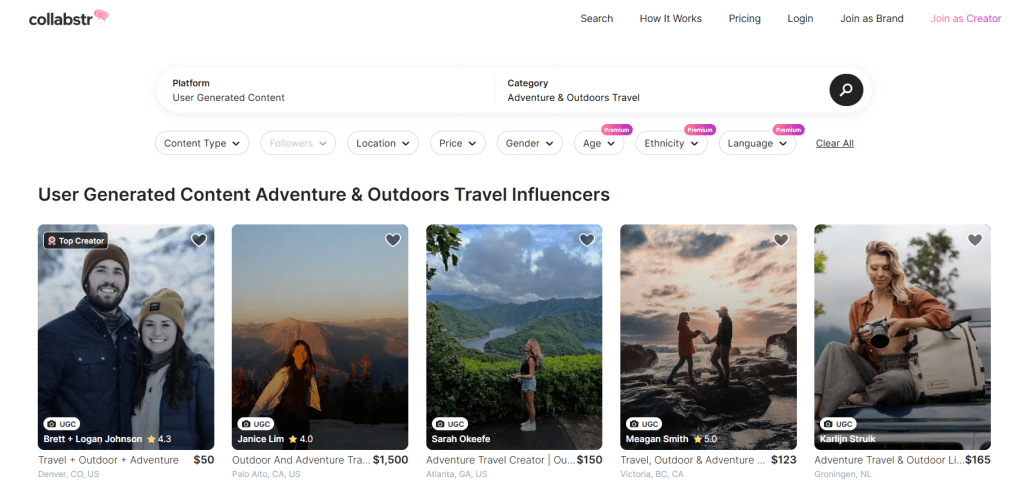
I used Collabstr to research and select two influencers that create outdoor adventure and travel content. When using Collabstr, I selected the “Adventure & Outdoors” and “Travel” categories to find relevant influencers that would align with the goals of the National Park Service.
Jay X Nina – Outdoor Adventure Couple
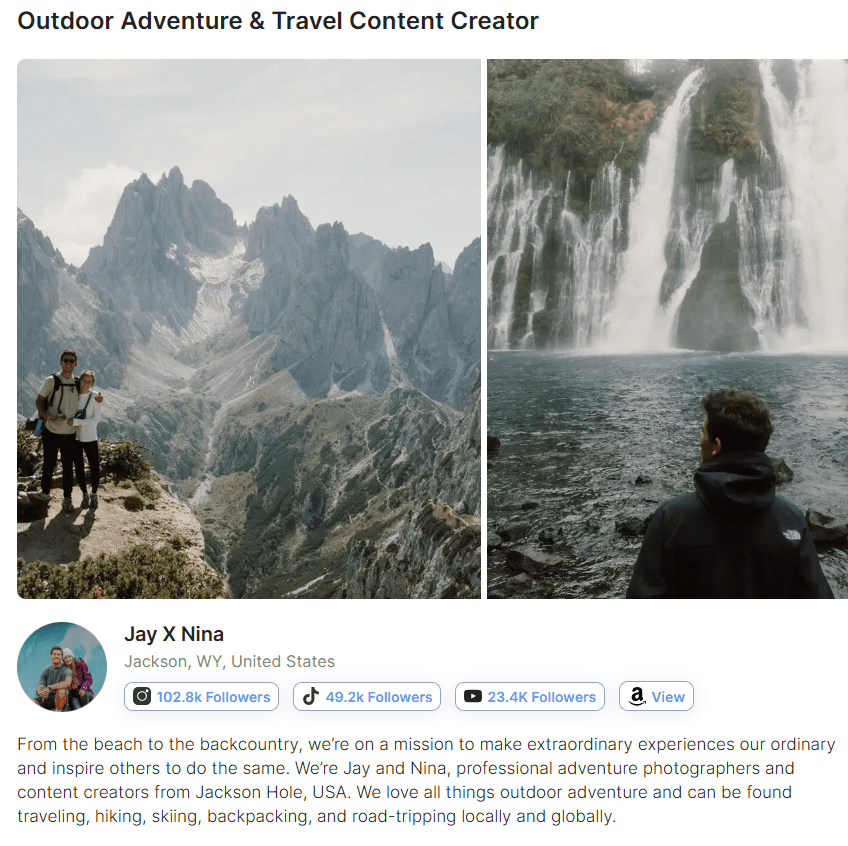
- 102.8K Instagram followers
- 49.2K TikTok followers
- 23.4K YouTube subscribers
- 42% of audience ages 25–34
- Majority U.S.-based
Jay X Nina create hiking and outdoor adventure content. Based in Wyoming, they frequently explore areas near Grand Teton National Park. Their audience demographics align closely with the NPS target audience because of similar age, gender, and location.
Brittany – Adventure Creator
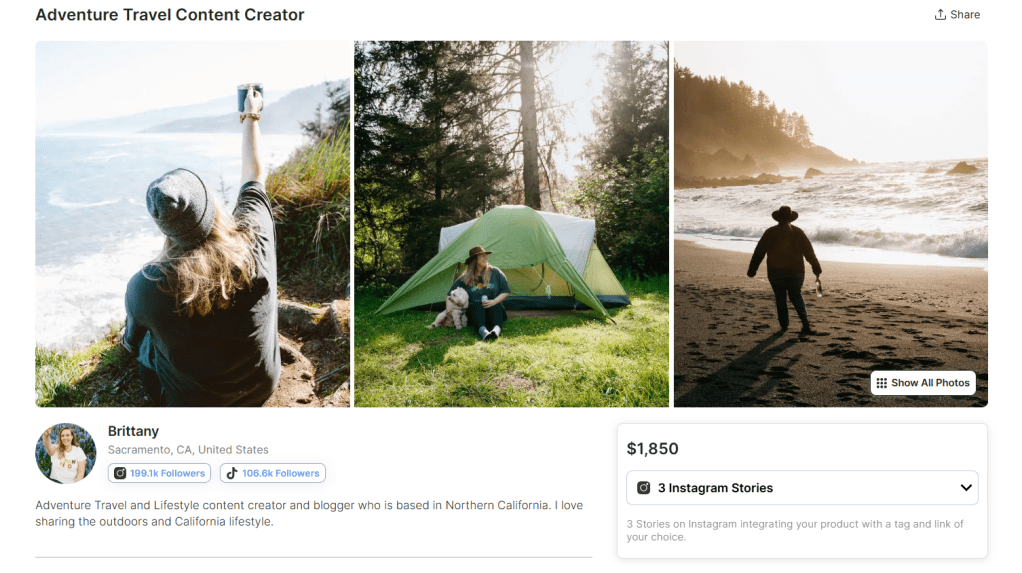
- 199.1K Instagram followers
- 106.6K TikTok followers
- 92% U.S.-based audience
- Top age range: 25–34
Brittany shares outdoor travel content in California, including visits to Yosemite National Park. Her audience skews female, which helps NPS connect with women interested in travel and outdoor recreation.
These influencers were chosen not only for reach, but for value alignment and audience match.
Campaign Goals
This campaign has three primary goals:
- Increase Brand Awareness of Leave No Trace principles.
- Boost Engagement with educational conservation content.
- Drive Website Traffic to NPS stewardship pages.
Per Thony’s suggestions, establishing clear goals upfront will help choose the correct KPIs when analyzing the success of the campaign.
Type of Collaboration
This campaign will use a three-month ambassador-style partnership instead of a one-time sponsored post. This builds trust and allows repeated exposure to conservation messaging.
Deliverables include:
- Sponsored videos
- Educational carousel posts
- Story content
- Long-form YouTube vlog
Content Strategy: Platform-Specific Roles
To maximize impact, each influencer will focus on their strongest platform and create content about national parks that are in their geographic area.
Jay X Nina:YouTube Educational Storytelling
Jay X Nina will create long-form YouTube content focused on deep education and storytelling.
Planned content includes:
- An 8–10 minute vlog titled “Exploring Grand Teton Responsibly”
- Demonstrations of proper trail use and wildlife safety
- Clear explanation of Leave No Trace principles
- Direct call-to-action linking to NPS.gov
YouTube is ideal for this format because it allows longer watch time and more detailed education.
Brittany: Instagram & TikTok Awareness
Brittany will focus on short-form Instagram Reels and TikTok content designed for high reach and shareability.
Planned content includes:
- “3 Things NOT to Do in Yosemite” short-form video
- Quick-tip clips focused on one Leave No Trace principle
- Instagram carousel post summarizing all seven principles
- Story posts with interactive polls
Short-form video increases reach, shares, and saves.
Performance Measurement: KPIs
Since the main goal of this campaign is to increase awareness and knowledge about the National Park Service (NPS), the selected KPIs focus on visibility, engagement, and learning behavior. These metrics help measure whether people are not only seeing the content, but also interacting with it and seeking more information.
Reach and Impressions
Reach shows how many unique users saw the influencer content. Impressions show how many total times the content was displayed. These metrics help measure how far the NPS message about conservation, park safety, and responsible tourism is spreading.
How platform analytics will be used:
- Instagram Insights: Track reach and impressions for posts, Reels, and Stories to see how many users viewed the content.
- TikTok Analytics: Monitor total video views and unique viewers to measure exposure.
- YouTube Analytics: Track impressions and unique viewers on long-form videos or Shorts to understand overall visibility.
Engagement Rate (Likes, Comments, Saves, Shares)
Engagement shows whether users are interacting with the content instead of just scrolling past it. Saves and shares are especially important because they suggest that users found the information valuable enough to revisit or share with others.
For the NPS, strong engagement may signal that audiences care about conservation tips or park education messages.
How platform analytics will be used:
- Instagram Insights: Measure likes, comments, saves, shares, and Story interactions. Saves are particularly important for educational posts.
- TikTok Analytics: Track likes, comments, shares, and video completion rate. High completion rates suggest users are paying attention to the message.
- YouTube Analytics: Monitor likes, comments, shares, and audience retention. Retention shows how long viewers stayed engaged with educational content.
Website Clicks and Landing Page Traffic (Using UTM Links)
Clicks show that users took action after viewing influencer content. This is important because the NPS campaign may direct users to park planning pages, safety guidelines, or conservation resources.
Using UTM links allows the NPS team to track which influencer drove traffic and how users behaved when they reached the website.
How analytics will be used:
- Track link clicks through Instagram Story links, bio links, TikTok profile links, and YouTube description links.
- Use Google Analytics to measure sessions, time on page, and conversions from each influencer’s UTM link.
Time on Page and Resource Downloads
If users visit the NPS website but leave quickly, the message may not be fully landing. Time on page helps measure whether visitors are actually reading about conservation or park safety.
Downloads of visitor guides or park maps are even stronger signals that users are preparing responsibly.
How analytics will be used:
Google Analytics will track:
- Average session duration
- Scroll depth
- Guide downloads
- Visits to educational pages
These behaviors help measure knowledge-building, not just clicks.
Branded Search Growth
Users may not click immediately after seeing influencer content. Instead, they may search for “National Park Service” or specific park names later. An increase in branded searches during the campaign period suggests growing awareness.
How analytics will be used:
- Monitor search volume trends using Google Trends.
- Compare baseline search data before and during the campaign to help measure long-term awareness.
Challenges and Solutions
Fake Followers and Inauthentic Engagement
One challenge the National Park Service may face when working with influencers is fake followers or bot activity. Some influencers may appear to have large audiences, but not all of those followers are real people. Bots can increase impressions and likes, which makes a post look successful at first glance.
Solution:
The NPS can use third-party tools to help confirm whether an influencer’s audience is authentic. Most importantly, the NPS should use trackable links that lead to park guides, safety pages, or conservation resources. This ensures success is measured by real website visits and learning behavior, not just impressions.
Focusing Too Much on Likes and Views
Posts about national parks often receive strong engagement because of beautiful scenery. While this attention is helpful, likes and views do not always mean people understand key messages about safety, sustainability, or Leave No Trace principles. If the goal is to increase knowledge, surface-level metrics are not enough.
Solution:
Before launching the campaign, the NPS should record baseline data such as website traffic to park planning pages, downloads of visitor guides, and searches for specific parks. During and after the campaign, they can compare this data to see if there was an increase. Polls or short quizzes on social media can also help measure whether people learned something new about protecting the parks.
Attribution Challenges and Delayed Action
Someone may see a post from an influencer about a national park, feel inspired, and then visit the NPS website days or even weeks later. Because the action does not happen immediately, it can be difficult to connect the website visit or trip planning behavior directly back to the influencer content.
Solution:
To better track impact, the NPS should use UTM links that are unique to each influencer. These special links will allow NPS to see exactly how much traffic comes from each post. Even if users return later, tracking tools can help identify patterns in referral traffic and assisted conversions. The NPS can also monitor increases in branded search terms during the campaign period.
Conclusion
Leveraging influencers is a powerful way to expand reach and build credibility. However, success depends on alignment and measurement. By choosing influencers who reflect conservation values and by tracking awareness, engagement, and traffic, the National Park Service can amplify its mission in a measurable way.
 Christian Schaaf's Blog + Portfolio
Leave a comment