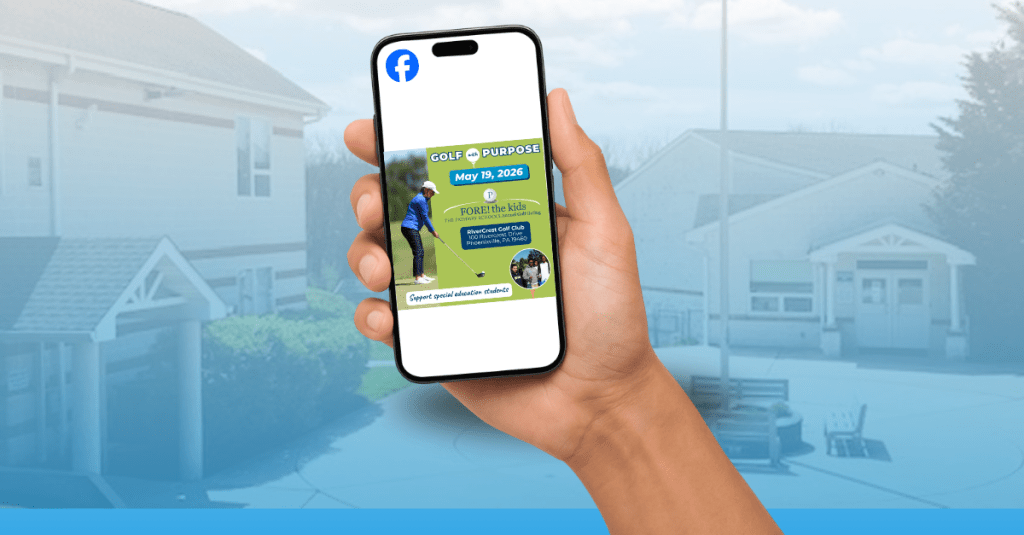
Designing a paid social media ad is never just about creating something visually compelling; it’s about developing a strategy that aligns creative decisions, targeting, and budget with a clearly defined business objective. When organizations invest in paid advertising, effective targeting is everything. Who the business targets and how they reach them will ultimately determine whether the campaign achieves its goals.
So how did I approach designing a paid social media ad and the strategy behind it?
To guide my planning process, I followed Sharon Thony’s framework outlined in The Marketing Campaign Playbook, which emphasizes intentional campaign design rooted in clear objectives, audience understanding, and measurable outcomes. Using this framework helped ensure that every decision made during the planning phase directly supports the campaign’s primary goal.
Campaign Framework: Strategy First, Creative Second
Before building the ad itself, I grounded the campaign in six strategic steps inspired by Thony’s guidelines:
- Define campaign objectives – Clearly establish what success looks like.
- Identify the target audience – Understand who the campaign is designed to reach.
- Develop a content strategy – Align messaging and creative with campaign goals.
- Set timelines and budgets – Establish realistic constraints for execution.
- Define key performance indicators (KPIs) – Determine how success will be measured.
- Prepare for execution and optimization – Plan how performance will be monitored and refined once the campaign is live.
This framework ensured the campaign was built strategically from the start.
Business & Campaign Overview
For this campaign, I designed a paid social media ad for The Pathway School, a nonprofit special education school where I work. The campaign promotes the school’s annual spring golf fundraiser, FORE! The Kids Golf Outing, taking place on May 19.
This event is one of the school’s key fundraising initiatives, supporting programs and resources for students. Historically, the outing sells approximately 100 golfer spots out of a maximum of 120. This campaign is designed to help close that gap and move the event toward a sellout.
Campaign Objective: Driving Conversions
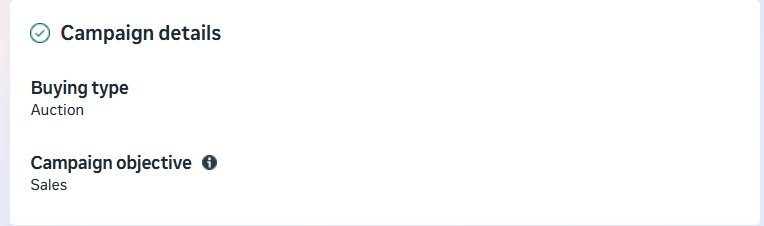
The primary objective of this paid social campaign is to increase golfer registrations (sales) through Facebook and Instagram advertising.
Specifically, the campaign is designed to:
- Drive at least 10 additional golfer registrations
- Increase golfer participation by 10%
- Generate registrations through link clicks leading to completed sign-ups
Rather than focusing on awareness or engagement, the campaign is intentionally structured around conversion-driven outcomes, ensuring that budget and targeting decisions support measurable revenue growth.
Campaign Optimization Goal
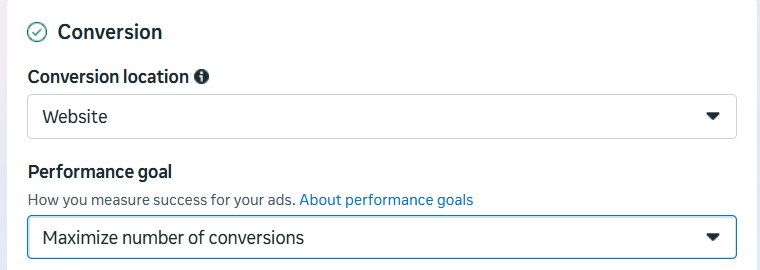
The ad’s performance goal is to maximize number of conversions, with completed golfer registrations serving as the key action.
Optimizing for conversions allows the advertising platform to prioritize users most likely to complete the registration process, rather than users who may only view or click on the ad. This approach aligns directly with the campaign’s revenue-focused objective.
Platforms & Ad Placements
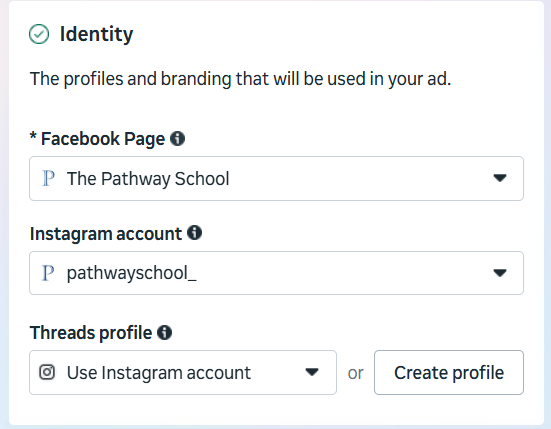
Ads will run on Facebook and Instagram, where The Pathway School already has an established presence and strong engagement with donors and community supporters.
Placements are intentionally selected to appear in high-visibility feed and story environments, ensuring the ad reaches users in spaces where they are most likely to engage and take action.
Target Audience Strategy
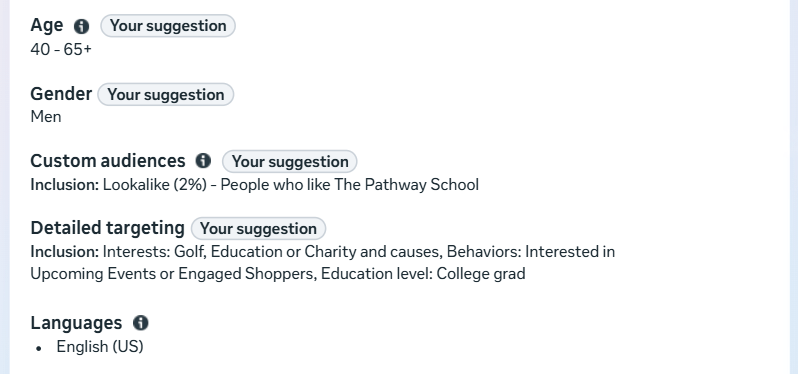
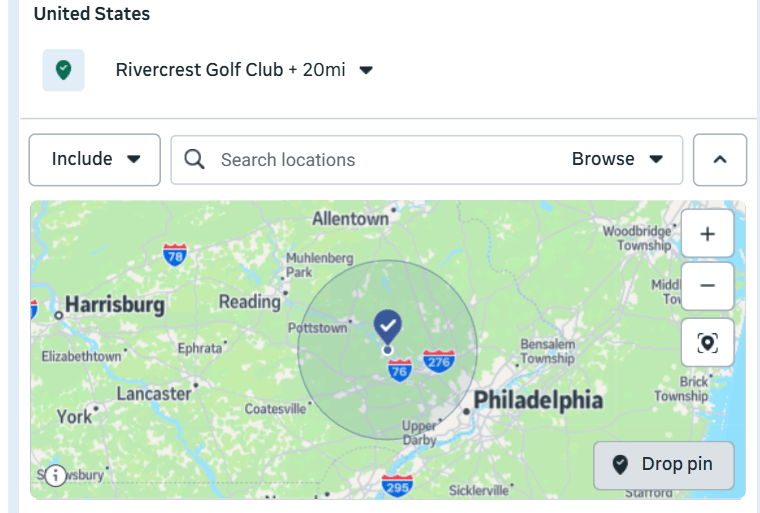
The targeting strategy combines demographic targeting, interest and behavior-based targeting, and first-party data to reach both existing supporters and high-quality new prospects.
Core Demographics
- Gender: Male
- Age: 40–69
- Location: Within a 20-mile radius of the golf course (which includes the school)
- Education Level: College Grad
This demographic profile closely aligns with past golf outing participants and typical charity golf event audiences.
Interests & Behaviors
The campaign targets users with demonstrated interest in:
- Golf and golf-related activities
- Community involvement and charitable causes
- Education advocacy
Behavioral targeting prioritizes individuals who:
- Interested in upcoming events
- Engage with nonprofit or fundraising content
- Interact with Facebook Events and local organizations
- Click on or engage with sponsored content
These behaviors indicate a higher likelihood of completing an online registration, supporting the campaign’s conversion-focused goal.
Lookalike Audience
To strengthen targeting efficiency, the campaign leverages first-party data from previous golf outings:
- Lookalike Audience: New users who share similar characteristics and behaviors
Using a lookalike audience will attract new golfers to the outing that have the same interests as current golf attendees.
Budget & Timeline
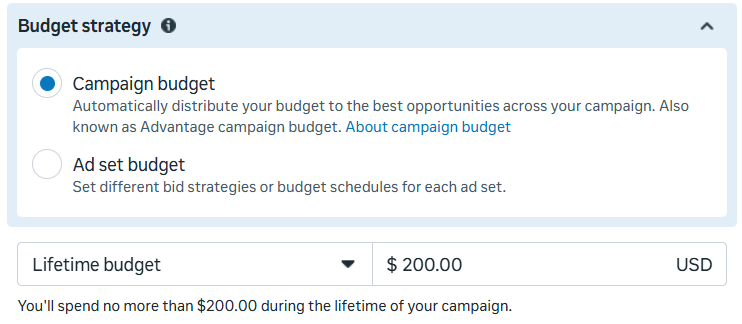

The total campaign budget is set at $200, consistent with prior years’ promotional spending for the event. The budget will be distributed over a 2 week period leading up to May 12, the registration deadline, allowing time for optimization and sustained visibility.
Given the focused audience and conversion-driven objective, this budget is expected to contribute meaningfully toward the goal of selling out the event.
Success Metrics & KPIs
Success metrics are intentionally aligned with the campaign’s primary objective.
Primary Metric
- Cost Per Acquisition (CPA): Measures the cost of each golfer registration and serves as the primary indicator of success.
Secondary Metrics
- Conversion Rate: Evaluates how effectively ad traffic converts into completed registrations.
- Cost Per Mille (CPM): Assesses audience efficiency and helps identify opportunities to reduce wasted impressions.
While click-through rate (CTR) will be monitored as an indicator of creative relevance, overall success will be evaluated based on completed registrations rather than engagement alone.
Planned Monitoring & Optimization
When the campaign launches, performance will be monitored regularly to ensure it is reaching the intended audience and driving conversions efficiently. If CPA or CPM trends higher than anticipated, targeting parameters and creative elements will be adjusted to improve performance and maximize budget efficiency.
Final Takeaway
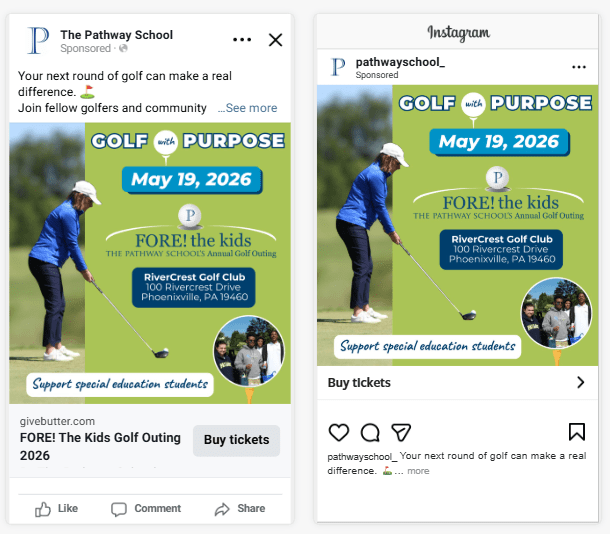
This campaign planning process highlights the importance of grounding paid social media advertising in clear objectives and intentional strategy. By aligning targeting, placements, budget, and success metrics with a single conversion goal, the campaign is designed to move beyond visibility and drive meaningful action.
 Christian Schaaf's Blog + Portfolio
Leave a comment