This week, I explored the process of creating my very own podcast: from developing the concept and planning the structure to learning the ins and outs of sound, scripting, and delivery. Before hitting record, I wanted to understand what makes a podcast engaging and professional. That began with diving into several readings that covered everything from microphone techniques to scriptwriting strategies. Below are my key takeaways and reflections from each piece that helped shape my understanding of podcast creation.
Readings & Writings
The Bare Bones: Camera Course for Film and Video – Chapter 8: Sound
By: Tom Schroeppel
Sound might not be visible, but it’s one of the most powerful storytelling tools. In this chapter, Schroeppel emphasizes that sound waves are spherical, traveling outward from their source. He compares microphones to our ears, explaining how both detect differences in frequency and amplitude. Frequency determines pitch (measured in Hertz, or Hz), while amplitude determines loudness (measured in decibels, or dB).
I found it fascinating how Schroeppel described the physics behind sound, like how each 3 dB increase doubles intensity, and how this translates to practical audio work. He also detailed microphone types and pickup patterns, which was extremely helpful as I thought about what equipment I might use for my own recording. Dynamic and electret condenser mics each have their advantages, and their pickup patterns (omnidirectional, cardioid, and supercardioid) determine how sound is captured in different environments.
What resonated most was his advice on recording clean, separate tracks for dialogue, sound effects, and ambience. Recording 30 seconds of “presence” or background noise after a scene helps create smooth transitions. This reinforced how intentional every sound decision should be, not just for technical quality, but for crafting a listener’s emotional experience.
“The Art of Creating an Invisible Podcast Episode Script”
By: Kevin Anderson
Kevin Anderson’s article reminded me that podcasting is as much about preparation as it is about performance. He encourages creators to script strategically, not word-for-word, but enough to give structure and clarity. The goal is to make your podcast sound natural and unscripted, even if it’s been thoughtfully written.
Anderson calls this approach the “invisible podcast script.” It’s invisible because it blends seamlessly into the host’s delivery: the listener doesn’t hear the preparation behind the performance. His five reasons for writing such a script stood out to me: it gives structure, ensures flow, builds professionalism, boosts confidence, and saves time in production. I also appreciated his breakdown of key script sections, from the opening “Welcome to” to the closing call to action.
The takeaway: write the way you speak. Anderson’s emphasis on storytelling, relatability, and authenticity is exactly the tone I want for my podcast.
“Creating a Great Podcast Script: 3 Methods Top Podcasters Use”
By: Colin Gray
Colin Gray expanded on the topic of scripting by breaking it down into three practical methods: the Word-for-Word Script, the Detailed Episode Outline, and the Bullet Point Plan. I liked how he explained that each has trade-offs, from precision and confidence to flexibility and spontaneity.
For me, the detailed outline approach seems ideal. It allows me to stay on topic while still speaking conversationally. The bullet-point method also intrigued me because of its freedom, but it requires strong improvisation skills. At the end of the day, it’s important to figure out which method works best for you and to practice your script before pressing record.
Gray’s closing point stuck with me: no matter which format you use, the goal is to make your delivery feel natural and connected. This felt like a recurring theme across all the readings. Podcasting, like good communication, is about making your audience feel part of the conversation.
“Podcast Taglines, Hooks, & the Power of Words”
By: Kevin Anderson
In this piece, Anderson shifts focus to branding and memorability. He highlights how powerful a tagline can be for building a podcast’s identity. A simple, catchy introduction like “Welcome to Steal the Show with Michael Port. This is Michael.” instantly connects with listeners.
He explains a few formats, including the straightforward tagline, the two-step format, and the bio format, that are all designed to make a podcast recognizable and relatable. What I found particularly helpful was his advice to use “hooks” throughout episodes to keep listeners engaged. These hooks might introduce recurring segments, like “Question of the Month” or “Interview of the Week,” giving structure and familiarity.
This reading made me think deeply about how I’ll introduce myself and my show. I want something short and memorable: a phrase that instantly reminds listeners what my podcast stands for.
“Best Podcast Tools of 2025: Make, Market, & Monetise Your Show”
By: Matthew McLean
McLean’s article provided a variety of practical resources. He listed tools that simplify the podcasting process, from recording to marketing. Tools like Alitu and EditPoint (iOS app) streamline editing by removing filler words and silences, while Podpage makes building a podcast website effortless.
I especially liked learning about the Samson Q2U microphone and the Zoom PodTrak P4 recorder, both tools that balance quality with affordability. Tools like Beehiiv for newsletters and the Podcast Host Planner for organization also showed how podcasting extends beyond recording: it’s about planning, branding, and growing a community.
This article reminded me that podcasting is both an art and a system. Having the right tools can make creativity flow more smoothly and turn ideas into polished episodes.
“Podcast Presentation Skills | Honing Your Speechcraft”
By: Robert Cudmore
Cudmore’s article tied everything together by focusing on delivery. His advice on pace, pitch, and confidence really stood out. He encourages podcasters to speak as if talking to a friend; to let their natural voice come through. I appreciated his reminder to breathe, avoid jargon, and not fear imperfection.
I also loved his discussion of storytelling structures like the Hero’s Journey, The Mountain, and Start in the Middle. These frameworks help build tension, shape narrative flow, and keep listeners hooked from start to finish. His reminder to include a call to action at the end of each episode felt like the perfect full-circle moment; it’s not just about sharing your message but inspiring your listeners to take the next step.
Cudmore’s advice made me realize that podcasting is ultimately about connection, speaking with your audience, not at them.
Research to Inform
Below are some examples of podcasts and commercials I researched to inspire the creation of my own podcast.
1.) New Heights with Jason & Travis Kelce: Taylor Swift
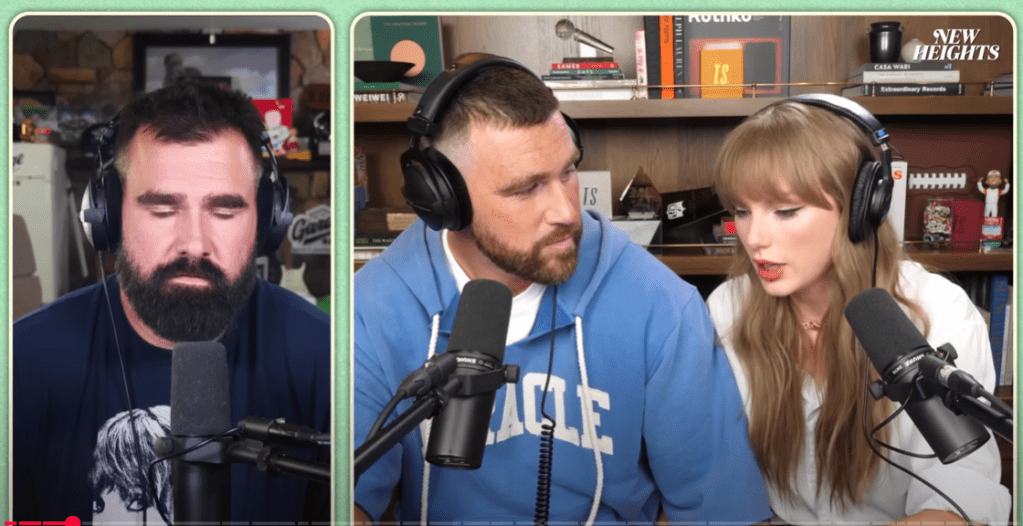
From a structure standpoint, this episode really shows how the Kelce brothers know their audience. It starts with their usual mix of sports talk and brotherly banter, setting that familiar, relaxed tone fans love. Then, bringing in Taylor Swift shifts things to a deeper, more personal story, one that still feels natural but adds a whole new layer of interest. The conversation is funny and loose at times, but it also delivers real substance through her reflections and album reveal. It’s the perfect blend of casual and meaningful.
What makes it work is authenticity. Jason and Travis stay true to who they are, and that chemistry pulls listeners in while letting Taylor shine in her own way. On top of that, the episode nails the marketing side: teasing the guest beforehand, building excitement, and then turning the live stream into a record-breaking event.
2.) How to Save a Planet: “Show We Mine the Deep-Sea?”

This episode dives into one of the trickiest questions in climate science. The hosts ask, should we mine the deep sea for materials that power our batteries? It’s a big topic, but they make it approachable from the very start. Instead of throwing heavy science at listeners, they break things down through storytelling and curiosity. They bring in experts, explore both sides of the debate, and guide the audience through each step like you’re learning together. What really stands out is how they balance serious information with moments of humor and honesty. It feels less like a lecture and more like a thoughtful conversation with a friend who happens to know a lot about the environment.
The structure keeps the episode easy to follow: start with a question, bring in perspectives, unpack the details, and end with a takeaway. The hosts never sound condescending: they speak with the listener, not at them. That sense of collaboration makes it feel empowering rather than overwhelming. For my podcast, this approach is gold: I can structure the episode around a big question and leave the audience with something they can think about or try themselves. It’s storytelling with purpose, and it makes complex topics feel human.
3.) Good Hang with Amy Poehler: Debut with Tina Fey
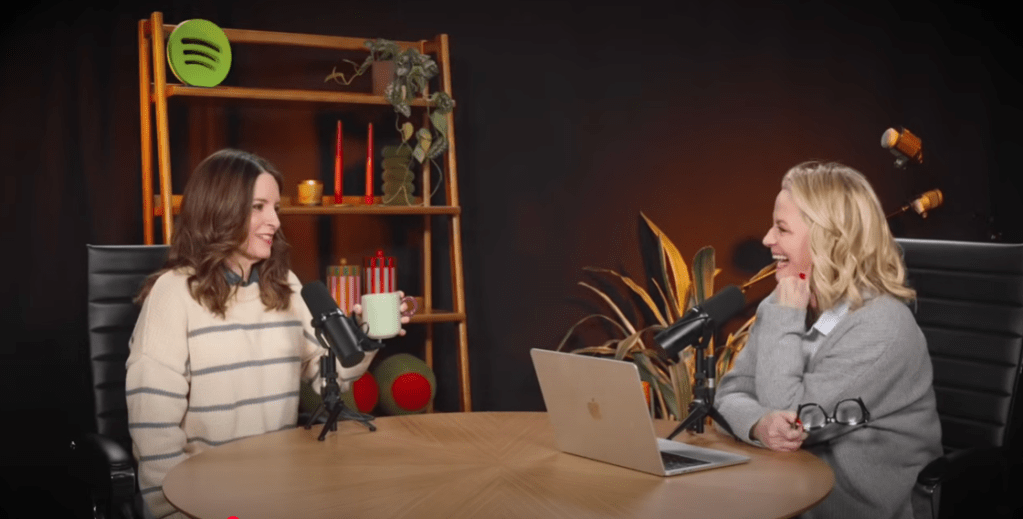
Amy Poehler kicks off her podcast exactly how you’d expect: with warmth, humor, and a dose of chaos that feels completely real. Having Tina Fey as her first guest sets the tone perfectly. From the first few minutes, it feels like you’ve walked into a coffee meet-up with two longtime friends. They joke, reminisce, and bounce off each other effortlessly, and that chemistry keeps you listening even when the conversation wanders. There’s no forced structure or formal intro; it’s just two funny, smart people talking about life and work in a way that feels unfiltered.
That relaxed energy is what makes Good Hang so inviting. Amy makes it clear she’s not here to preach or “fix” anyone’s problems. She just wants to hang out and make people laugh. It’s a reminder that not every podcast needs to teach a lesson or follow a rigid outline. Sometimes, the magic is in authenticity and connection.
Create
Pre-Production Planning Documents

When brainstorming ideas for my podcast project, two very different concepts came to mind, and they are both connected to topics I care deeply about but expressed in completely unique ways.
The first idea, “Preserve the Peaks,” grew out of my previous campaign project about climate change and visitor impact in National Parks. This podcast would continue that mission by exploring how people interact with protected spaces, specifically Rocky Mountain National Park in this episode. I’ve already gathered research and statistics to build a strong call to action, encouraging listeners to follow Leave No Trace principles and take mindful steps to protect the environment when they visit. The biggest challenge will be making sure it sounds natural rather than scripted. I plan to overcome that through practice: recording, listening back, and re-phrasing until it feels like I’m having a genuine conversation with the listener.
My second idea takes a totally different approach: “The Ballroom Breakdown.” This would be a fun, lighthearted show that recaps and comments on the latest episode of Dancing with the Stars. It’s conversational, cheeky, full of personality, and something that lets me bring my own voice and humor into the mix. While it’s less serious than Preserve the Peaks, it still allows me to build storytelling and audience-engagement skills. I wasn’t completely sure if it fit the project’s criteria, but I wanted to explore it because it reflects another side of my interests: pop culture, performance, and creative commentary. I think this would be a very fun podcast to create and explore further.
To compare the two, I created mind maps and scripts for each concept, which can be viewed in the planning document linked above. This helped me visualize tone, structure, and content, and gave me clarity on how each could connect with an audience. Even though the topics couldn’t be more different, they both let me practice my voice, structure ideas effectively, and focus on engaging listeners. I’m excited to keep developing one of these into a full podcast episode!
 Christian Schaaf's Blog + Portfolio
Leave a comment