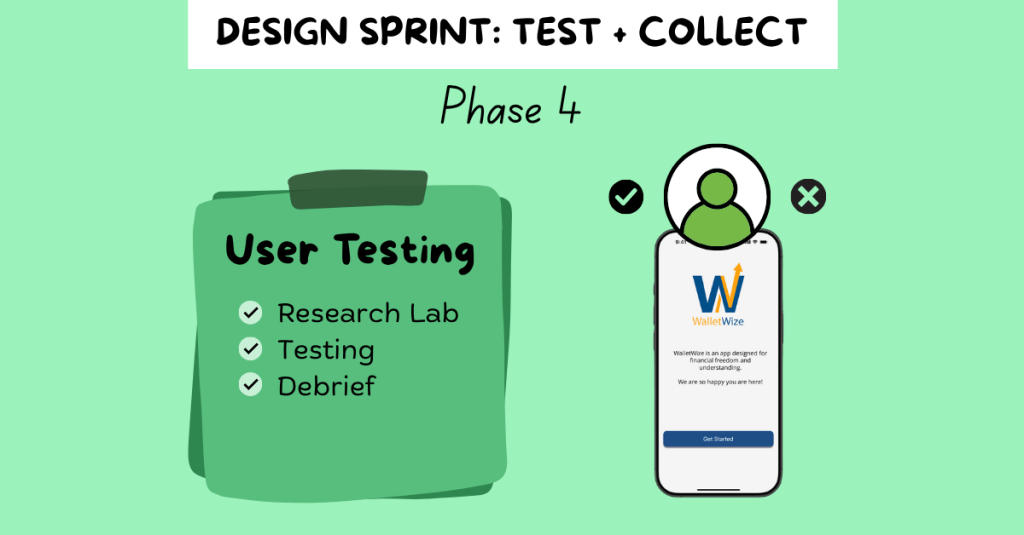
The finish line is in sight.
After days of brainstorming, building, and refining, you’re approaching the last stretch of the Design Sprint. Just like the final leg of a race, it’s time to dig deep, make informed decisions, and sprint through the tape. Welcome to Phase 4: Test + Collect, where your prototype meets the real world and real users.
“The ‘Test’ phase is the moment of truth in your Sprint journey. This is where your prototype faces the ultimate test — real-world user interaction and feedback.”
Pattie Belle Hastings
This week, my team entered the user testing phase of our digital prototype. It’s a nerve-wracking but rewarding part of the process. You finally get to see how users interact with the solution you’ve been working hard to create.
Let’s break it all down so you can feel confident as you enter the final stages of your Design Sprint.
Step 1: Research Lab

Before jumping into user interviews, take time to prepare the environment for testing. In The Sprint Handbook: A Step-by-Step Guide to Planning and Running Innovation Sprints, Pattie Belle Hastings refers to this as the “Research Lab” phase.
Here’s how to successfully prepare for user testing:
- Define your target audience: Who is your prototype for? Be specific. The more tailored your users, the more valuable the feedback.
- Determine number of participants: In Sprint: How to Solve Big Problems and Test New Ideas in Just Five Days, Jake Knapp, John Zeratsky, and Braden Kowitz recommend five participants. Why? It’s the sweet spot where patterns emerge without overwhelming your team.
- Create a recruitment plan: Be clear and transparent. Reach out, explain what’s involved, and ask if they’re open to participating.
- Handle the paperwork: If your tests are recorded, especially virtual ones, always send consent forms. Make sure participants understand it’s voluntary.
- Schedule wisely: Confirm dates and times with your users. A defined schedule helps everyone feel prepared and respected.
The moral of the story? Communicate, communicate, communicate with your user testers before starting the interviews.
Step 2: Conduct the Interviews
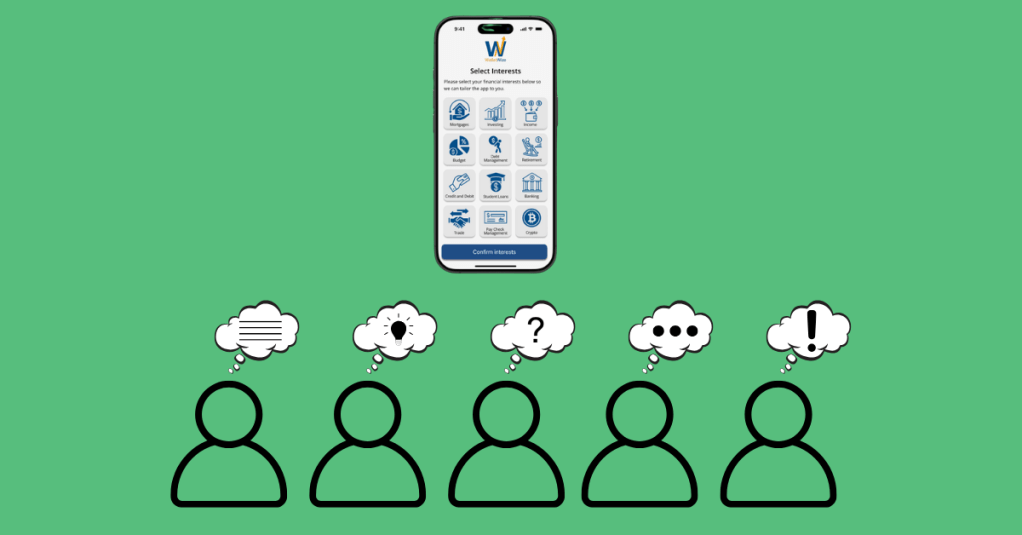
Now that your team is prepared, it’s time for the interviews. This is where the magic happens, and where things can get emotional.
“These interviews are an emotional roller coaster. When customers get confused by your prototype, you’ll be frustrated. If they don’t care about your new ideas, you’ll be disappointed. But when they complete a difficult task…you will be elated.”
Jake Knapp, John Zeratsky, and Braden Kowitz
User Scripts
To keep things on track, follow a user script. This script keeps your team consistent and avoids giving the participants hints. The goal is to observe their authentic reactions and not guide them to the “right” answer.
Knapp and his team suggest to start the user interviews with a friendly welcome to make the participant feel comfortable and at ease. Make sure to tell them that you are testing the prototype and not them. Ask open-ended background questions to learn about their experience and built trust. Introduce the prototype and present the tasks in a clear manner without giving hints. It’s important to end with a debrief and let the users reflect. Ask what they liked, what didn’t work, and how they would improve it. This uncensored feedback is gold.
Tip: Stay Neutral and Curious
Watching users struggle with your prototype can be hard. But that’s the point: your job isn’t to defend your work; it’s to learn from it.
Here are some tips for a productive testing session:
- Stay calm, even when users are confused.
- Avoid giving explanations or answering questions they might have about completing a task.
- Ask open-ended questions like:
- “Why did you click there?”
- “How did that feature make you feel?”
Encourage participants to think out loud and resist the urge to jump in. Those moments of confusion are not failures; they’re opportunities to make your product even better.
Step 3: Reflect with Your Team
When all user sessions are complete, it’s time to analyze the results. Pattie Belle Hastings puts it best:
“Analyzing the data from user testing in a Design Sprint is critical for deriving meaningful insights, identifying areas for improvement, and determining steps forward after the Sprint.”
Pattie Belle Hastings
During this debrief, your team should identify recurring patterns or problems, highlight areas where users were both confident and confused, review task completion rates and timing, observe users’ body language and facial expressions, and, if possible, collect both quantitative and qualitative feedback.
You can write down observations in a shared document, on sticky notes, or on a digital whiteboard. When the insights are clear, schedule a check-out meeting to decide your next steps. Do you iterate on the prototype? Do you move forward with development? The decision will come from the evidence.
To view my team’s user testing documentation and results, click here.
Final Lap: Celebrate and Reflect
You did it! Your team sprinted through ideation, prototyping, and testing. You gathered real feedback and now have a stronger sense of where your solution stands.
So take a moment. High-five your team. Celebrate the collaboration and your hard work. Whether you nailed it on the first try or have adjustments to make, you’ve completed something meaningful.
Cross that finish line strong.
 Christian Schaaf's Blog + Portfolio
Leave a comment