
Lining up at the start of a race, shoes double-knotted, heart racing, playlist queued. You’ve trained, fueled, hydrated, and mentally prepped. Everything’s ready because you know that when the sprint begins, there’s no time to second-guess. As a runner, I’ve learned that success doesn’t come from the starting gun. It comes from the work you put in beforehand.
And that’s exactly how a Design Sprint works. No sneakers required.
Just like a real sprint, preparing for a Design Sprint takes intention, strategy, and teamwork. Without proper preparation, the five-day process can feel chaotic instead of creative. With the right foundation, it’s a fast and focused way to solve big problems, prototype solutions, and gain meaningful feedback before investing time and money into full execution.
Before we dive into how to prepare, let’s make sure we’re clear on what a Design Sprint actually is.
So, What is a Design Sprint?
Originally developed at Google Ventures, a Design Sprint is a five-day, structured process created to rapidly ideate, prototype, and test ideas. In Sprint: How to Solve Big Problems and Test New Ideas in Just Five Days, Jake Knapp, John Zeratsky, and Braden Kowitz break down this method:
- Day 1: Understand and Define – Identify your long-term goal and clarify the problem to solve.
- Day 2: Diverge – Sketch ideas individually before sharing with the group.
- Day 3: Decide – Narrow down ideas and storyboard the best ones.
- Day 4: Prototype – Build a quick, realistic version of the solution.
- Day 5: Test – Gather feedback from real users to inform next steps.
Pattie Belle Hastings, in The Sprint Handbook: A Step-by-Step Guide to Planning and Running Innovation Sprints, describes the Design Sprints as:
“A human-centered approach to problem-solving that inherently promotes experimentation, embraces failures as learning opportunities, and encourages a deep understanding of ambiguity.”
Design Sprints help you move quickly while staying focused, efficient, and user-centered, but they only work if you’re properly prepared.
How do you set the stage for a successful and productive sprint?
(Hint: it starts before Day 1.)

Assembling the Right Team
Just like a relay team needs a strong mix of speed, endurance, and strategy, your sprint team needs a balance of skills and perspectives. According to Knapp, every sprint should include:
- The Decider – the final decision-maker.
- The Facilitator – keeps the team on track and energized.
- The Designer – visualizes and prototypes ideas.
- The Voice of the Customer – represents the user’s perspective.
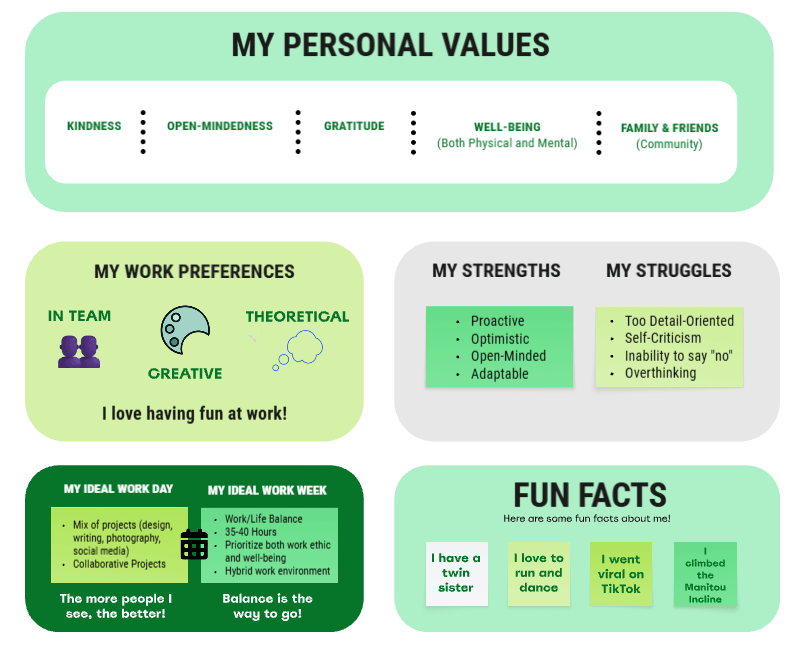
A good way to match people to these roles? Try building a Personal User Manual.
“Personal User Manuals are most effective when they are short, succinct, and scannable. Ideally they should fit on a single page and the text should be active and engaging.” – Anna Brown
In her article “What is a Personal User Manual?,” Anna Brown explains that these one-pagers include your background, working style, communication preferences, strengths, and even what frustrates you. It’s a powerful tool for fostering empathy and building psychological safety on a team, which are both crucial for Design Sprints to thrive.
In “A Personal User Manual for Working With Me,” Luke Thomas adds that user manuals help accelerate relationship building with your team while reducing ambiguity at work. Not sure where to start? Try Thomas’s suggested prompts like:
- “An ideal day at work is…”
- “My superpower is…”
- “How I like to give and receive feedback…”
For inspiration, take a look at a section of my personal user manual below that I created on Miro.
Choosing the Right Challenge
Once your team is in place, the next step is defining the challenge. And no, it shouldn’t be a safe or easy one. Knapp encourages teams to “go after their most important problem…don’t go for the small win” (Knapp, 2016, p. 27).
Design Sprints are built to tackle tough questions: the ones that carry risk and reward. Think of it like choosing to run a marathon instead of a 5K. The stakes are higher, but so are the breakthroughs.
Focus on the problem that will make the biggest impact, even if it feels daunting. The structure of the sprint gives your team the support to take bold leaps.
Why Sprint?
Still wondering why you’d take the time for a Design Sprint? Hastings outlines several benefits:
- Speeds up product development
- Builds collaboration across teams
- Surfaces user feedback early and often
- Drives better decision-making
- Boosts morale and creativity
Design Sprints encourage experimentation without fear. They give you a playground to test ideas and fail forward before stakes get too high.
Final Thoughts
Design Sprints might not require running shoes, but they do require preparation and a strong sense of direction. Much like training for a real race, the goal is to do the groundwork before the big event, so that once you start, you can focus on performance, not uncertainty.
So lace up (figuratively), build your team, write your user manuals, identify your mountain to climb, and when you’re ready…sprint.
 Christian Schaaf's Blog + Portfolio
Leave a comment